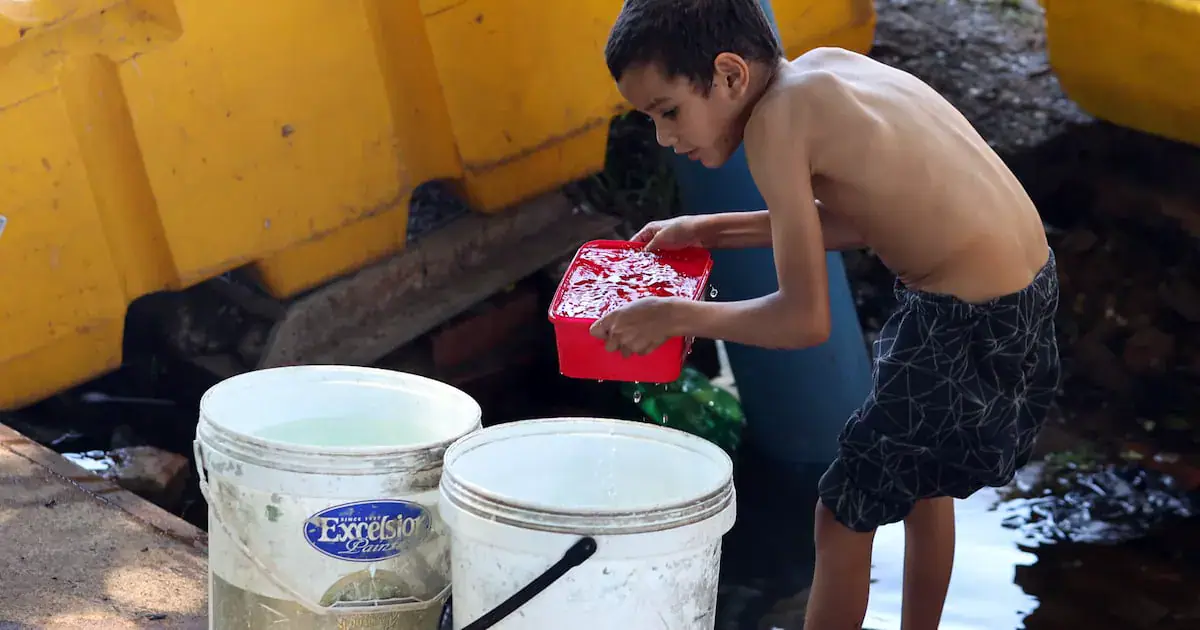
Johannesburg's water crisis has intensified, with supply systems constrained, leading to low water pressure, intermittent supply, and prolonged outages across several parts of the city. The crisis has prompted Johannesburg Water to warn residents to reduce their water usage by 15%. The entity's spokesperson, Nombuso Shabalala, stated that high demand and excessive draw-off are preventing reservoirs and towers from recovering. Technical teams are working to reconfigure the network and implement targeted throttling to balance available supply and stabilise distribution.
The affected systems include Commando, Central, Sandton, and parts of Midrand, Randburg-Roodepoort, Soweto, and the Deep South. Shabalala mentioned that higher-lying areas are expected to be hardest hit when reservoir and tower levels drop. To address the crisis, Johannesburg Water has proposed more stringent level 1 water use restrictions. The proposed measures include prohibiting irrigation between 6am and 6pm, requiring compulsory spray nozzles on hosepipes, and banning the hosing down of hard surfaces and dampening of building sand.
The proposed restrictions also involve stopping irrigation at parks and public spaces, while the Johannesburg Roads Agency and Johannesburg Water contractors would be required to use treated effluent instead of potable water for road construction and jetting activities. If demand continues to increase, Johannesburg Water will consider implementing level 2 water use restrictions. The entity aims to reduce current demand by approximately 15%. Shabalala emphasised the need for residents to cooperate with the proposed measures to mitigate the crisis.
The water crisis has become increasingly politicised, with the DA's Ward 101 councillor, Ralf Bittkau, attributing the restrictions to government failure rather than an agreement between parties. Bittkau argued that Johannesburg's water allocation from Rand Water should have been increased long ago. He also claimed that Johannesburg Water was losing 49.8% of its water through illegal connections, bypassed meters, and technical losses such as pipe bursts.
Bittkau expressed disappointment that the losses had not improved significantly, citing a previous loss rate of 42.5%. The ANC Greater Joburg region has questioned Rand Water's decision to restrict bulk supply to Johannesburg, citing concerns about the impact on residents already experiencing unreliable water. ANC regional secretary Sasabona Manganye emphasised that water is essential to human dignity, public health, and the functioning of schools, clinics, and businesses.
Manganye called on Rand Water to account publicly for its decision-making process and work with the city to protect vulnerable communities. He also raised concerns about the timing of the decision, which coincides with the final stretch towards the local government elections. The ANC Greater Joburg region is seeking transparent communication, effective co-ordination, and a credible plan to minimise the impact of the intervention on communities.
The water crisis in Johannesburg is expected to have significant implications for residents, businesses, and public institutions. The implementation of water restrictions and the proposed measures aim to mitigate the crisis and ensure a stable water supply. However, the crisis has also highlighted the need for long-term solutions to address the city's water challenges, including infrastructure upgrades and improved water management practices.
Key points
- Johannesburg Water warns residents to reduce water usage by 15% due to constrained supply systems and high demand.
- The proposed water restrictions include prohibiting irrigation between 6am and 6pm and requiring compulsory spray nozzles on hosepipes.
- The water crisis has become increasingly politicised, with the DA and ANC trading accusations over the cause of the crisis and the response to it.