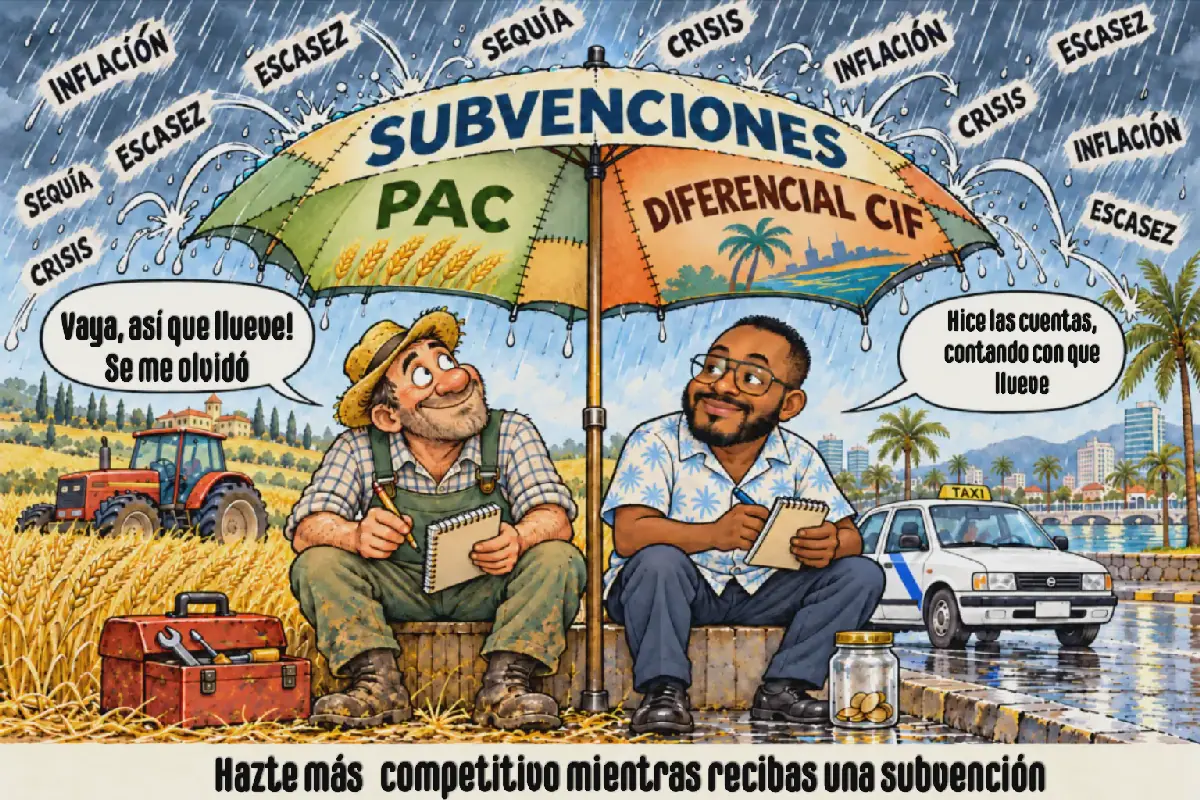
In a small town in Castilla, Spain, Mateo begins his day by checking the fuel gauge of his tractor, a ritual shared by many farmers who rely on the land for their livelihood. Similarly, in Malabo, Equatorial Guinea, Ondó starts his day by turning the key in his taxi, also mindful of the fuel costs. Though they have never met, their daily routines are intertwined by a common thread - the need to balance their expenses and ensure a stable income. This delicate balance is made possible by a support network that has been put in place to safeguard the agricultural sector.
Europe's Common Agricultural Policy, born out of the lessons learned from war, aims to provide a safety net for farmers like Mateo. The policy ensures that they can continue to work the land without fear of financial ruin, even when faced with unpredictable weather conditions or fluctuating market prices. This support is not a luxury, but a necessity that guarantees a steady supply of food to cities, keeping bread and other essentials affordable for the general population. In doing so, it also shields consumers from the full impact of global market fluctuations.
In Malabo, Ondó's daily commute is made possible by a similar support system, albeit in a different form. The government subsidizes fuel costs, allowing him to fill up his taxi without breaking the bank. However, the actual cost of importing fuel is significantly higher, and it is this difference that the state quietly absorbs. This hidden subsidy ensures that the cost of living remains manageable for Ondó and his fellow citizens, who rely on imported goods for their daily needs.
The synergy between Europe's agricultural policy and the fuel subsidies in Equatorial Guinea may seem invisible, but it is a powerful force that underpins the daily lives of people like Mateo and Ondó. By supporting farmers in Europe, the policy helps ensure a stable food supply, which in turn enables the transportation of goods to places like Malabo. Conversely, the fuel subsidies in Equatorial Guinea guarantee that these goods can be distributed without crippling the local economy.
However, this support network can create a sense of complacency, as those who benefit from it begin to take it for granted. Mateo and Ondó have grown accustomed to living with the safety net, adjusting their daily routines and financial calculations accordingly. But this reliance on support can also obscure the risks that lie ahead, particularly if the aid were to falter or disappear. It is a precarious situation that highlights the need for prudent management and planning.
The value of these support networks lies not only in the immediate relief they provide but also in the time they buy for those who rely on them. For individuals like Mateo and Ondó, it means being able to plan for the future, make prudent financial decisions, and invest in their livelihoods. For policymakers, it means understanding the human impact of their decisions and taking steps to mitigate the risks that come with relying on external support.
As the day comes to a close, Mateo and Ondó reflect on their accomplishments, satisfied that they have made ends meet. Their stories serve as a reminder of the intricate web of support that underpins the global economy, and the importance of acknowledging the human face of economic policy. By recognizing the interconnectedness of their lives, we can better appreciate the value of these support networks and work towards creating a more stable and equitable future.
Key points
- Europe's Common Agricultural Policy has a ripple effect on lives in Equatorial Guinea.
- The policy helps ensure a stable food supply and shields consumers from market fluctuations.
- The support network can create a sense of complacency, obscuring the risks that lie ahead.