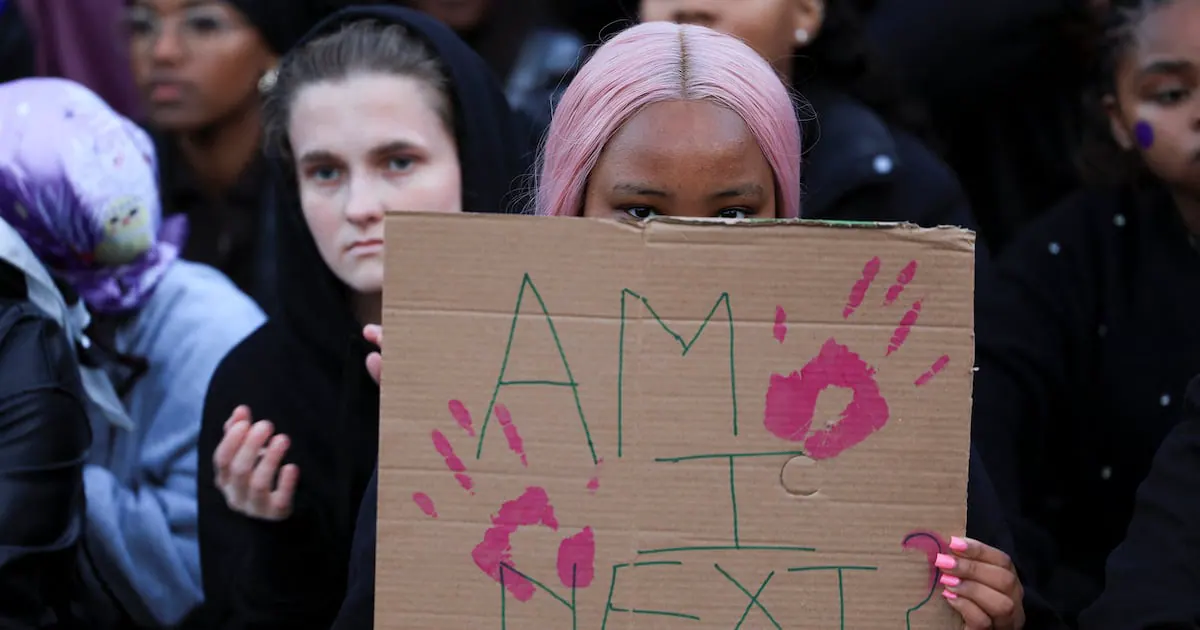
In South Africa, women are taking extensive precautions to ensure their safety, but many feel that these measures are insufficient in preventing gender-based violence. Malaika Mhlatsi, a writer, shared her personal experiences of being extremely cautious, from sharing live locations with friends when using public transportation to having a live tracker and panic button in her car. Despite these precautions, Mhlatsi acknowledges that she is not immune to gender-based violence.
Mhlatsi's safety measures extend to her home, where she has installed additional security cameras, panic buttons, and motion-sensor alarms. Her neighborhood is considered one of the safest in Johannesburg, with armed private security patrolling 24/7 and CCTV cameras. However, Mhlatsi has still fortified her house with extra security features, including burglar bars on her windows and doors. She also engages in an elaborate security ritual before bed, double-locking doors and activating alarms.
Mhlatsi's precautions also apply when she leaves her house. She ensures that her location is tracked by a close friend and does not meet strangers in secluded places. She prefers to shop at malls with open parking and uses grocery delivery services to minimize her exposure to potential dangers. Her home is also equipped with a 24/7 emergency feature built into her home CCTV app, which allows her to dispatch security or medical services in case of an emergency.
Despite her best efforts, Mhlatsi recognizes that her precautions are limited in protecting her against certain forms of gender-based violence. She notes that no amount of caution can protect her against a partner who abuses her in her own home, a smart criminal who bypasses her security infrastructure, or a labor market that maintains a gender pay gap. This reality highlights the complexities of addressing gender-based violence in South Africa.
Mhlatsi's experiences are reflective of a broader societal issue in South Africa, where women are disproportionately affected by gender-based violence. According to various reports, South Africa has one of the highest rates of rape and intimate partner violence in the world. This has led to widespread calls for greater action to address the root causes of gender-based violence and to support survivors.
The "women need to be more cautious" narrative has been criticized for placing the onus of responsibility on women to prevent gender-based violence, rather than addressing the underlying societal issues that perpetuate it. Mhlatsi argues that there is no precaution left to take, highlighting the need for a more nuanced approach to addressing gender-based violence in South Africa.
Ultimately, Mhlatsi's story serves as a reminder of the ongoing struggles faced by women in South Africa. While individual precautions can provide a sense of security, they are not a substitute for systemic change. As the country continues to grapple with the complexities of gender-based violence, it is clear that a more comprehensive approach is needed to support survivors and prevent future instances of violence.
Key points
- Women in South Africa are taking extensive precautions to ensure their safety, but many feel that these measures are insufficient in preventing gender-based violence.