The political landscape of Rivers State is becoming increasingly volatile as the 2027 elections approach. Rotimi Amaechi, the vice-presidential candidate of the African Democratic Congress (ADC), still commands a significant following in the state. Meanwhile, Peter Obi, the presidential candidate of the Nigeria Democratic Congress (NDC), enjoys a massive fan base among the state's youth and Igbo population. This development has exposed the fragility of the All Progressives Congress (APC) in Rivers State.
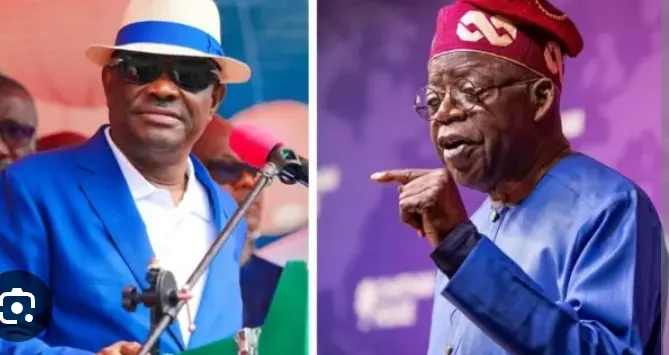
President Bola Ahmed Tinubu's inability to guarantee votes from his high-ranking party officials in a free and fair election in Rivers State is a significant concern. Despite this, Nyesom Wike, a key figure in the state, has signaled his support for Tinubu, boasting about his ability to manipulate the electoral process. Wike's threat to replicate the dark machinations that led to Rivers State voting for Tinubu in the 2023 elections has raised concerns about the integrity of the electoral process.
The alliance between Tinubu and Wike has its roots in the 2022 PDP presidential primaries, where Wike was humiliated by internal defeat. Wike's subsequent formation of an alliance with Tinubu has been described as a toxic and malignant development in Nigerian politics. This transactional relationship has now become a terminal cancer eating away at the APC.
The implications of this alliance are far-reaching, with many Nigerians expressing concern about the impact on the country's democracy. The fact that Wike can openly boast about manipulating the electoral process raises questions about the effectiveness of the country's electoral institutions.
The development has also led to a re-evaluation of the role of key players in Nigerian politics, including Amaechi and Obi. Their influence in Rivers State and their ability to mobilize support for their respective parties will be crucial in determining the outcome of the 2027 elections.
As the 2027 elections approach, the situation in Rivers State remains fluid and unpredictable. The Tinubu-Wike alliance has created a toxic political environment, with many stakeholders calling for a more transparent and credible electoral process.
The international community is also watching the developments in Nigerian politics with keen interest. The country's democracy has been under scrutiny in recent years, and the 2027 elections will be a critical test of its resilience.
Key points
- The Tinubu-Wike alliance has become a terminal cancer in Nigerian politics, rooted in betrayal and electoral robbery.
- The alliance has exposed the fragility of the APC in Rivers State, with President Tinubu unable to guarantee votes from his high-ranking party officials.
- The development has raised concerns about the integrity of the electoral process in Nigeria, with many stakeholders calling for a more transparent and credible process.