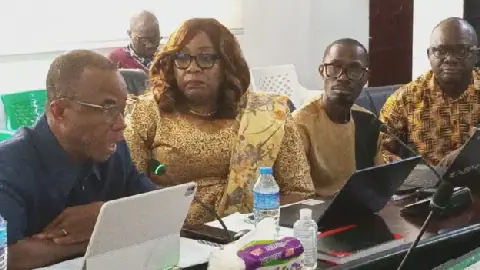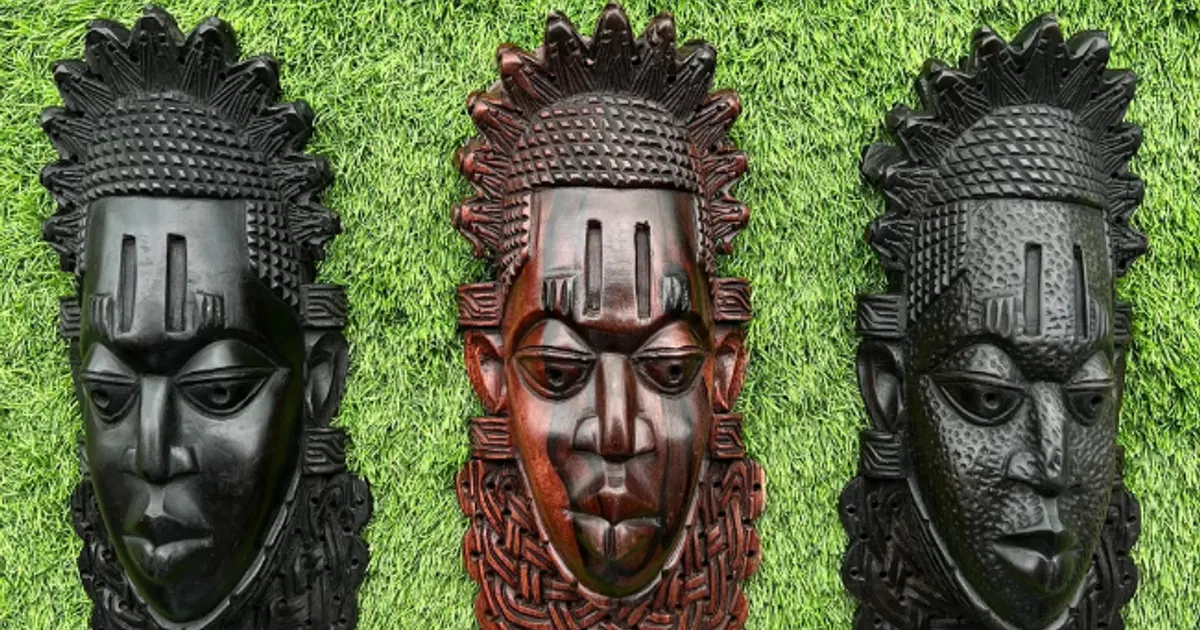
In 1976, Nigerian authorities commissioned a group of carvers in Benin City to recreate the original ivory mask of Queen Idia, looted by British soldiers in 1897. The goal was to create an emblem for FESTAC, a festival meant to unite the Black world in Lagos. Joseph Alufa Igbinovia Obayagbona was among the selected carvers tasked with recreating Idia's likeness from scratch. The project would result in a bronze mask that would become the face of the festival.
According to a 2024 biography, 'Pa Joseph Alufa Igbinovia Obayagbona: The Account’, Obayagbona was the true carver of the mask, a claim that remains contested. The biography argues that Obayagbona's role in creating the mask was significant, but his name was left out of official documentation. Instead, the credit went to Erhabor Emokpae, a well-known sculptor and painter who oversaw the overall visual branding and graphic/bronze adaptations for the festival.
Emokpae, who died in 1984, is remembered as one of Nigeria's most significant modern artists, with the FESTAC mask listed among his defining works. However, Obayagbona's family claims that he was never paid for his work on the mask or for a separate piece called Olokun, created around the same period for the festival. Despite his contributions, Obayagbona's name rarely appears in official accounts of the festival's history.
The bronze mask from FESTAC '77 remains one of the most recognizable images in Nigerian history, symbolizing cultural pride and invoked in discussions about looted African art. The original mask it was based on is still in London, part of an unresolved restitution debate tied to a new museum being built in Benin City to eventually house it. Obayagbona's biography and recent reporting aim to bring attention to his role in creating the iconic mask.
Today, Obayagbona lives in Benin City, his eyesight and hearing failing, in an incomplete building he started in 1981 but could not finish. Despite his contributions to Nigerian art and culture, he has received no reward or recognition for his work. His story highlights the often-overlooked contributions of artists and craftsmen in Nigeria's rich cultural heritage.
The FESTAC mask has become an enduring symbol of Nigerian culture, but the story of its creation and the role of its creators remains complex. While Emokpae is often credited with the mask's design, Obayagbona's claims and the accounts of those present at the time suggest that his involvement was significant. The debate over who created the mask continues, with no clear resolution in sight.
The legacy of the FESTAC mask and its creators serves as a reminder of the complexities of Nigerian art and culture. As the country continues to grapple with the restitution of looted artifacts, the story of Obayagbona and the Queen Idia mask highlights the need for accurate documentation and recognition of the artists and craftsmen who contribute to Nigeria's rich cultural heritage.
Key points
- Joseph Alufa Igbinovia Obayagbona claims he created the famous Queen Idia mask for FESTAC 1977, but received no payment or recognition for his work.