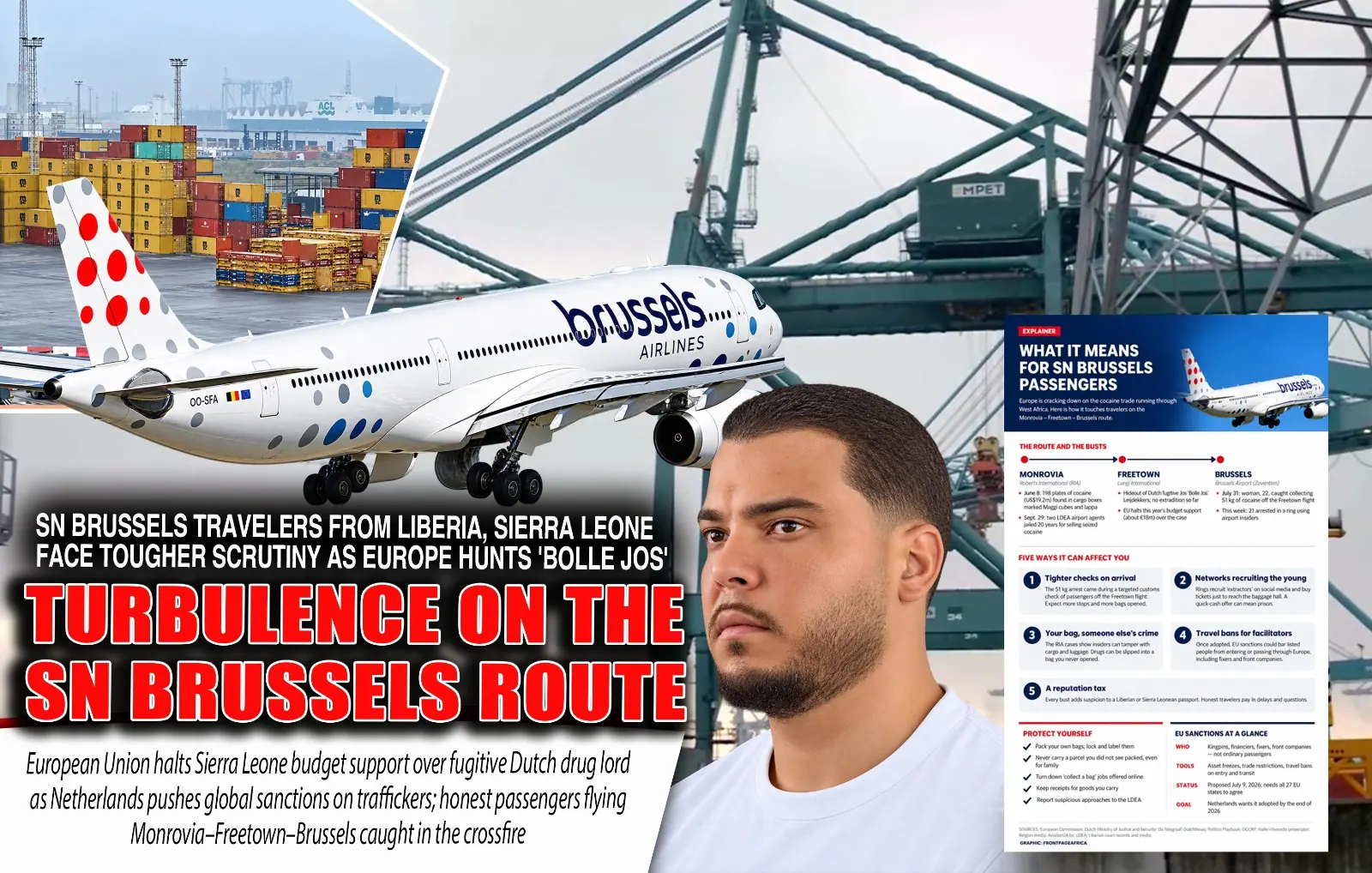
The Brussels Airlines flight, commonly referred to as "SN" by travelers, has become a focal point in the fight against drug trafficking in West Africa. For many Liberian and Sierra Leonean families, this flight is a vital link to Europe, carrying not only passengers but also goods and commodities. However, investigators in Monrovia and Brussels have discovered that this route has been exploited by drug networks. Recently, Belgian customs officers intercepted 51 kilograms of cocaine at Brussels Airport, which was hidden in two suitcases that had not been on the flight.
The incident at Brussels Airport was not an isolated case. In July, Liberian security officers at Roberts International Airport (RIA) flagged six cargo boxes labeled as Maggi cubes and lappa, which contained 198 compressed plates of cocaine valued at $19.2 million. The shipment was bound for Brussels Airlines' Europe-bound operations, with a final destination listed as London. These discoveries have led to increased scrutiny of travelers from Liberia and Sierra Leone, as European authorities attempt to crack down on drug trafficking.
At the center of Europe's efforts to combat drug trafficking is Jos Leijdekkers, a notorious Dutch drug trafficker known as "Bolle Jos" (Chubby Jos). Leijdekkers, who has been sentenced to over 100 years in prison in Belgium and 24 years in the Netherlands for cocaine trafficking and attempted assassination, is believed to be hiding in Sierra Leone. Dutch media reported that he has been living in Sierra Leone under the name "Omar Sheriff," posing as a wealthy investor, and has bodyguards from Ghana and South Africa.
The Netherlands and Sierra Leone have no extradition treaty, which has complicated efforts to bring Leijdekkers to justice. Despite a formal extradition request from the Netherlands, Freetown has yet to sign off on it. In response, the European Union has announced that it will no longer provide budget support to Sierra Leone this year, citing the country's lack of cooperation on Leijdekkers' extradition. The suspension, valued at €18 million for 2026, aims to pressure the Sierra Leonean government to take action against the notorious drug trafficker.
The EU's decision to freeze aid to Sierra Leone has been welcomed by Dutch authorities, who have been working to bring Leijdekkers to justice. The Dutch government has also worked with neighboring countries, including Liberia and Ghana, to increase pressure on Freetown to cooperate. Ghana has already taken action, arresting three men accused of representing Leijdekkers' network in September. The incident highlights the complex web of international cooperation and pressure needed to combat drug trafficking in West Africa.
Liberia itself has faced challenges in combating drug trafficking, with several high-profile cases highlighting the country's vulnerabilities. In July, police charged five men and a cargo firm with smuggling 237.6 kilograms of cocaine through Roberts International Airport. The case has stalled due to delays in processing certified records, but investigators have followed leads to uncover a suspected cocaine cache valued at $50 million. Additionally, two LDEA agents were convicted of taking bribes and selling seized cocaine, highlighting the need for stronger anti-corruption measures.
As European authorities continue to tighten checks on travelers from Liberia and Sierra Leone, passengers are likely to face increased scrutiny and delays. The cases of Leijdekkers and others have highlighted the critical role that West Africa plays in the global drug trade, with an estimated one-third of cocaine reaching Europe passing through the region. As international pressure mounts on Sierra Leone to cooperate with Leijdekkers' extradition, travelers can expect continued vigilance from authorities seeking to disrupt the flow of illicit goods.
Key points
- The European Union has suspended €18 million in budget support to Sierra Leone due to the country's lack of cooperation on the extradition of Jos Leijdekkers, a notorious Dutch drug trafficker.
- Liberian and Sierra Leonean travelers may face increased scrutiny and delays as European authorities tighten checks in an effort to capture Leijdekkers and disrupt the flow of illicit goods.
- The cases of Leijdekkers and others have highlighted the critical role that West Africa plays in the global drug trade, with an estimated one-third of cocaine reaching Europe passing through the region.