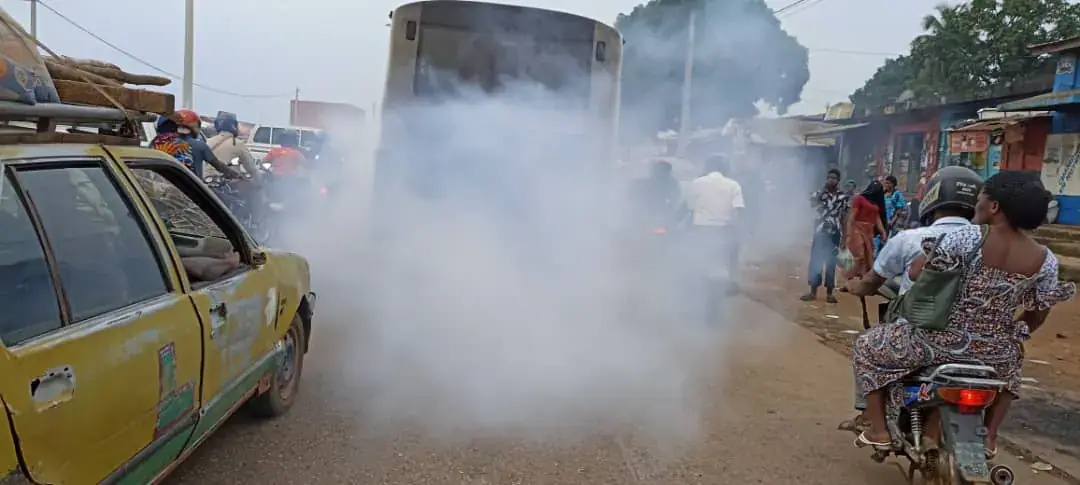
In Guinea, a common sight is that of old, worn-out vehicles emitting thick white smoke from their exhaust pipes, causing distress to those around them. This smoke not only obstructs the vision of drivers but also poses serious health risks to pedestrians, motorcyclists, and other road users. The smoke can cause respiratory problems, irritate the eyes, nose, and throat, and even trigger asthma attacks.
The cause of this phenomenon is often a mechanical malfunction, such as a leak in the cooling liquid, problems with injection or combustion, or general engine wear and tear. While the technical aspects may be complex, it is essential to understand that these issues can have severe consequences. Vehicle owners are advised to consult with mechanics or specialists to better comprehend the problems and find solutions.
The consequences of these pollutants on individuals, traffic, and road safety are significant. Prolonged inhalation of these gases and fumes can lead to acute irritations and even more severe health issues. Furthermore, the thick smoke reduces visibility, increasing the risk of accidents, particularly rear-end collisions and crashes.
The impact of these pollutants extends beyond individual health risks, contributing to a broader environmental problem. The massive release of pollutants degrades urban air quality, forming a toxic, invisible fog that affects everyone. This phenomenon is closely linked to climate change, as these old or poorly maintained vehicles actively contribute to environmental pollution and global warming by emitting fine particles and greenhouse gases.
The necessity of technical inspections cannot be overstated. However, in Guinea, it is common to see old, dilapidated vehicles operating in urban and rural areas. This tolerance can have severe long-term consequences, compromising not only the comfort and aesthetics of urban life but also the entire chain of urban sanitary and environmental security.
The Guinean government and relevant authorities must take action to address this issue. Implementing and enforcing strict regulations on vehicle maintenance and emissions can significantly reduce the number of polluting vehicles on the road. Additionally, public awareness campaigns can educate vehicle owners about the risks associated with old, poorly maintained vehicles and encourage them to take proactive steps to address these issues.
In conclusion, the problem of polluting old vehicles in Guinea requires immediate attention. By understanding the causes and consequences of this issue, stakeholders can work together to find effective solutions. The health, safety, and environmental well-being of the Guinean people depend on it.
Key points
- The pollution from old vehicles in Guinea causes significant health risks, including respiratory problems and increased accident rates.
- The problem is also closely linked to climate change, as these vehicles contribute to environmental pollution and global warming.
- Implementing and enforcing strict vehicle maintenance and emissions regulations can help address this issue.