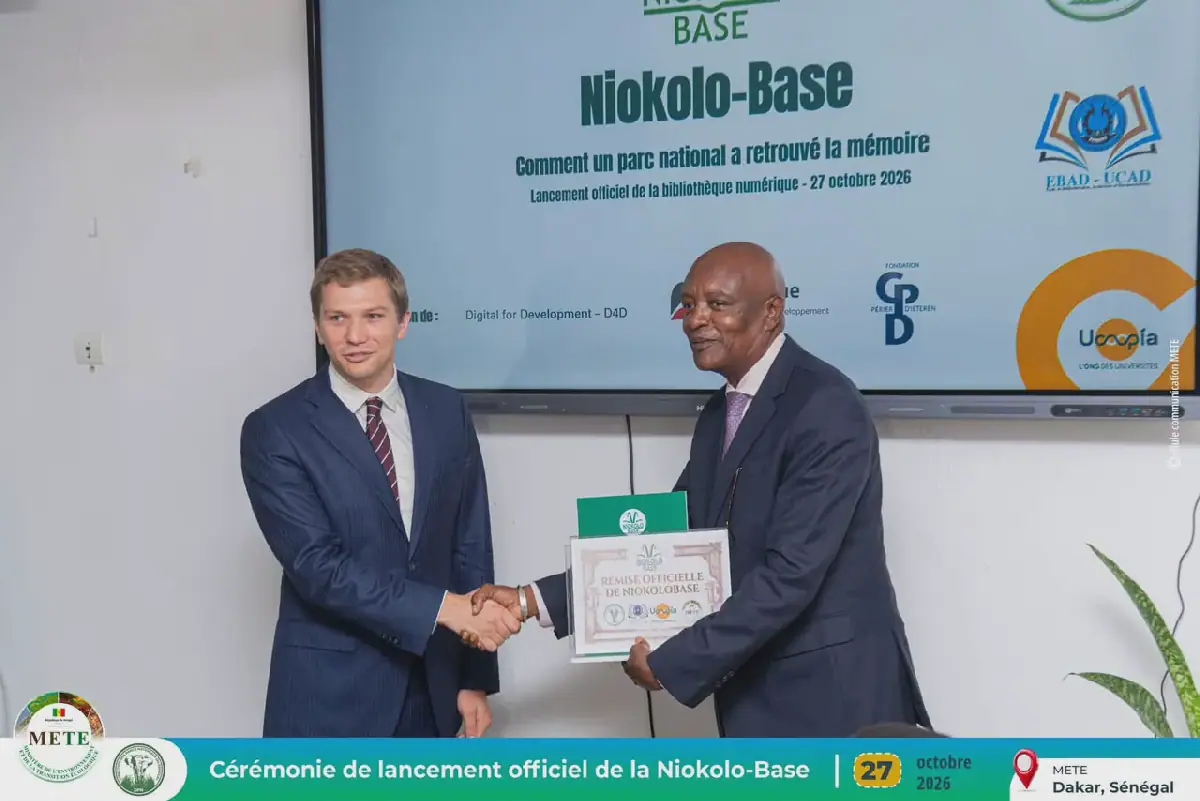
The Senegalese government has taken a significant step towards preserving its natural heritage with the launch of Niokolo-Base, a digital library dedicated to the documentation of Niokolo-Koba National Park. The park, inscribed on the UNESCO World Heritage list in 1981, is home to a rich array of biodiversity, fauna, and flora. The digital library is the result of a collaborative effort between the Ministry of Environment and Ecological Transition, the NGO Ucoopia, and the École nationale des bibliothécaires, archivistes et documentalistes (EBAD) of the University Cheikh Anta Diop in Dakar.
Niokolo-Base aims to centralize and make accessible the wealth of knowledge accumulated over the years on the park's ecosystems, biodiversity, and management. The digital library will serve as a valuable resource for park rangers, researchers, students, and conservationists, facilitating research and informed decision-making. By providing easy access to documentation, Niokolo-Base is expected to support scientific research and enhance the protection of this nationally and internationally significant natural area.
The development of Niokolo-Base involved the digitization of a vast array of documents, including reports, studies, and research papers. This initiative is part of a broader effort to promote the sustainable management of natural resources in Senegal. The digital library will not only support conservation efforts but also contribute to the preservation of Senegal's cultural heritage by making historical and scientific documents available online.
The launch of Niokolo-Base has been welcomed by conservationists and researchers, who see it as a vital tool for protecting the park's unique biodiversity. Niokolo-Koba National Park is home to a wide range of species, including chimpanzees, lions, and elephants. The park's ecosystems, which include savannas, forests, and wetlands, are of great ecological importance and require careful management to ensure their long-term conservation.
The Ministry of Environment and Ecological Transition has emphasized the importance of Niokolo-Base in supporting the sustainable development of Senegal's natural resources. The digital library is seen as a key component of the government's strategy to promote environmental conservation and protect the country's natural heritage. By making information more accessible, Niokolo-Base is expected to engage a wider audience in conservation efforts and promote a culture of sustainability.
Niokolo-Base is also expected to support education and research in the fields of ecology, conservation biology, and environmental science. The digital library will provide students and researchers with a valuable resource for studying the park's ecosystems and biodiversity. This, in turn, is expected to contribute to a better understanding of the park's ecological importance and inform conservation efforts.
The development of Niokolo-Base demonstrates Senegal's commitment to preserving its natural heritage and promoting sustainable development. The digital library is a significant step towards achieving these goals and is expected to have a lasting impact on conservation efforts in the region. Key partners in the development of Niokolo-Base include the NGO Ucoopia and the École nationale des bibliothécaires, archivistes et documentalistes (EBAD).
Key points
- The digital library will support conservation efforts and promote sustainable development in Senegal.
- Niokolo-Base will provide access to a wealth of information on the park's ecosystems, biodiversity, and management.
- The development of Niokolo-Base involved collaboration between government agencies, NGOs, and academic institutions.