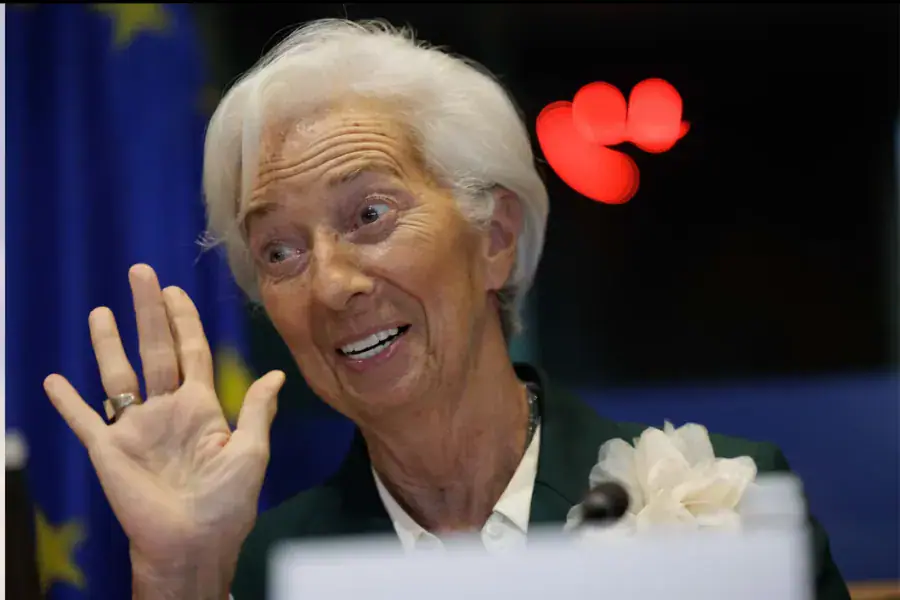
Christine Lagarde, the President of the European Central Bank (ECB), has announced that she will be leaving her position on February 7, 2027, nearly nine months before her term was set to expire in October. Lagarde, who is 70 years old, has had a distinguished career in finance, having held several influential positions, including French Minister of Economy under President Nicolas Sarkozy and Managing Director of the International Monetary Fund.
Lagarde's career has been marked by her ability to navigate complex global economic issues, including the 2008 financial crisis, the COVID-19 pandemic, and the war in Ukraine. Despite not having a background in economics, she has become a prominent figure in the financial world, known for her elegance and authority. Her departure from the ECB will likely have significant implications for the bank's future policies.
Lagarde has been a trailblazer for women in finance, having held positions that were previously dominated by men. She has spoken about the challenges she faced as a woman in a male-dominated field, including being denied a job because of her gender. Her experiences have made her a role model for many young women aspiring to careers in finance.
During her tenure at the ECB, Lagarde has been known for her efforts to listen and find compromises, often using the symbol of the owl to represent her approach. However, her time at the bank has not been without controversy, including tensions with some staff members and criticism of her communication style.
Lagarde has cultivated a distinct image, different from the traditional banker, using social media to connect with a wider audience. In Germany, she has been less criticized than her predecessor, Mario Draghi, although she was sometimes referred to as "Madame Inflation" due to her role in addressing rising prices.
While Lagarde has stated that she does not plan to return to French politics, she has not ruled out other public roles. She has been mentioned as a potential candidate to lead the World Economic Forum in Davos. For now, she plans to focus on her personal life, including spending more time with her grandchildren and participating in coral conservation efforts.
Lagarde's legacy at the ECB will be complex, with some praising her efforts to address the challenges facing the European economy, while others have criticized her approach. Her departure will undoubtedly have significant implications for the bank's future direction.
Key points
- Christine Lagarde will leave the European Central Bank on February 7, 2027.
- Lagarde has had a distinguished career in finance, holding several influential positions.
- Her departure from the ECB will likely have significant implications for the bank's future policies.