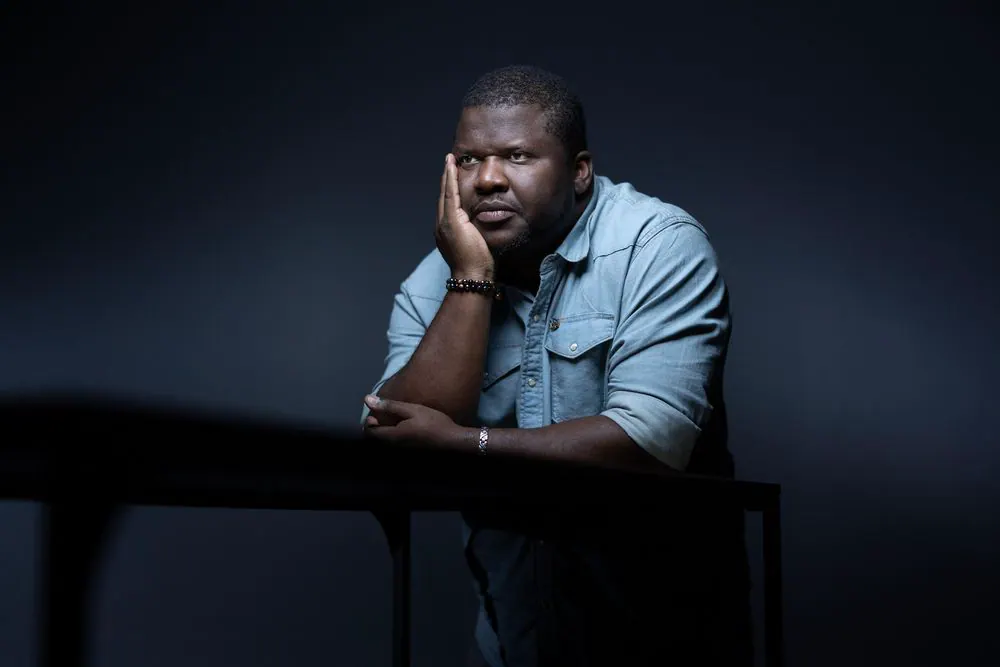
The controversy surrounding Canadian-Haitian writer Thelyson Orelien's novel 'C'était ça ou mourir' has sparked debate about the reliability of AI detectors. Orelien was accused by an anonymous account on X of using AI to write his best-selling debut novel, which has been sold to publishers in over 20 countries. The accusation was made after an AI-detecting program called Pangram concluded that the tale of a Haitian migrant traveling to Canada had been largely written by a text-generator.
Orelien denies the allegations and has stated that he will prove that he wrote the book. He described the writing process as being "with my guts and my heart." Various AI detection tools were run on excerpts of the book, producing a range of results from "very likely" to have been written by a human to "100 percent" AI-generated. This inconsistency has raised questions about the accuracy of these tools.
Dozens of AI detection tools are now available online, many designed for use in education or publishing. These tools compare large troves of AI-generated text with content written by humans. Researchers at the University of Chicago found that Pangram achieved "near-zero error rates" on medium-to-long extracts in a paper published in October 2025.
The detection systems look for "linguistic tics" such as triadic phrasing or em dashes, which were common in generated texts due to training on American scientific writing or novels. Pangram claims to detect AI text by analyzing subtle cues in writing, including repetitive words or phrases and monotonous sentence structures.
However, the performance of these tools is not without limitations. Thierry Poibeau, a researcher at France's national CNRS research institute, notes that AI programs are constantly evolving, making it a "moving target problem" for detection systems. Additionally, the tools may pick up on repetitive patterns that could be a writer's style, rather than AI-generated text.
Some experts have questioned the accuracy of Pangram's results, citing the risk of false positives. Benoit Raphael, an entrepreneur and writer, used Pangram to test Orelien's work and found that it rated at around 100 percent AI-generated. Critics had also raised doubts about the book's writing style, describing it as formulaic and lacking a unique voice.
The controversy highlights the challenges of detecting AI-generated text and the need for more in-depth investigations. As AI technology continues to evolve, it is essential to develop more accurate detection tools that can distinguish between human and AI-generated writing. The reliability of AI detectors will remain under scrutiny as the use of AI-generated text becomes more prevalent.
Key points
- The use of AI detectors to identify AI-generated text is being questioned after a Canadian-Haitian writer was accused of using AI to write his novel.
- The detection systems look for "linguistic tics" such as triadic phrasing or em dashes, but may pick up on repetitive patterns that could be a writer's style.
- The controversy highlights the challenges of detecting AI-generated text and the need for more in-depth investigations.