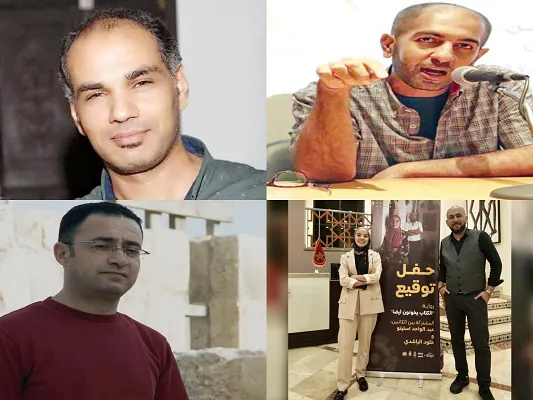
The digital literature scene in Morocco and the Arab world is undergoing a significant transformation. With the rise of digital media, authors are now leveraging technology to produce and distribute their work. This shift has led to the emergence of new forms of storytelling, where artificial intelligence plays a crucial role. According to Jordanian writer and novelist Muhammad Snajella, the digital revolution has given birth to a new era of literature, one that blurs the lines between reality and virtual reality.
Snajella, a pioneer in digital literature, argues that the information revolution has created a new dimension of time and space. This new reality, which he terms "supernatural time," has enabled writers to experiment with innovative narrative styles. He cites the example of his own novel, "Chat," which explores the intersection of technology and human experience. By embracing digital tools, writers can now create immersive stories that transcend traditional boundaries.
Another author pushing the boundaries of digital literature is Iraqi writer Dhia Jabieli. His novel, "The Curse of Marquez," is a prime example of how technology can be used to craft a unique narrative. The story revolves around a mysterious manuscript written in an unknown language, which the protagonist attempts to decipher. Through this narrative, Jabieli explores the possibilities of digital storytelling and the role of the reader in shaping the narrative.
The use of artificial intelligence in literature raises important questions about authorship and creativity. As AI algorithms become more sophisticated, they are increasingly capable of generating complex texts. This has led to concerns about the role of human writers in the digital age. Can AI truly create literature, or is it simply a tool for human authors? These questions are being debated by scholars and writers across the Arab world.
In Morocco, the literary scene is also embracing digital innovation. With the rise of online platforms and social media, writers are now able to connect with readers and share their work more easily. This has created new opportunities for emerging writers and has helped to democratize the literary landscape. However, there are also concerns about the impact of digital technology on traditional forms of storytelling.
The intersection of literature and technology is also giving rise to new forms of collaboration. The novel "The Writers Betray Each Other," co-authored by multiple writers, is an example of this trend. By working together and leveraging digital tools, authors can create complex and innovative stories that reflect the diversity of the Arab world.
As the digital literature scene continues to evolve, it is clear that the future of storytelling will be shaped by technology. With the rise of AI and digital media, writers are now able to experiment with new forms and styles. While there are challenges to be addressed, the opportunities for innovation and creativity are vast. As Muhammad Snajella notes, "The writer is an adventurer, just like the human being."
Key points
- The rise of digital literature in Morocco and the Arab world is transforming the way stories are told and consumed.
- Artificial intelligence is playing an increasingly important role in the creation and distribution of literary works.
- The intersection of literature and technology is giving rise to new forms of collaboration and innovation in the Arab world.