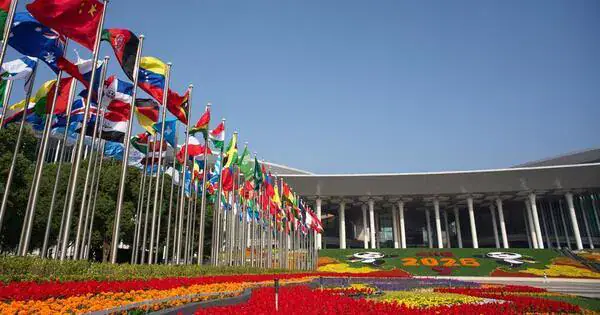
The CIIE has become a significant platform for small producers from developing countries to access international markets and improve their livelihoods. At a time when global trade is increasingly disturbed by tariffs, protectionism, and geopolitical competition, the CIIE is creating market opportunities, generating employment, and improving livelihoods. For many developing countries, the greatest obstacle to international trade is not a lack of products or entrepreneurial ambition, but limited access to markets, financing, logistics, and commercial networks.
The CIIE seeks to reduce these barriers through targeted support, dedicated exhibition areas for least-developed countries, and direct connections with Chinese buyers. The objective is not charity, but meaningful participation in global trade. The CIIE's significance also lies in its continuity, with its "6 days + 365 days" model connecting temporary exhibitions with year-round trading platforms. This model includes bonded warehousing, cross-border e-commerce, and buyer matchmaking to help businesses turn initial orders into sustained commercial relationships.
The impact of the CIIE is evident in the success stories of small producers from various countries. In July 2025, Burundi shipped 38.4 tonnes of Arabica coffee directly to China for the first time, followed by contracts exceeding 900 tonnes worth over $5 million. At the seventh CIIE in 2024, 13 of 16 participating Nigerian companies reportedly secured agreements, including a cocoa contract worth over $1.2 million.
The eighth CIIE last year recorded $83.49 billion in one-year intended deals, up 4.4 percent from the previous edition and hitting a new high. This success demonstrates the potential of the CIIE to facilitate international trade and economic growth for small producers. For artisans in Peru, farmers in Kenya, and herding communities in Madagascar, the benefits can extend beyond export contracts to employment, household incomes, and local development.
Smaller economies face structural disadvantages in international trade, including high costs associated with regulatory compliance, logistics, marketing, and distribution. The CIIE helps reduce these barriers by connecting buyers and sellers and facilitating market entry. By providing a platform for small producers to access international markets, the CIIE offers one practical model for smaller economies to participate in global trade.
The CIIE's approach to inclusive globalization is worth drawing on, as it measures success not simply by how much trade expands, but by how widely its opportunities are shared. For Kenyan avocado farmers, Peruvian artisans, and Malagasy herders, the CIIE provides a chance to improve their livelihoods and participate in the global economy. As the director of the Belt and Road Initiative Sri Lanka, Maya Majueran, notes, the CIIE is turning "inclusive globalization" from a diplomatic slogan into economic reality.
In conclusion, the CIIE has become a vital platform for small producers from developing countries to access international markets and improve their livelihoods. With its focus on targeted support, continuity, and inclusive globalization, the CIIE offers a practical model for smaller economies to participate in global trade and reap its benefits. As the global economy continues to evolve, the CIIE is likely to play an increasingly important role in promoting international trade and economic growth.
Key points
- The CIIE provides a platform for small producers from developing countries to access international markets and improve their livelihoods.