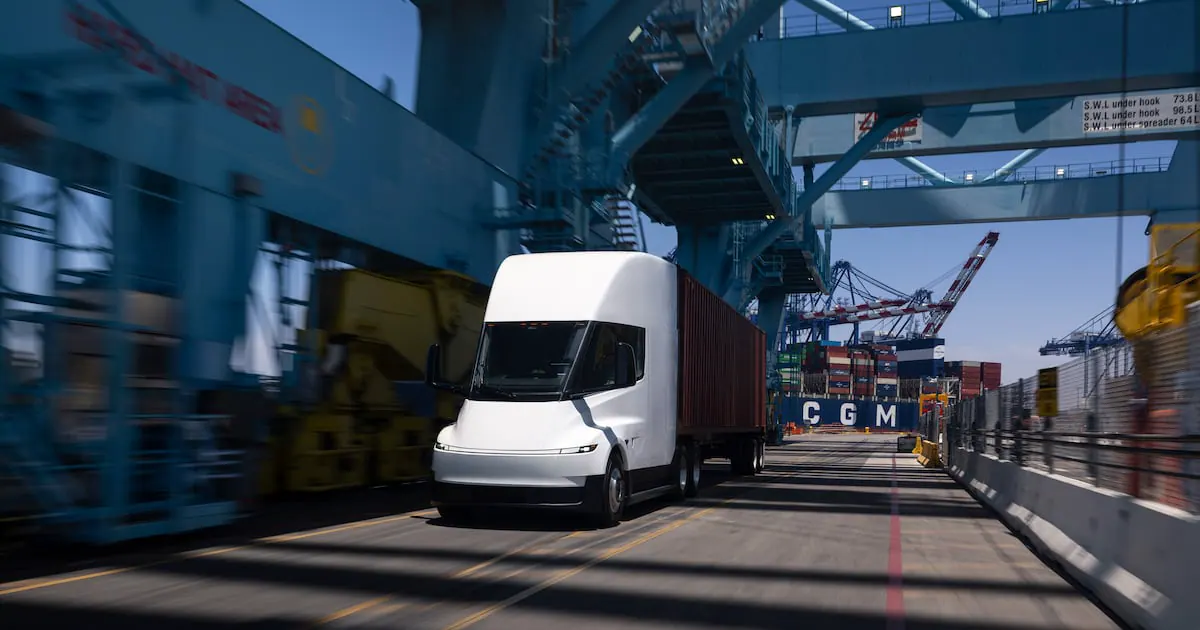
This week, Tesla executives announced the start of deliveries for its Semi electric trucks to an initial set of customers at its Sparks, Nevada plant. The event marked a significant milestone almost nine years after CEO Elon Musk first unveiled the electric big rigs. The Semi trucks are designed for long-haul freight, representing a new market for Tesla, which is known for its electric sedans and SUVs.
The introduction of the Semi trucks comes at a time when diesel prices in the US have reached record highs. Tesla did not disclose production volume plans or pricing of the trucks during a webcast event at the plant. However, the company reiterated its plans to manufacture 50,000 Semis annually at the Nevada plant. Musk did not attend the event but sent a recorded video message, encouraging customers to place more orders.
Customers, including PepsiCo, DHL, and US Foods, were invited on stage, and trucks with their logos were displayed outside. The long-range variant of the Semi truck can drive 800km with one charge, according to Dan Priestley, Tesla's director of Semi truck engineering. This range was validated by Tesla's customers. A standard variant has a range of 520km.
The Semi truck was first unveiled in 2017, with production initially expected to start in 2019. However, the first truck rolled off the high-volume production line in April, and volume production was set to begin this year. Despite this, Tesla's July shareholder letter stated that production of Semi would start in 2026, removing an earlier forecast for volume production this year.
Tesla began limited deliveries to customers, including PepsiCo, in the US in late 2022. The company has faced concerns about demand due to delays, rising competition, and a reversal in EV policies in the US. Nevertheless, Tesla recently received an order for 2,500 Semis from a coalition of major cargo-owning shippers, including Microsoft and PepsiCo, according to clean transportation NPO Catalyst Mobility.
This recent order is significant, nearly doubling the existing US fleet of electric Class 8 trucks, as reported by the NPO. Last month, Swedish freight technology company Einride AB announced a deal to add 500 Semi trucks to its fleet. These developments indicate continued interest in Tesla's electric trucks despite challenges in the market.
As Tesla expands into commercial freight hauling, it faces a changing landscape with rising competition and shifting policies. The company's ability to meet demand and navigate these challenges will be crucial to its success in this new market. With the start of deliveries, Tesla takes a significant step forward in its expansion into the commercial sector.
Key points
- Tesla starts delivering Semi electric trucks to customers, including PepsiCo, DHL, and US Foods.
- The long-range variant of the Semi truck has a range of 800km with one charge.
- Tesla received an order for 2,500 Semis from a coalition of major cargo-owning shippers, including Microsoft and PepsiCo.