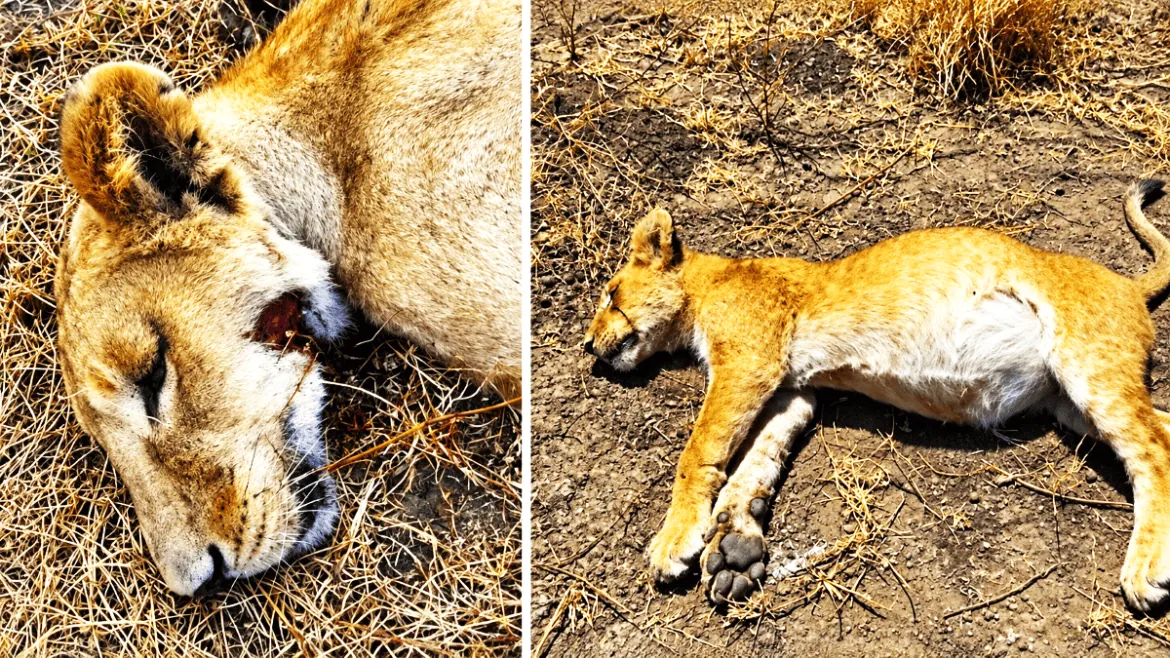
A total of ten lions, possibly from the same pride, were found dead in the Ngorongoro Conservation Area, specifically in the Ndutu plains within the Endulen Ward of Ngorongoro Division. The area is located in the north-western section of Ngorongoro, bordering the Southern Serengeti. The discovery has raised concerns and sparked an investigation into the cause of their deaths.
The Ngorongoro Conservation Area Authority (NCAA) has confirmed that investigations are underway, but the cause of the mass deaths remains a mystery. The area is normally under 24-hour surveillance, which has led to speculation about possible human involvement. Locals also reported finding a dead giraffe in close proximity to the lion carcasses.
The lions that inhabited the Ngorongoro Highlands often moved between the conservation area and the adjacent Serengeti plains. The pride that was discovered dead frequently visited the Masek Gorge area. The Ndutu Lake area, located to the west of the conservation area, is known for its strong lion and cheetah populations.
The Ngorongoro crater is home to over 25,000 large animals, mostly ungulates, and approximately 64 lions. These lions are well-catered for, with abundant hunting grounds, and tend to remain within the caldera. However, the lions found dead at Ndutu were relatively young, which has raised questions about the possible cause of their deaths.
There have been claims that the lions may have been poisoned, possibly in retaliation for attacking livestock. A week prior to the discovery, some donkeys belonging to the Maasai were reportedly killed by wild beasts. However, conservators note that lions rarely consume carcasses of animals they did not hunt themselves, especially among young cats.
The incident has sparked concern, particularly given Tanzania's reputation for having the highest number of lions in the world. According to recent wildlife census results, Tanzania has a total of 17,200 lions, accounting for around 68.5 percent of the global lion population. The Northern Zone circuit, including Arusha, Ngorongoro, Serengeti, Manyara, and Tarangire, holds the largest number of lions, with 5,844 cats, equivalent to 33.7 percent of the total.
The NCAA's investigation aims to determine the cause of the mass deaths and prevent similar incidents in the future. The conservation area is a mixed protected site, where the nomadic pastoralists Maasai coexist with wildlife. The incident highlights the complex relationships between humans and wildlife in the region and the need for continued conservation efforts.
Key points
- The cause of the deaths of the ten lions in the Ngorongoro Conservation Area remains unknown.
- Tanzania has the highest number of lions in the world, with a total of 17,200.
- The incident has raised concerns about human-wildlife conflict and the need for conservation efforts.