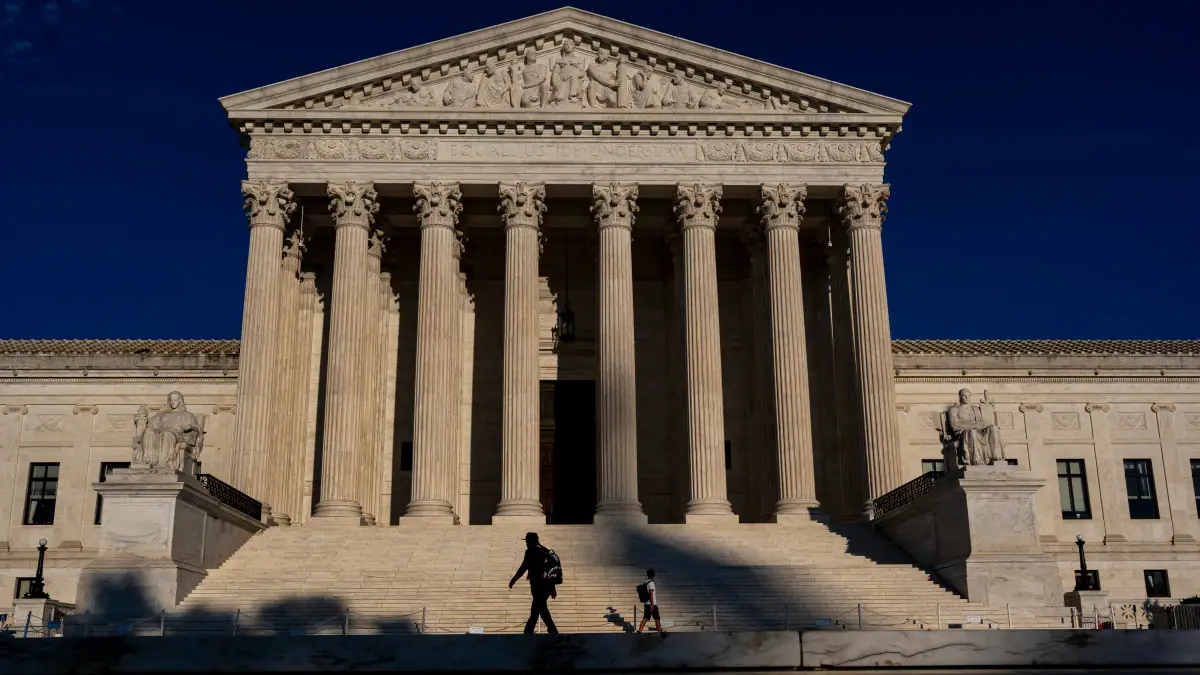
The US Supreme Court will hear a case that could determine whether federal law enforcement officers can be held accountable for violating constitutional rights. The case involves Kekai Watanabe, who was beaten in a federal prison in Hawaii and later diagnosed with a fractured tail bone. Watanabe sued a nurse for violating his Eighth Amendment right against cruel and unusual punishment. The case has sparked debate about the accountability of federal law enforcement officers.
The Supreme Court's decision could have far-reaching implications, particularly in light of rising complaints about Immigration and Customs Enforcement (ICE) agents. Georgetown law professor Steve Vladeck said the case is about whether the country will hold federal law enforcement officers accountable for violating clearly established constitutional rights. The court's decision could either strengthen or weaken the ability of individuals to sue federal officers for wrongdoing.
The case centers on a 1971 precedent known as Bivens, which created a right to sue federal officers for wrongdoing. However, Mary Hampton Mason, a former Justice Department lawyer, said that precedent has been hollowed out over the years. Mason said rogue officers are rare, and problems are typically systemic, resulting from agency culture, training, and other institutional factors.
Supporters of Watanabe argue that allowing individuals to sue federal officers can deter bad behavior and provide a means for individuals to seek redress. Gregory Cui, an attorney at the MacArthur Justice Center, said damages are essential in holding officers accountable and providing a way for individuals to pay for medical care or rebuild their lives.
The grievance process for people inside federal prisons is often ineffective, with inmates succeeding only 1% of the time in changing conditions such as access to medical care. Cui and other legal experts argue that now is not the time for the Supreme Court to eliminate one of the few avenues of accountability for errant officers, particularly given the spotlight on abuses by federal immigration agents.
Both sides agree that Congress has the power to weigh in and provide a clear way for individuals to sue federal officers who have violated their rights. However, lawmakers have not yet advanced legislation to hold those officers accountable. The Supreme Court's decision will have significant implications for the accountability of federal law enforcement officers.
The case has sparked concern among legal experts, who warn that a world with no Bivens would mean federal law enforcement officers would enjoy absolute immunity. Vladeck said this would be a "terrifying" prospect, particularly given the current spotlight on abuses by federal immigration agents. The Supreme Court's decision will be closely watched by those advocating for accountability and transparency in law enforcement.
Key points
- The Supreme Court will hear a case that could determine whether federal law enforcement officers can be held accountable for violating constitutional rights.
- The case centers on a 1971 precedent known as Bivens, which created a right to sue federal officers for wrongdoing.
- The decision could have far-reaching implications, particularly in light of rising complaints about ICE agents.