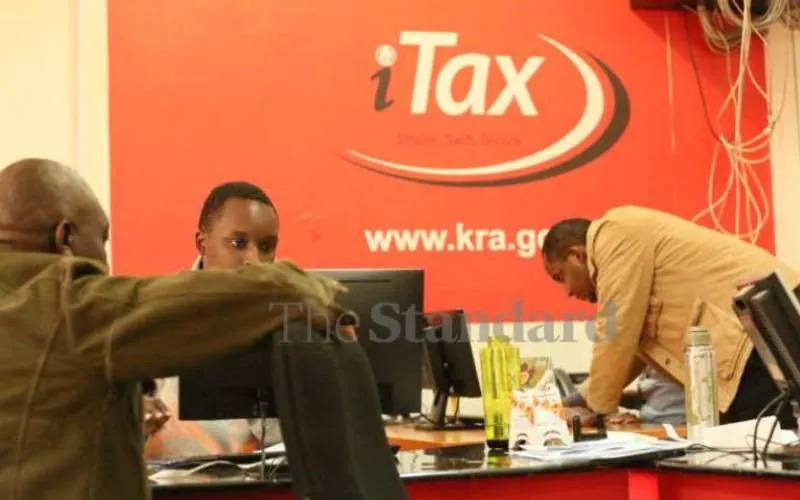
The Kenya Revenue Authority (KRA) recently lost a case at the Supreme Court against Export Trading Company Limited, a firm importing rice from Pakistan. The dispute centered on a faulty tax rate calculation by KRA's automated system, Simba, which incorrectly charged the company 35 percent instead of the correct rate. The Supreme Court ruled that taxpayers should not be held liable for system errors, emphasizing the need for fairness and accountability in government decision-making.
The case began when KRA's Simba system failed to differentiate between countries, incorrectly charging Export Trading Company Limited a 35 percent tax rate instead of the higher 75 percent rate applicable to other countries. Four years later, KRA demanded the company pay the difference, approximately Sh500 million. The company refused, and the case was taken to court. The Supreme Court's decision was based on the principles of legitimate expectation, procedural fairness, and Article 47 of the Constitution.
The court's ruling highlighted the concept of legitimate expectation, which implies that individuals who follow a government-created process in good faith should not be penalized later for mistakes made by the system. In this case, Export Trading Company Limited relied on KRA's system to calculate its tax rate and paid accordingly. The court agreed that this created a legitimate expectation that the company would not be punished for a mistake it did not make.
The Supreme Court also emphasized the importance of procedural fairness in government decision-making. The court found that KRA's decision to demand payment almost four years after the fact, without a proper explanation for the delay, was irrational, arbitrary, and unfair. This ruling underscores the need for government bodies to follow fair processes when making decisions that affect citizens.
Article 47 of the Constitution guarantees every person the right to administrative action that is lawful, reasonable, and procedurally fair. The court explained that this protection exists to safeguard people's legitimate expectations of fair process, not just to serve as an empty promise. In essence, government bodies cannot simply do what is convenient for them; they must follow a process that is fair to the person on the other end.
The Export Trading Company case has far-reaching implications for taxpayers who have encountered issues with government digital systems, such as iTax, eCitizen, and NHIF. The court's ruling sets a precedent that when a government system makes a mistake, the person who relied on that system in good faith should not automatically be the one who pays for it. Fairness and accountability sit with the institution that built and controls the system.
The law is now clear: taxpayers should not bear the cost of system errors. The next time a citizen encounters a glitch in a government portal, they can take comfort in knowing that the law may already be on their side. This ruling serves as a reminder to government agencies to ensure their systems are accurate and reliable, and to take responsibility for any errors that may occur.
Key points
- The Supreme Court ruled that taxpayers should not be held liable for system errors made by government agencies.
- The case was based on the principles of legitimate expectation, procedural fairness, and Article 47 of the Constitution.
- The ruling sets a precedent for taxpayers who have encountered issues with government digital systems.