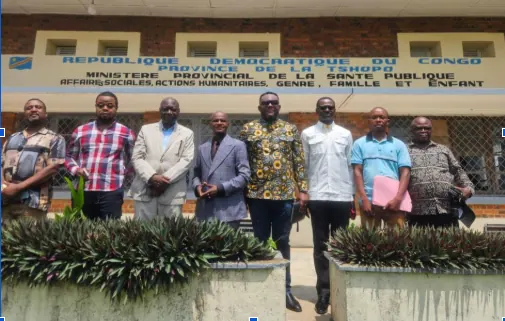
The Congolese press agency reports that the sixth edition of the "Kongo River" festival, held in Kisangani, Tshopo's capital, emphasized the importance of preserving and rebranding local heritage. The festival's theme, "From Heritage to Prosperity: Tshopo at the Heart of Congo Basin Opportunities," highlights the potential for cultural, ecological, and tourist development. According to the festival's report, local communities can generate employment, boost tourism, and attract investment in creative industries by structuring and professionalizing their culture.
The festival featured a series of scientific conferences with experts in environmental, cultural, and eco-tourism issues. Over 150 participants, including researchers, economic operators, public authorities, cultural and tourism actors, community representatives, and young entrepreneurs, gathered to discuss heritage, biodiversity, eco-tourism, green industry, and territorial development. The conferences identified six key areas for development: culture as infrastructure, the river as a territorial system, eco-tourism as a complete chain, biodiversity as capital, green industry, and regional cooperation within the Congo Basin.
The report noted that the festival demonstrated how various stakeholders, including the Wagenya Falls, Maele Island, the Congo River, riverine community knowledge, artists, researchers, entrepreneurs, and institutions, can contribute to territorial development. The event also included activities such as school competitions, a pedagogical program, and a cultural event at the Wagenya Falls. Furthermore, the fourth Kisangani Piroguiers' Race took place, featuring a women's prologue.
Four pilot projects were selected to boost eco-tourism and support local communities. These projects include transforming the Wagenya Falls into a community ecotourism village, developing Maele Island as a site for memory, nature, and river discovery, establishing Conkim Lodge as an eco-tourism and scientific tourism hub, and organizing the Pool Malebo Piroguiers' Race. The festival's report recommended that these projects be included in a portfolio of projects to be developed and implemented.
To ensure the success of these initiatives, the festival organizers suggested establishing a permanent data collection system to measure the results of these projects. This would enable stakeholders to track progress and make informed decisions. The report emphasized that the "Kongo River" festival aims to promote sustainable development and improve the livelihoods of local communities.
The 2026 edition of the "Kongo River" festival, dubbed "Singa Mwambe," successfully brought together various stakeholders to discuss the potential of Tshopo's heritage. The event demonstrated that, with proper structuring and professionalization, local culture can generate employment, boost tourism, and attract investment. By preserving and rebranding their heritage, local communities can unlock new opportunities for economic growth and development.
The "Kongo River" festival has become a significant platform for promoting cultural, ecological, and tourist development in the Tshopo province. By engaging local communities, researchers, and stakeholders, the festival aims to contribute to the sustainable development of the region. The six identified levers of development – culture, river, eco-tourism, biodiversity, green industry, and regional cooperation – provide a framework for future initiatives.
Key points
- Local communities in Tshopo province are being urged to preserve and reevaluate their cultural, tourist, and ecological heritage to unlock new opportunities for economic growth and development.
- The sixth edition of the "Kongo River" festival identified six key areas for development: culture, river, eco-tourism, biodiversity, green industry, and regional cooperation.
- Four pilot projects were selected to boost eco-tourism and support local communities, including transforming the Wagenya Falls into a community ecotourism village and establishing Conkim Lodge as an eco-tourism hub.