An entrepreneur in the Democratic Republic of Congo, Bemba Andy, has recommended that the personal effects and professional objects of Miguel Masaïsaï, a renowned Congolese cyclist who died on September 18, 2026, be conserved at the Genocost memorial in Kinshasa. According to Bemba Andy, these objects are not mere souvenirs but part of Masaïsaï's history and collective memory. He suggested that they be exposed at the memorial for economic gains and to remind future generations of Masaïsaï's journey and commitment to peace.
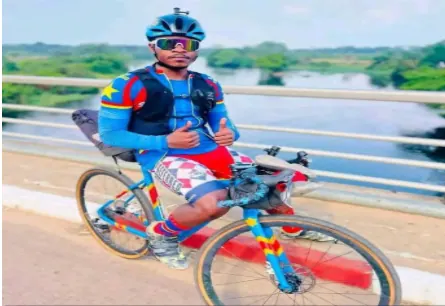
Miguel Masaïsaï was a 25-year-old professional cyclist and triathlete from Goma, North Kivu province. He used sports to tell a different story about the Democratic Republic of Congo. His bicycle became an instrument for travel, awareness, and promotion of peace. Masaïsaï's sports career began in 2018 when he joined the Goma Cycling Club. In 2025, he embarked on an adventure called "Pedals for Peace," aiming to travel across Africa with a message of peace, starting from Cape Town, South Africa, and eventually heading to Rabat, Morocco.
Masaïsaï's journey, "Pedals for Peace," was designed to cover approximately 14,000 kilometers through 17 African countries. He began his trip on May 17, 2025, and faced various challenges, including visa issues, which forced him to change his route. Despite these challenges, he persevered and traveled over 6,500 kilometers through several provinces in the Democratic Republic of Congo, facing long distances, mountains, rains, heat, and mechanical issues. He completed this leg of his journey in 67 days and arrived in Kinshasa on August 5, 2026.
After arriving in Kinshasa, Masaïsaï continued his journey to Congo-Brazzaville on September 6, 2026. He planned to pass through Gabon, Cameroon, and several West African countries before reaching Rabat. In his autobiography, Masaïsaï emphasized that "Pedals for Peace" was a personal initiative, not affiliated with any political movement, party, or armed group. His journey was a testament to his commitment to peace and unity.
Tragically, Miguel Masaïsaï died on September 18, 2026, in Congo-Brazzaville, while continuing his journey to Morocco. His death was met with an outpouring of tributes and recommendations for the conservation of his personal effects. Bemba Andy's suggestion to conserve his belongings at the Genocost memorial highlights the significance of Masaïsaï's legacy and the impact of his journey on the Congolese people.
The Genocost memorial in Kinshasa is a fitting place for Masaïsaï's personal effects, as it serves as a reminder of the country's turbulent past and its ongoing quest for peace and unity. By conserving his belongings, the Congolese people can reflect on Masaïsaï's journey and the values he embodied. Masaïsaï's legacy continues to inspire young people, and his story serves as a reminder of the power of sports to promote peace and unity.
Masaïsaï's "Pedals for Peace" initiative has left a lasting impact on the Congolese people, and his testament continues to inspire young people to work towards a more peaceful and united Africa. His journey may have been cut short, but his legacy will live on, and his personal effects will serve as a reminder of his commitment to peace and unity.
Key points
- Conservation of Miguel Masaïsaï's personal effects recommended at Genocost memorial in Kinshasa
- Miguel Masaïsaï's journey, "Pedals for Peace," aimed to promote peace and unity across Africa
- Masaïsaï died on September 18, 2026, in Congo-Brazzaville, while on his journey to Morocco