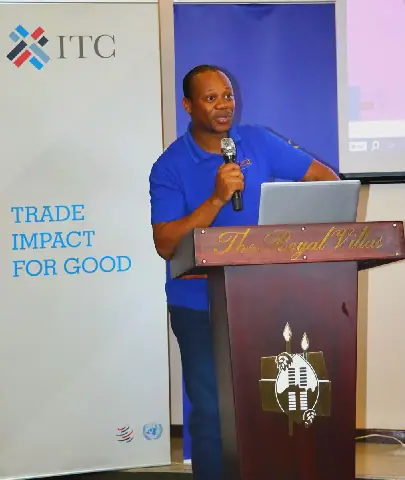
Taxation expert Misheck Msiska has criticized the Malawi Government for its lack of strategic focus in providing tax incentives to boost the country's ailing economy. According to Msiska, the government's approach to tax incentives has not been effective in generating revenue. He was commenting on a United Nations Children's Fund (Unicef) analysis that indicates Malawi has been losing tax revenue through value-added tax (VAT) exemptions.
The Unicef analysis reveals that Malawi's VAT policy gap is estimated at 2.8 percent of the country's gross domestic product (GDP). The analysis suggests that recovering half of this gap could generate revenue equivalent to 1.4 percent of GDP, or approximately K20.8 billion. Msiska advised the government to strike a balance between revenue needs and investment in future revenue requirements.
Msiska recommended that the government provide incentives strategically, focusing on sectors that can help the economy grow and encourage exports. He also emphasized the need to ensure that standards are met for both local and international demand. The expert's comments come as the government faces pressure to increase revenue and boost economic growth.
The Unicef analysis on VAT base rationalization found that only 44 percent of household consumption is subject to VAT, while 40 percent of the VAT base is entirely exempt and another 14 percent is zero-rated. The analysis noted that many exemptions are typical of VAT regimes internationally, reflecting administrative necessity or social objectives.
The analysis also cited research by the UK's Institute for Fiscal Studies, which found that preferential VAT rates benefit people living in poverty but are not well-targeted towards poor households. This is because higher consumption households spend more on exempt and zero-rated goods, accruing a greater share of the benefit.
The Government of Malawi's Domestic Revenue Mobilisation Strategy 2021-26 includes a commitment to reduce the number of VAT exemptions and zero-rated goods. This commitment was reiterated under the November 2023 four-year $175 million Extended Credit Facility with the International Monetary Fund (IMF). The IMF agreement included conditionalities to repeal VAT relief on motor vehicles and eliminate VAT exemptions on business inputs and building materials.
Minister of Finance, Economic Planning and Decentralisation Joseph Mwanamvekha previously stated that the increase in revenue forgone through tax incentives and exemptions had outpaced overall economic growth. He emphasized the need to assess whether these measures are delivering the intended benefits. The government's efforts to increase revenue and boost economic growth are ongoing.
Key points
- Expert Misheck Msiska faults Malawi's government for lacking strategic focus in providing tax incentives.
- Unicef analysis estimates Malawi's VAT policy gap at 2.8 percent of GDP.
- Government committed to reducing VAT exemptions and zero-rated goods under IMF agreement.