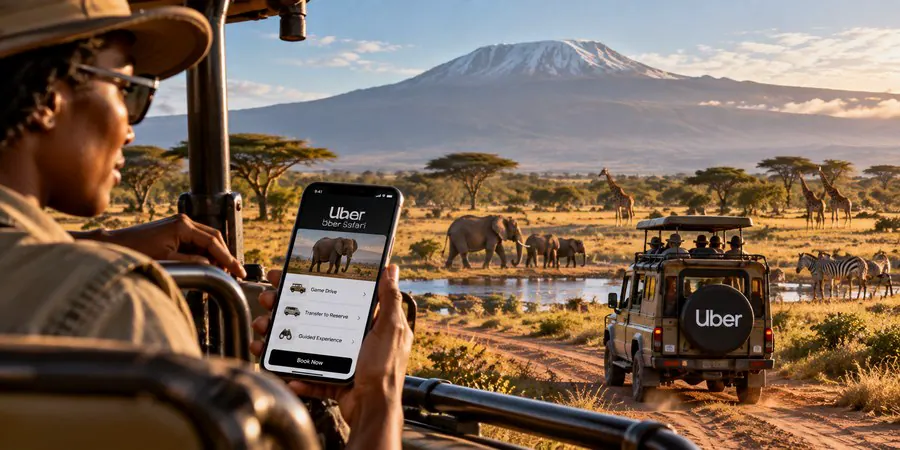
Uber has introduced a new service, Uber Safari Kenya, which provides guided wildlife excursions in Nairobi National Park, a national park located within the Kenyan capital. Launched in September 2025, the service aims to offer business travellers a unique and convenient way to experience Kenya's wildlife without having to travel long distances. The service is an extension of Uber's existing digital model, allowing customers to book through a familiar platform.
The proximity of Nairobi National Park to the city centre, hotels, corporate offices, and international airport connections makes it an ideal location for the service. The park is approximately 10 kilometres from the city centre, making it easily accessible for visitors with limited time. Uber Safari Kenya targets the growing segment of corporate travellers who want a genuine wildlife encounter within a tight schedule.
The service is designed to be a short and condensed experience, with no long-distance travel required. Uber is not competing with multi-day lodge safaris but instead offers a unique experience for visitors who have limited time. The service provides direct access to Nairobi National Park, widely recognised as the only national park inside a capital city, giving it a proximity advantage over rival destinations.
Kenya's tourism sector offers Uber a sizeable commercial opportunity, with tourism earnings reaching approximately KSh500 billion in 2025, equivalent to around US$3.84 billion. The country's tourism industry is a material adjacent market for a platform company with an existing urban customer base. Platform economics favour this move, as adding guided excursions to a ride-hailing network raises revenue per user without proportionate increases in fixed cost.
The safari service is currently a limited offering, but its commercial significance lies in what it signals: ride-hailing platforms can leverage customer networks to enter related mobility and leisure categories at scale. Uber's ability to manage operational demands, such as capable vehicles, qualified guides, and ongoing coordination with Kenya Wildlife Service, will determine how far the service can scale.
Kenya is a strong proving ground for this experiment, combining a large, established tourism economy with Nairobi's role as East Africa's leading business hub. The critical variable is repeat demand, whether business travellers return to the service or treat it as a one-off novelty. Investors should monitor booking volumes, guide partner structures, pricing strategy, and any plans to extend the model beyond Nairobi National Park to other Kenyan destinations.
Uber Safari Kenya is a wildlife excursion service that offers guided trips into Nairobi National Park. The service was launched in September 2025 and targets time-pressed business travellers. By leveraging its existing digital model and platform economics, Uber aims to provide a unique and convenient experience for visitors to experience Kenya's wildlife.
Key points
- Uber Safari Kenya offers guided wildlife excursions in Nairobi National Park, targeting time-pressed business travellers.
- The service is an extension of Uber's existing digital model, allowing customers to book through a familiar platform.
- Kenya's tourism sector offers Uber a sizeable commercial opportunity, with tourism earnings reaching approximately KSh500 billion in 2025.