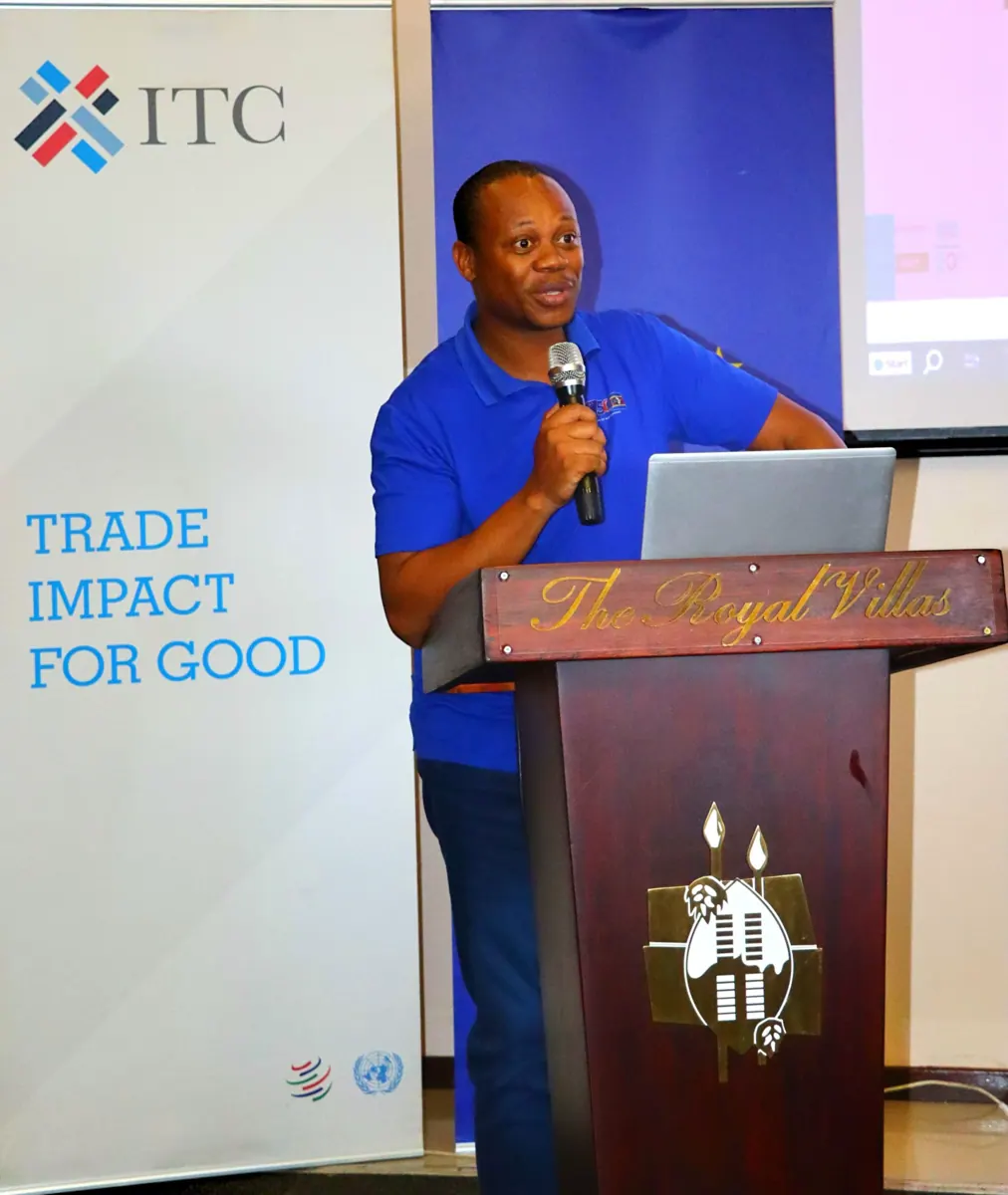
The European Union (EU) and the International Trade Centre (ITC) have collaborated to equip 17 local trainers in Eswatini with skills to use market analysis tools. This initiative aims to strengthen the country's capacity to support exporters and businesses with market intelligence. The trainers represent various institutions, including the Eswatini Investment Promotion Authority (EIPA), Royal Science and Technology Park (RSTP), academia, Small Enterprises Development Company (SEDCO), and government institutions.
The programme, funded by the EU and implemented by ITC in partnership with the government, seeks to expand and diversify Eswatini's export base. The trainers have been equipped with skills to apply ITC market analysis tools within their respective institutions to support micro, small, and medium-sized enterprises (MSMEs), exporters, and other stakeholders. This initiative will enable businesses to access market information and turn trade data into practical decisions on exports, markets, and products.
The Eswatini Investment Promotion Authority (EIPA) has already started using the market intelligence tools to analyze trade trends, identify emerging export opportunities, and provide businesses with evidence-based information. EIPA Manager: External Trade Promotion Thandeka Dlamini stated that the tools have become an essential resource in their work with existing and prospective exporters. The tools enable EIPA to develop market insights and analyze trade trends, supporting traders' business decisions.
The market analysis tools allow users to examine export performance over several years, compare markets and products, identify growth trends, and understand market access conditions. This information provides entrepreneurs with a stronger basis for decisions on where to sell products, which markets to target, and which products may have potential for expansion. It also assists businesses in understanding the requirements associated with different international markets.
Eswatini's traditional export products include sugar, textiles, wood, and chemical products. However, with the market analysis tools, EIPA is able to look beyond these established products and identify products showing growth potential. This enables EIPA to show businesses that there are additional opportunities they can explore for export expansion and diversification.
European Union Policy Officer Bhekani Magongo emphasized that strengthening local expertise in market intelligence is crucial in developing a more responsive trade support ecosystem. The initiative goes beyond simply training individuals to operate digital platforms; it aims to create trusted advisers, mentors, and knowledge multipliers who can help MSMEs identify export markets.
Maintaining the skills of the 17 trainers is essential to ensuring the programme's benefits continue beyond the formal training sessions. The objective is to ensure that the knowledge among all 17 trainers remains active, and they can continue using these tools within their respective organizations, responding to enquiries, analyzing opportunities, and supporting businesses.
Key points
- The EU and ITC have equipped 17 local trainers in Eswatini with skills to use market analysis tools to support exporters and businesses.
- The programme aims to strengthen local expertise so that businesses can access market information and turn trade data into practical decisions on exports, markets, and products.
- Eswatini's export base is expected to expand and diversify as a result of this initiative.