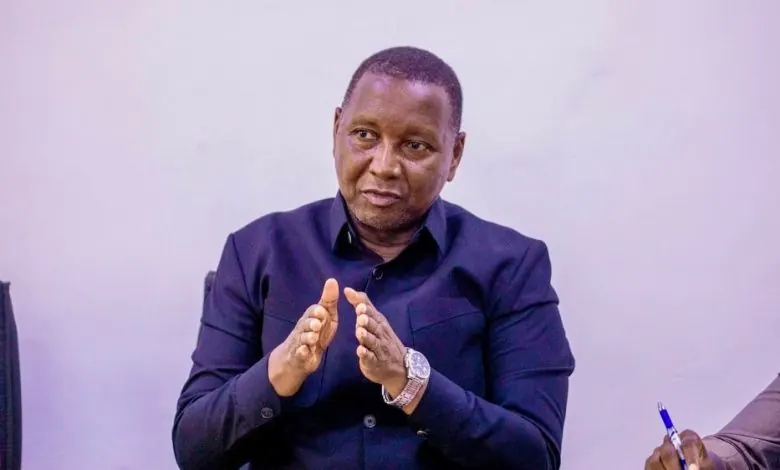
Tanzanian Education Minister Prof Adolf Mkenda has directed councils across the nation to incorporate the Integrated Programme for Out-of-School Adolescents (IPOSA) into their plans and budgets. The programme's success will be measured by the number of young people whose lives improve through education and employment. Mkenda emphasized that IPOSA must move beyond classrooms by creating stronger links between training and jobs, tracking graduates, and helping beneficiaries access credit, markets, and other economic opportunities.
The Minister's speech, delivered on his behalf by Deputy Permanent Secretary Prof Daniel Mushi, was made during the launch of a new IPOSA centre in Tanga. The government and the Korea International Cooperation Agency (KOICA) marked a major milestone after establishing 31 centres in six regions through a three-year, six-million-US-dollar partnership. Mkenda directed the Institute of Adult Education (IAE) to deepen collaboration with the Vocational Education and Training Authority (VETA), the Small Industries Development Organisation (SIDO), Folk Development Colleges (FDCs), and private employers.
The Minister stressed that councils should make IPOSA centres permanent youth development hubs by including the programme in local plans and budgets. Local committees should help graduates access loans, markets, and further training. Mkenda also called for stronger monitoring systems, including digital platforms that would track graduates and use the data to improve the programme and guide policy decisions.
According to IAE Director-General, Prof Philipo Sanga, the project has established 31 IPOSA centres in Tanga, Pwani, Manyara, Shinyanga, Singida, and Simiyu, while improving training infrastructure and building teachers' capacity. He said 149 teachers had completed short-course training, while about 100 others had received sponsorship for diploma studies in vocational education through cooperation between IAE and VETA.
The programme offers vocational training in trades such as carpentry, domestic electrical installation, electronics, tailoring and batik, hairdressing and beauty, masonry, horticulture, motor vehicle mechanics, and welding, depending on local needs. IPOSA provides an alternative learning pathway for young people aged 14 to 19 who are outside the formal education system, combining literacy, numeracy, life skills, vocational training, and entrepreneurship.
The Republic of Korea's Ambassador to Tanzania, Ms Eunje Ahn, said KOICA had invested about 6 million US dollars in the programme over three years, financing the construction of 31 centres, including three model centres and one special centre in Tanga, as well as equipment and facilitator training. She said handing over the centres marked the beginning of a new chapter, with Tanzanian institutions expected to take ownership and ensure the facilities continued serving young people.
Prof Mkenda also stressed equitable access, saying girls and boys, young people with disabilities, rural youth, and other vulnerable groups should all benefit from the programme. The Minister's directives aim to enhance the programme's impact and ensure its sustainability.
Key points
- The programme has established 31 IPOSA centres in six regions.
- IPOSA offers vocational training in various trades.
- KOICA invested 6 million US dollars in the programme over three years.