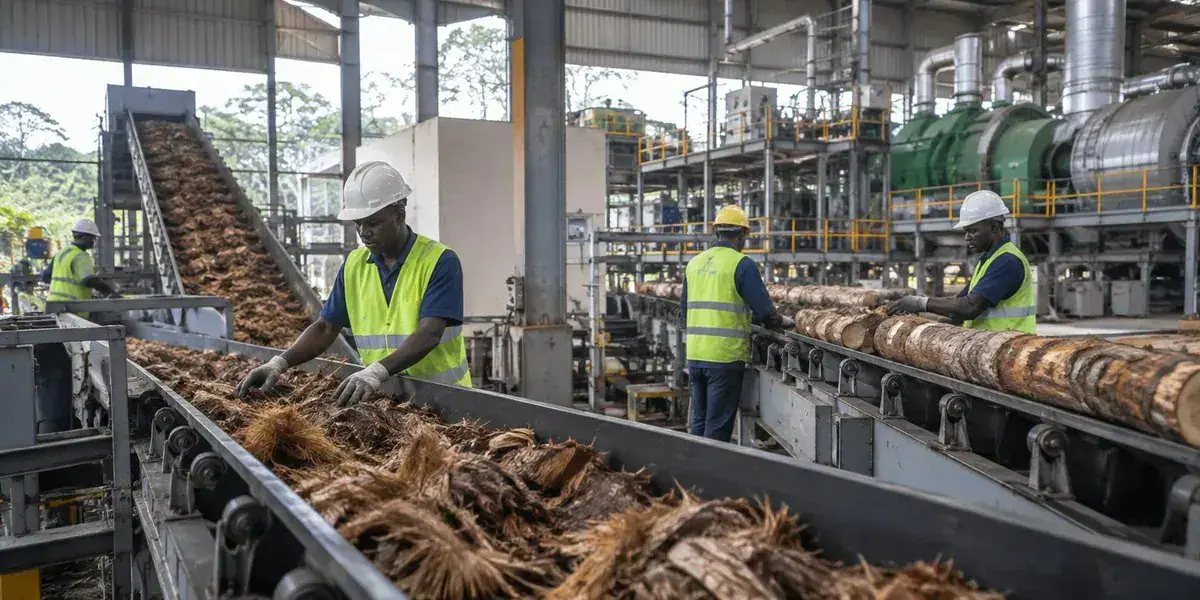
The Biovéa biomass plant, located in the Sud-Comoé region of Côte d'Ivoire, commenced operations on 5 November 2026, near Aboisso at Ayébo. This facility generates 46MW of power from agricultural waste, specifically palm-oil residues and rubber-tree trunks. The plant's location allows for easy access to the country's major agricultural zones, making it an ideal site for harnessing biomass energy.
The Biovéa project is backed by three sponsors: EDF, Meridiam, and SIFCA. The plant's innovative model ties electricity generation directly to agricultural supply chains, providing investors with exposure to both infrastructure returns and rural commercial activity. By utilizing agricultural waste, the plant not only generates power but also offers a commercial outlet for waste materials that would otherwise pose a disposal problem.
The Biovéa biomass plant processes over 540,000 tonnes of biomass annually, producing 348GWh of electricity per year. This output is sufficient to meet the electricity needs of approximately 1.7 million people, providing genuine baseload capacity and reducing Côte d'Ivoire's dependence on a narrower generation mix. According to reports, the project avoids 4.5 million tonnes of carbon dioxide emissions over 25 years, contributing significantly to Côte d'Ivoire's renewable energy goals.
Côte d'Ivoire aims to achieve 45% renewables in its energy mix by 2030, and the Biovéa project is a significant step towards this goal. The plant's feedstock model creates a recurring commercial link between farms, logistics operators, and power buyers, generating steady revenue from waste materials. This innovative approach has the potential to be replicated across different crop bases, making biomass a viable investment opportunity.
The Biovéa project is expected to have a positive impact on local communities, with around 12,000 farmers anticipated to earn income by collecting and selling agricultural residues to the plant. The facility is also expected to create 1,000 direct jobs, strengthening local spending around Ayébo and deepening the supply networks the plant depends on.
Côte d'Ivoire's Minister for Mines, Petroleum, and Energy, Mamadou Sangafowa-Coulibaly, announced two further biomass projects at the Biovéa inauguration. The proposed Divo plant would utilize cocoa residues, while the Boundiali facility would run on cotton stalks. These announcements signal a replicable project structure across different crop bases, with each facility requiring close assessment of collection costs, seasonal supply patterns, and transport distances.
The success of the Biovéa project and the announced Divo and Boundiali facilities will be closely watched by investors in 2027. Key factors to track include the plant's operating performance, feedstock volumes, and progress on the new announcements. A similar push to link local feedstocks to grid-scale output is visible in other African countries, such as Morocco and Mozambique, reflecting a continental trend towards sustainable energy solutions.
Key points
- The Biovéa biomass plant produces 348GWh of electricity per year, meeting the needs of 1.7 million people.
- The project avoids 4.5 million tonnes of carbon dioxide emissions over 25 years.
- The plant creates a recurring commercial link between farms, logistics operators, and power buyers, generating steady revenue from waste materials.
Reporting sources
- Biovéa biomass plant powers 1.7M people in Côte d’Ivoire · FurtherAfrica