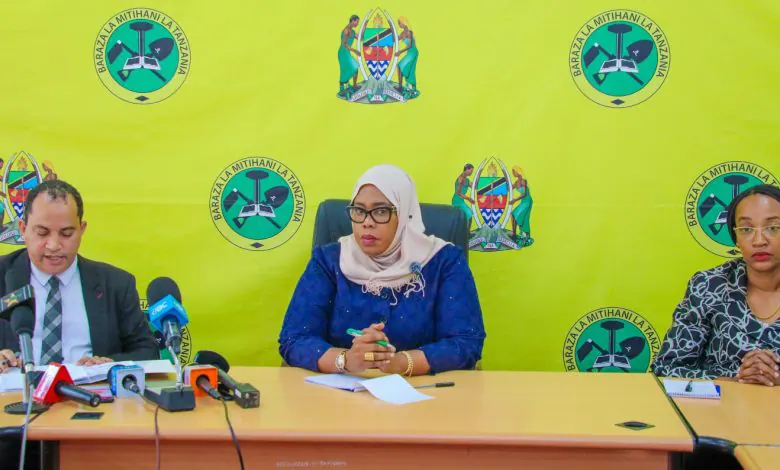
The Tanzanian government has introduced guidelines to incorporate financial education into higher education, technical education, and vocational training curricula. This initiative, jointly implemented by the Ministry of Education, Science and Technology and the Bank of Tanzania, aims to equip graduates with knowledge and skills to manage money and make responsible financial decisions. Deputy Minister for Education, Science and Technology Wanu Hafidh Ameir launched the guidelines in Dar es Salaam, emphasizing the importance of financial education in preparing human resources for national development.
According to Deputy Minister Ameir, financial education is essential in preparing graduates to contribute to national development and achieve the aspirations of the National Development Vision 2050. She thanked President Dr Samia Suluhu Hassan for prioritizing education and promoting human resources with the necessary knowledge, skills, and competencies. Ameir stressed that having a degree, diploma, or certificate is not enough; graduates should be able to apply their education to make better financial decisions. The guidelines will enable graduates to plan and manage income and expenditure, save, invest, borrow responsibly, and identify financial opportunities and risks.
The guidelines are aligned with the National Development Vision 2050, the Education and Training Policy of 2014, the Third National Financial Inclusion Framework 2023–2028, the Financial Sector Development Master Plan 2021/22–2029/30, and Sustainable Development Goal Four. Ameir emphasized that financial literacy is crucial, especially as young people increasingly access financial services digitally. She warned that convenience without adequate financial knowledge can lead to costly decisions for individuals and families. The government expects the guidelines to bring changes in four areas: curricula reflecting financial education, teaching and assessment developing financial competencies, students applying financial knowledge in daily life, and graduates making responsible financial decisions.
Deputy Minister Ameir called on the Tanzania Commission for Universities, National Council for Technical and Vocational Education and Training, and Vocational Education and Training Authority to ensure financial education is reflected in quality control, accreditation, approval, and institutional inspection criteria. Acting Commissioner of the Financial Sector Development Department at the Ministry of Finance, Ms Dionisia Mjema, stated that the guidelines will support the implementation of the National Development Vision 2050 and the Financial Sector Development Master Plan. Mjema noted that financial literacy and consumer protection are key areas for strengthening the financial sector.
The integration of financial education into higher learning curricula is expected to benefit Tanzanian graduates in various ways. They will be equipped with skills to plan and manage their finances effectively, make informed decisions, and avoid costly mistakes. This initiative is also expected to contribute to the country's economic growth and development by producing graduates who are financially literate and capable of making responsible financial decisions. The guidelines will be implemented in collaboration with various stakeholders, including the Bank of Tanzania and the Ministry of Finance.
The launch of the guidelines is a significant step towards promoting financial literacy and education in Tanzania. The government aims to ensure that graduates are well-equipped to manage their finances and make informed decisions in an increasingly complex financial landscape. By integrating financial education into higher learning curricula, the government hopes to produce graduates who are financially savvy and capable of contributing to the country's economic growth and development.
The implementation of the guidelines is expected to have a positive impact on Tanzanian society. By producing financially literate graduates, the government aims to reduce financial exclusion and promote economic growth. The guidelines will also help to protect consumers from financial fraud and promote financial inclusion. Overall, the integration of financial education into higher learning curricula is a significant step towards promoting financial literacy and education in Tanzania.
Key points
- The Tanzanian government has launched guidelines to integrate financial education into higher education, technical education, and vocational training curricula.
- The guidelines aim to equip graduates with knowledge and skills to manage money and make responsible financial decisions.
- The initiative is expected to contribute to the country's economic growth and development by producing graduates who are financially literate and capable of making responsible financial decisions.