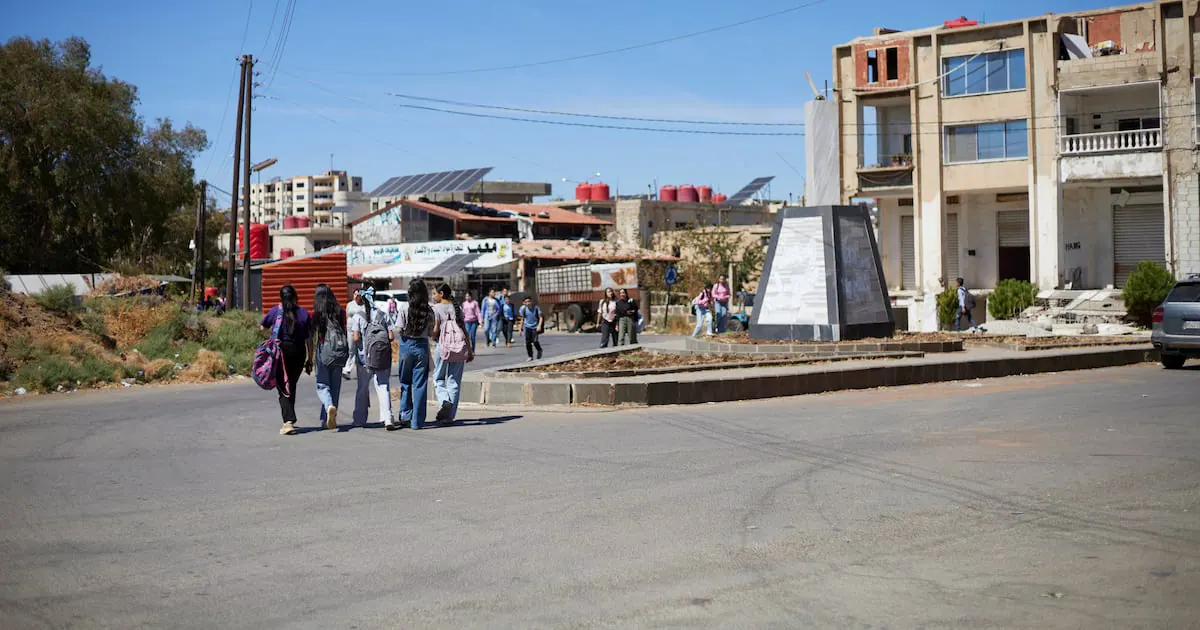
The ongoing conflict in Syria has severely impacted the education system, particularly in Sweida province, where hundreds of Druze were killed last year in sectarian violence. Maram Abu Hamra, a 20-year-old student, had to abandon her architecture studies in Aleppo due to safety concerns. She is now back in Sweida, unable to pursue her dreams. The situation has left many students like Abu Hamra in limbo, with their futures uncertain. The trauma and instability in the province have taken a toll on the students.
Sweida, home to around 700,000 Druze, lies in the southwest, bordering Jordan. The area is largely controlled by forces loyal to Sheikh Hikmat al-Hajari, a Druze cleric who declared his community "part of the state of Israel" in an August video. This move has sparked concerns among Syrian authorities, who aim to reunite the country under a single leadership. President Ahmed al-Sharaa, who overthrew Bashar al-Assad in 2024, has vowed to restore relations with the West and protect the rights of all citizens. However, many Druze remain skeptical about his assurances.
The rift between the Druze leaders and Damascus has resulted in the cancellation of exams for high school and university entry in Sweida. Syrian government troops withdrew from most of Sweida, and Hajari barred them from returning, hardening his stance against integration. He founded an armed faction called the National Guard, which has contributed to the instability in the region. The situation has led to a significant disruption in the education system, with many students unable to take their exams.
Many Druze students studying in other parts of Syria returned to Sweida in 2025, but this year, student exams were disrupted again. The government and Druze factions traded blame for the disruptions. In the spring, Damascus offered to send proctors into Sweida to supervise exams, but some Druze saw it as an attempt to redeploy government forces. The proposal sparked concerns among students and their parents, who fear for their safety.
In August, Damascus proposed that students from Hajari-held areas take their exams in a northern part of Sweida province now held by the government. However, this proposal spooked students and their parents, who fear being labeled as traitors by Hajari's forces. Some Druze, still shaken by the 2025 killings, are hesitant to send their children to government-held territory for exams. The concerns are fueled by the lingering distrust between the Druze community and the Syrian government.
The disruption in the education system has severe consequences for the students. Only 150 of 13,700 school students in Sweida managed to take exams this year that they need to progress into high school or university. The rest, including university students like Abu Hamra, remain in limbo. The situation in Sweida province as a whole remains uncertain, with the area traditionally being fairly autonomous, including during the nearly 14-year civil war.
The international community has been trying to resolve the Sweida dispute. Syria's government, Jordan, and the US agreed on a seven-step roadmap last year, but the UN said in June that it had made "no progress". The situation in Sweida province remains a pressing concern, with many students and their families caught in the middle of the conflict. The uncertainty surrounding their education and future is a stark reminder of the ongoing instability in the region.
Key points
- The rift between Druze leaders and Damascus has severely impacted the education system in Sweida province.
- Many students in Sweida face uncertain futures due to the disruptions in the education system.
- The international community has been trying to resolve the Sweida dispute, but progress has been limited.