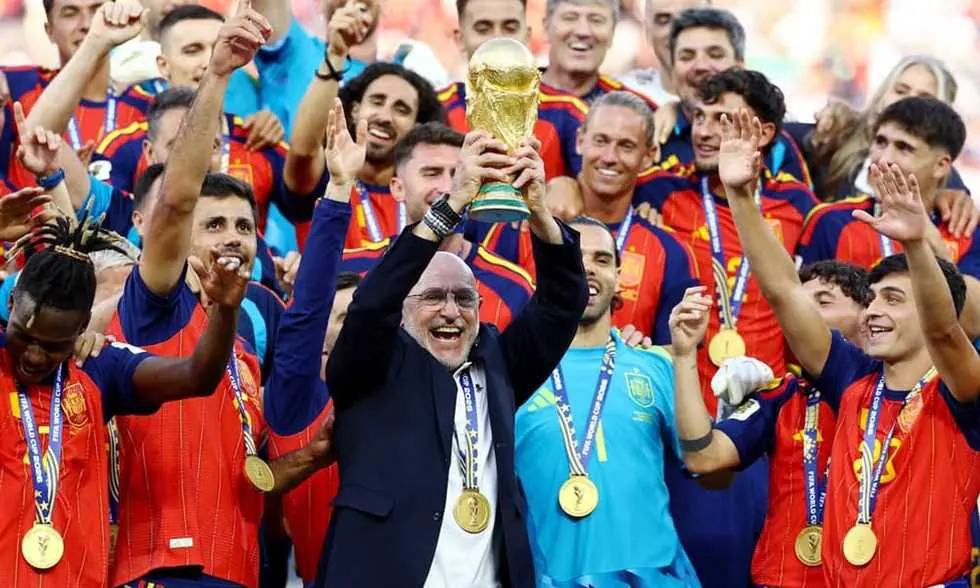
The Fédération Internationale de Football Association (FIFA) has published a comprehensive report analyzing the 2026 World Cup, providing unprecedented insights into how top teams and players are redefining modern football. The report, prepared by FIFA's Technical Study Group and Football Performance Analysis Department, is based on data from all 104 matches of the tournament. Spain won the tournament, defeating Argentina 1-0 in the final with a goal from Ferran Torres.
The report highlights several key tactical trends, including the use of counter-pressing as a double-edged sword. Top teams, such as Spain, successfully converted lost possession into immediate counter-attacks, showcasing their ability to regain the ball and launch attacks before their opponents could reorganize. This approach allowed them to capitalize on their opponents' mistakes and create scoring opportunities.
The report also notes the diversity of winning strategies, ranging from high-intensity pressing to disciplined defensive organization and quick transitions. For example, Cape Verde demonstrated how a compact defense, collective organization, and proactive goalkeeper participation could enable a team to compete against more technically gifted opponents. This tactical flexibility was a hallmark of the tournament.
The role of goalkeepers has continued to evolve, with teams increasingly relying on their goalkeepers to participate actively in building attacks and overcoming opponent pressure. The report features nine in-depth case studies examining critical tactical topics, including the use of three-center-back formations, player rotation on the flanks, and exploiting interior spaces.
According to Arsène Wenger, FIFA's Head of Development, the 2026 World Cup provided a unique opportunity to observe the game, learn from it, and consider its future direction. Wenger emphasized the importance of analyzing the tournament to understand how teams created and controlled spaces, attacked and defended, and how individual player and coach decisions impacted the game.
The report is now available on the FIFA Training Centre, offering detailed analysis for coaches, analysts, players, and football stakeholders worldwide. The Technical Study Group and Football Performance Analysis Department identified patterns, innovations, and emerging trends throughout the tournament, providing a deeper understanding of the game.
The report compares the findings to previous FIFA tournaments, providing a historical context that allows FIFA to track broader changes in the game. Wenger hopes that the report will encourage coaches, players, and football stakeholders to ask questions, discuss, and learn from these observations, ultimately contributing to the development of football.
Key points
- The 2026 World Cup saw the rise of counter-pressing as a key tactical trend.
- Teams employed diverse winning strategies, including high-intensity pressing and disciplined defensive organization.
- The role of goalkeepers continues to evolve, with increased participation in building attacks.