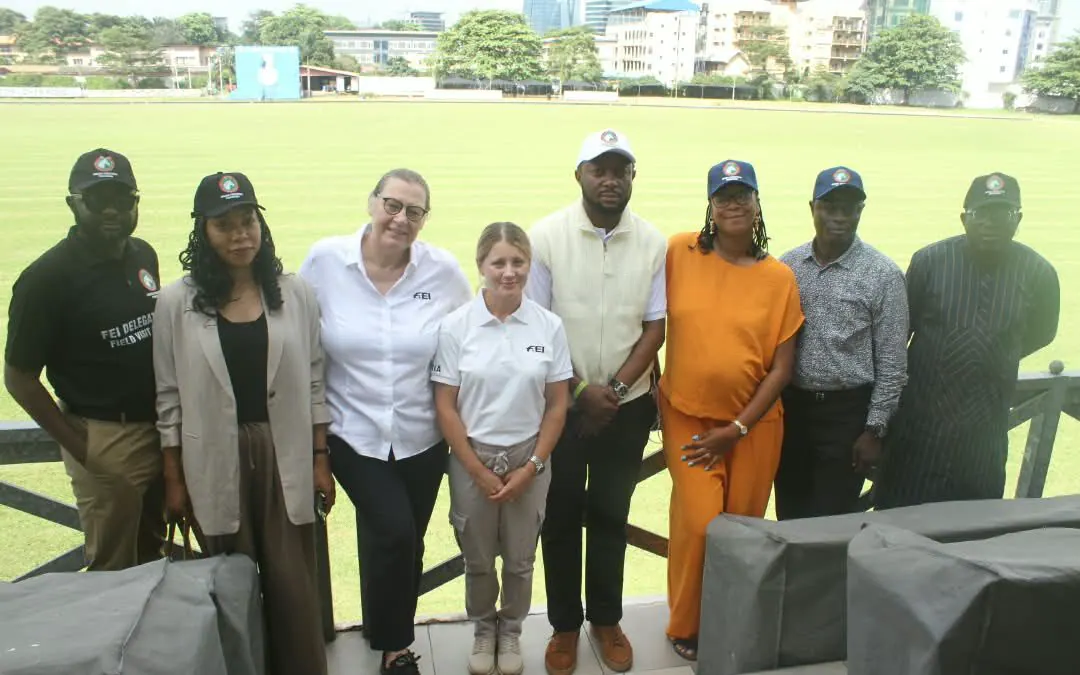
The Fédération Équestre Internationale (FEI) has set a three-year target for Nigeria to meet the requirements needed to progress towards full membership. This target was established after a four-day FEI visit to assess Nigeria's equestrian structures, facilities, and plans for the sport. The visit, led by FEI Group IX Chairperson Brigitte Matthias, included stops at key equestrian and sports locations in Abuja, Kaduna, Zaria, and Lagos.
During the visit, Matthias emphasized that the goals set for Nigeria are achievable within the three-year timeframe, paving the way for the country to meet the conditions required to become a full FEI member. She encouraged Nigeria to demonstrate its commitment through regular competitions, noting that these events do not necessarily have to be at the highest level. The FEI is looking for a willingness to enjoy the sport, with competitions at the grassroots level being acceptable.
Céline Starbanov, FEI Project Manager for Solidarity and Development, noted that Nigeria is still at an early stage of development and will need to strengthen several areas before progressing further. The FEI identified key priorities, including training for grooms, farriers, and stable managers, as well as coaching education. Starbanov also mentioned that Nigeria would need more venues, riders, horses, coaches, and national-level competitions to develop its equestrian sport.
Anthony Obiorah, President of the Nigeria Equestrian Federation (NEF), described the FEI visit as an important milestone, exposing areas where Nigeria needs to make corrections. He stated that the federation is open to recommendations and intends to use them to strengthen the sport. Obiorah emphasized that the visit marks a new beginning for Nigeria's equestrian development, with a focus on putting Nigeria on the world equestrian map.
The NEF aims to broaden access to equestrian sport, which has often been viewed as an activity largely reserved for wealthy families. The federation wants to create a pathway for children to enter the sport at the grassroots level, receive training, compete nationally, and eventually represent Nigeria internationally. Vanessa Asuni, NEF Vice President, Technical and Sports Development, highlighted the importance of building the foundations of the sport, including attention to horse welfare and the people who support riders and horses.
The Lagos State Government and Lagos State Sports Commission have expressed interest in using equestrian sport as another avenue for youth development and participation. Lekan Fatodu, Director General of the Lagos State Sports Commission, criticized the excessive focus on football in Nigerian sports and emphasized the need for young people to experience other sports. The state aims to make equestrian sport part of the opportunities available to young people, including children between five and 15 years.
The FEI visit has given the NEF clear targets to pursue, including competitions, technical capacity, horse welfare, trained personnel, and broader participation, as Nigeria works toward meeting the conditions for full FEI membership. With a focus on development and progress, Nigeria's equestrian community is optimistic about the opportunities the process can create for Nigerian young people. The country's equestrian sport is poised for growth, with a new beginning and a clear roadmap for the future.
Key points
- The FEI has set a three-year target for Nigeria to meet the requirements for full membership.
- Nigeria needs to strengthen several areas, including training for grooms, farriers, and stable managers, as well as coaching education.
- The NEF aims to broaden access to equestrian sport, creating a pathway for children to enter the sport at the grassroots level and eventually represent Nigeria internationally.