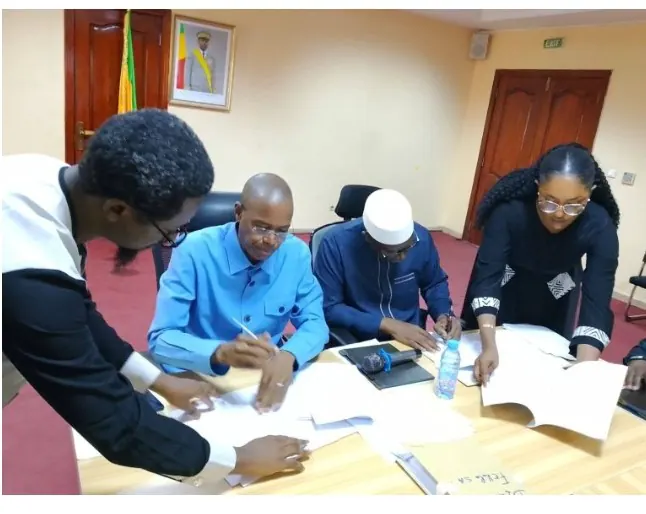
The Malian government has taken significant steps to develop its mining sector, adopting several major texts at a cabinet meeting on September 30, 2026. The moves aim to leverage the country's mineral wealth for development, combining local expertise with international investor confidence. The creation of a mining school and the renewal of exploration permits are key measures to achieve this goal. Mining Minister Pr Amadou Keita is driving these efforts to transform the sector.
The new mining school, established by the government, will address the country's shortage of skilled engineers and technicians. Despite being a major mining nation in Africa, Mali previously relied on foreign expertise due to a lack of domestic training institutions. The school will provide high-level training for national cadres, enabling the country to control the entire competence chain. This development marks a significant shift towards intellectual and technical sovereignty.
Alongside the creation of the mining school, the government has replaced the outdated 1990 Programme for Mineral Resource Development with a modern agency, the Research and Development of Mineral Resources Agency. This new institution will oversee petroleum and gas research, a previously neglected area, to better map the country's potential. The reform aims to enhance the sector's scientific and research capabilities.
In a move to attract investment, the cabinet has renewed 10 gold exploration permits for various companies, including Robex, Africa Mining, and Comicar. This decision ends a prolonged wait for operators affected by a suspension of renewals between December 2022 and March 2025. The permits cover strategic areas such as Kéniéba, Kayes, and Bougouni, allowing companies to continue promising explorations.
The renewal of permits demonstrates Mali's commitment to creating a transparent and secure legislative framework, signaling the country's openness to mutually beneficial partnerships. The government aims to ensure that benefits and expertise primarily benefit Malians. By taking these steps, Mali seeks to balance economic patriotism with attractiveness to investors.
The measures adopted by the government reflect a broader strategy to maximize the benefits of Mali's mineral resources. By investing in local expertise and modernizing institutions, the country aims to become a more significant player in the global mining industry. The mining sector is expected to contribute substantially to Mali's economic growth and development.
The implementation of these reforms will be closely watched by industry stakeholders and investors. With its rich mineral resources and newfound commitment to training and institutional development, Mali is poised to strengthen its position in the African mining landscape. The success of these initiatives will depend on effective execution and continued government support.
Key points
- Mali creates a mining school to address the shortage of skilled engineers and technicians.
- The country renews 10 gold exploration permits for various companies.
- The government aims to balance economic patriotism with attractiveness to investors.