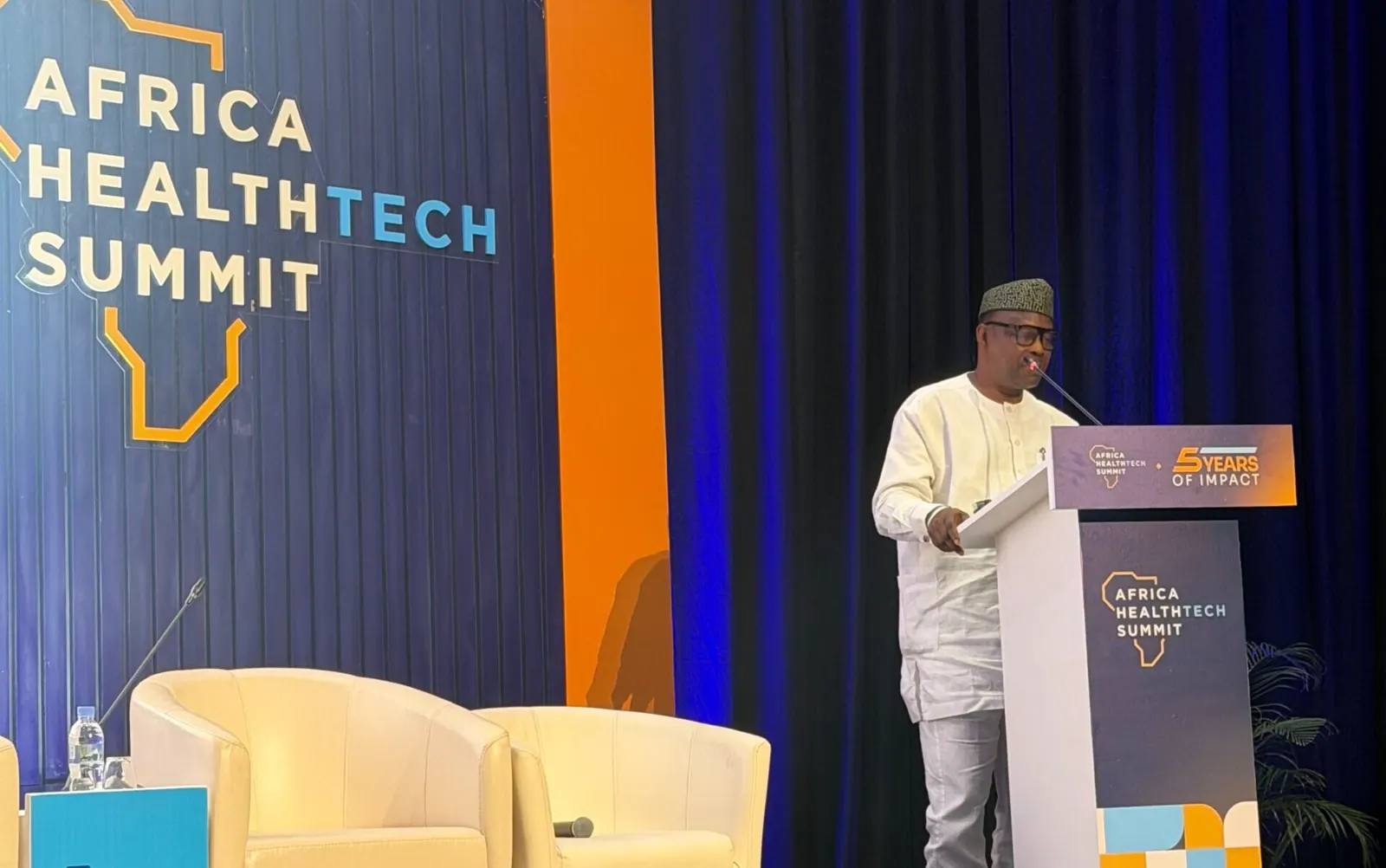
Nigeria has shifted its focus from developing isolated digital health applications to creating a unified National Digital Health Architecture (NDHA). This development was announced by Minister of State for Health and Social Welfare, Iziaq Salako, at the 5th Africa Healthtech Summit in Rwanda. The NDHA aims to transform Nigeria's health sector by integrating various digital health systems. This move is expected to enhance the overall efficiency and effectiveness of healthcare services in the country.
According to Mr. Salako, Africa has made significant progress in innovating digital health solutions, including electronic medical records, telemedicine, and Artificial Intelligence tools. However, the real challenge lies in connecting these innovations into sustainable national systems. The NDHA, developed through the Nigeria Digital in Health Initiative, provides a national blueprint for a secure and interoperable digital health ecosystem. This architecture is endorsed by the National Council on Health and has the support of sub-national governments.
The NDHA is built around a Health Information Exchange with a Shared Health Record and national registries for clients, health facilities, and health workers. This system operates on the principle of "one patient, one health record," ensuring that patients' health information is centralized and easily accessible. The Minister noted that for years, investments in digital health have created valuable but program-specific solutions that could not communicate with one another. The NDHA addresses this issue by providing a unified framework for digital health systems.
The Nigerian government has already seen positive results from the NDHA at the sub-national level. Telemedicine initiatives have bridged gaps in healthcare access, enabling doctors to reach rural communities. To further strengthen governance, President Bola Tinubu established the National Health Technology and Data Analytics Office. This office will coordinate the digital health agenda, harmonize public and private institutions, and oversee the implementation of the NDHA.
Mr. Salako emphasized that building intelligent infrastructure must precede the adoption of Artificial Intelligence. He warned that AI cannot compensate for fragmented data, weak standards, and non-interoperable systems. Africa must not only consume health technology but also define standards, govern its data, and build local capacity. The Minister stressed that partnerships should focus on strengthening national systems rather than creating parallel ones.
The ultimate goal of Nigeria's digital health ambition is to improve healthcare outcomes for its citizens. This includes ensuring that pregnant women receive safer care, children have accurate vaccination records, and health workers can focus on patient care. The NDHA aims to build health systems that can learn, connect, anticipate, and respond to the needs of patients and healthcare providers.
Nigeria has reaffirmed its commitment to collaborating with other African nations to advance digital health. The country aims to play a leading role in defining the future of digital health in Africa. By getting this right, Africa will not only participate in the future of digital health but also help shape it.
Key points
- Nigeria has developed a National Digital Health Architecture to integrate its health systems.
- The architecture provides a unified framework for digital health systems, enabling better service delivery and governance.
- The NDHA is built around a Health Information Exchange with a Shared Health Record and national registries.