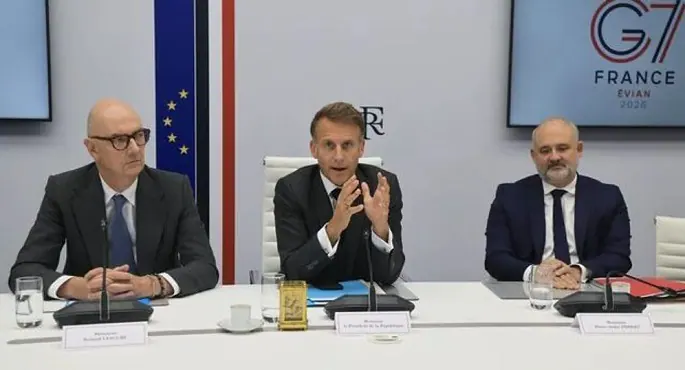
On October 2, 2026, the G7 group of nations called for the immediate and complete restoration of navigation rights and principles in the Strait of Hormuz. This appeal was made in a statement by G7 leaders on global energy security and market stability, issued after a virtual meeting convened by French President Emmanuel Macron, whose country holds the rotating presidency of the group.
The G7 leaders emphasized that energy security challenges are escalating due to unprecedented fluctuations in oil markets and rising prices, which threaten economic stability and citizens' welfare. They agreed to take decisive and coordinated actions to stabilize short-term energy supplies, protect against price shocks, and enhance the resilience of global energy systems in the long term.
To address these challenges, the G7 leaders plan to coordinate maintenance schedules at refineries in G7 countries to avoid simultaneous downtime and temporarily increase refining capacities where possible. They also encouraged engagement with countries possessing significant refining capacities to boost global production of refined products, particularly diesel, given current market pressures.
The G7 requested the International Energy Agency (IEA) to monitor the immediate and full implementation of commitments agreed upon in March 2026. The group stated that it would fulfill its obligations through a coordinated release of 100 million barrels of oil over four months, starting immediately, via the IEA. This release would include a significant amount of diesel in the initial 20 days.
G7 leaders reaffirmed their commitment to refrain from imposing restrictions on energy exports and products between G7 countries. They urged all producers to avoid imposing bans that could exacerbate market tensions. The IEA was also asked to monitor the impact of these actions on energy security and market stability, providing a follow-up report within 20 days with actionable recommendations.
The G7 strongly condemned continued Iranian attacks on regional neighbors, which they said disrupt international trade, energy security, and the global economy. They demanded the immediate restoration of navigation rights and principles in the Strait of Hormuz and expressed their determination to redouble collective efforts to achieve this goal. The US was commended for its efforts to ensure free trade flows through the Strait of Hormuz.
In conclusion, G7 leaders emphasized that concerns about energy prices remain a top priority and that they will closely monitor developments, being prepared to adjust their actions as needed. They expressed confidence that the agreements reached would contribute to a more secure, transparent, and resilient energy future.
Key points
- G7 leaders demand immediate restoration of navigation rights in Strait of Hormuz
- G7 to release 100 million barrels of oil over four months to stabilize markets
- G7 condemns Iranian attacks on regional neighbors, urges free trade flows through Strait of Hormuz