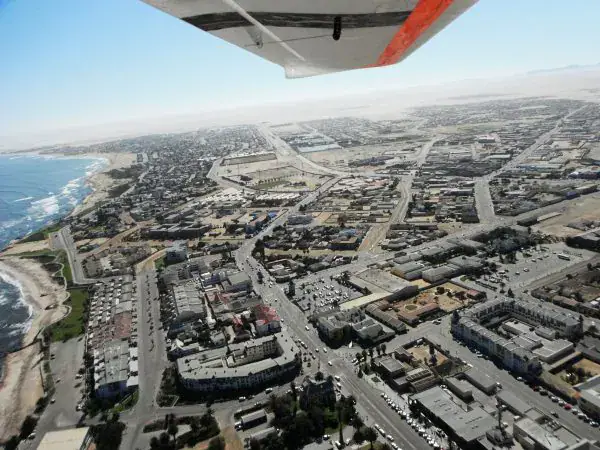
Swakopmund has surpassed Windhoek in the value of building plan approvals for the second time this year, reflecting a shift in Namibia's construction activity. In October, building plan approvals across Windhoek and Swakopmund declined 29.4% year-on-year to N$397.2 million. Swakopmund approved building plans worth N$209.8 million, compared with N$187.4 million in Windhoek. This change indicates a growing trend towards coastal industrial development and household-led building projects.
The coastal town's approvals included five major industrial projects valued at N$82.4 million and 98 new houses. As a result, Swakopmund's share of combined building approvals increased from 19% in March 2025 to 40% over the latest rolling 12-month period. This significant increase suggests that Swakopmund is becoming a major hub for construction activity in Namibia.
Windhoek's commercial building approvals fell to N$48.7 million in October from N$393.2 million in the same month last year. However, excluding commercial projects, the capital's approval values increased 47.1% year-on-year. This indicates that while Windhoek's commercial construction activity has declined, household and other non-commercial construction projects are on the rise.
The total number of building plans approved across the two municipalities reached 345 in October, the highest monthly figure recorded so far in 2026. Swakopmund also recorded stronger construction completion activity, with year-to-date building completions rising 22.1% to N$418.6 million. This represents 37.8% of approved building value, indicating that Swakopmund is not only approving more projects but also completing them at a faster rate.
In Windhoek, household construction has increasingly offset the decline in corporate building activity. Company and institutional approvals fell 63% year-to-date, while corporate commercial approvals declined 87%. This shift suggests that businesses are directing capital towards other sectors, such as mining, energy, and existing properties, rather than new commercial floor space in the capital.
Households in Windhoek are adjusting construction plans amid higher borrowing costs and inflation. With prime lending rates at 10.50% and inflation at 5.6%, homeowners are opting for extensions and renovations rather than relocating or undertaking larger construction projects. Home additions accounted for 73% of all building plans approved in Windhoek in October, indicating a trend towards smaller-scale construction projects.
The construction outlook for 2027 is expected to diverge between the two municipalities. Swakopmund's approvals are expected to moderate towards December, but its medium-term outlook remains supported by potential oil developments, uranium projects, and desalination investments. Windhoek, however, recorded 320 new building plan submissions in October, potentially supporting residential construction and renovation activity into the first quarter of 2027.
Key points
- Swakopmund's building plan approvals reached N$209.8 million in October, driven by industrial and household projects.
- Windhoek's commercial building approvals declined significantly, while household construction projects increased.
- The construction outlook for 2027 is expected to differ between Swakopmund and Windhoek, with Swakopmund supported by large-scale projects and Windhoek by residential construction.
Reporting sources
- Swakopmund overtakes Windhoek in building approvals · Windhoek Observer