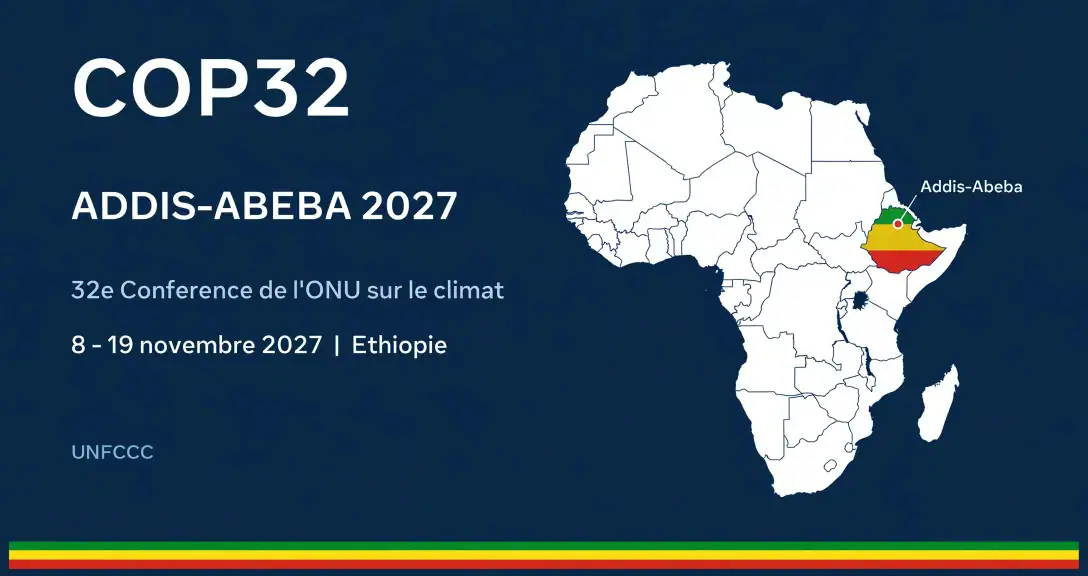
The 31st UN Climate Conference in Antalya, Turkey, highlighted the global community's ongoing struggle to reach consensus on key climate issues. Disagreements over climate financing, energy transition, and responsibility among industrialized nations underscored the need for greater international solidarity. For Africa, this conference serves as a lesson and an opportunity to prepare for the next meeting in Addis Abeba, where the continent must present a united front with clear proposals and strategies.
Africa contributes minimally to global greenhouse gas emissions but is disproportionately affected by climate change impacts such as droughts, floods, and desertification. The continent must continue to demand climate justice, with countries that have historically contributed most to pollution taking responsibility and supporting African nations in their adaptation and development efforts. This is not about seeking aid out of solidarity but about upholding international commitments.
A key takeaway from Antalya is that Africa must prioritize climate financing. The continent requires real, accessible, and sustainable funding to develop infrastructure, modernize agriculture, and enhance access to clean energy and water. Africa must also assert its right to development, ensuring that the energy transition does not hinder its progress. The continent should be able to develop its hydroelectric, solar, and wind potential while adhering to environmental commitments.
Water is another critical issue for African diplomacy. Climate change is also a water crisis, affecting rivers, lakes, and transboundary basins essential for agriculture, energy, and food security. Africa must strengthen cooperation among countries sharing water resources, drawing on successful models like the Organisation pour la mise en valeur du fleuve Sénégal. These experiences should be highlighted in international climate negotiations.
As Africa prepares for the COP32 in Addis Abeba, it faces a significant responsibility as the host continent. Africa must present itself not only as a region vulnerable to climate change but also as a continent with solutions, projects, and a vision for the future. To achieve this, African nations must prepare collectively, harmonize their positions, and identify common priorities.
The continent must speak with one voice on critical issues such as climate financing, technology transfer, access to clean energy, and water protection. Africa should arrive in Addis Abeba with concrete, well-prepared projects, and regional organizations and institutions should propose joint initiatives capable of mobilizing international financing. Stronger participation from African leaders, experts, and various stakeholders is also crucial.
Ultimately, Addis Abeba must be an opportunity for Africa to assert a stronger ambition. The continent seeks not only to benefit from climate financing but also to contribute to the development of new energy, agricultural, and environmental solutions that will shape the future global economy. The message Africa will convey is clear: it is committed to fighting climate change while refusing to compromise its development and growth.
Key points
- African nations are pushing for a unified stance on climate change, energy, and water at the upcoming COP32 in Addis Abeba.
- The continent demands climate justice and financial support from historically polluting countries to aid in adaptation and development efforts.
- Africa aims to present itself as a solution provider, with concrete projects and a vision for sustainable development and climate resilience.