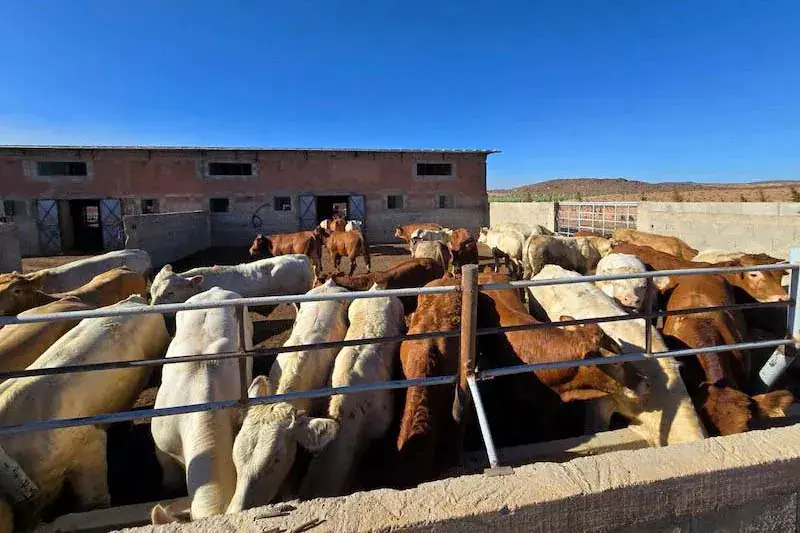
Morocco's Minister of Agriculture, Fisheries, and Food Sovereignty, Khalid Hatimy, announced that his department is preparing a medium- and long-term strategy to rebuild the national herd and lower meat prices. The plan includes importing at least 30,000 cows per year over six years to increase the national herd to over 1.5 million dairy cows. This initiative aims to boost local reproduction, milk, and meat production.
The program also promotes investment in large-scale fattening and dairy production units, facilitates access to financing, and restructures marketing channels. Additionally, it supports and upgrades small and medium-sized breeders by improving their production capacities and strengthening collaboration with professional organizations. According to Hatimy, the national market requires between 750,000 and 800,000 bovine heads per year, as well as around 14 million ovine and caprine heads.
On the legislative front, Hatimy's department is working on adopting a livestock law, which will significantly contribute to rebuilding the national herd. A decree related to powdered milk is also forthcoming, expected to indirectly support national herd reconstitution. Furthermore, a joint circular with the Interior Ministry and the Ministry of Industry, Trade, Investment, and Economic Inclusion is being prepared.
The circular aims to require sales outlets to specify whether the meat being sold is of local or imported origin and to display prices. This move seeks to increase transparency in the meat market. Hatimy emphasized that his department will work with partners to reduce margins practiced after leaving slaughterhouses, currently ranging from 15 to 25 dirhams per kilogram, to a range of 10 to 15 dirhams.
The government's strategy also focuses on supporting breeders and improving the national herd's quality. By promoting local production and reducing reliance on imports, Morocco aims to stabilize red meat prices and enhance food security. The plan's success will depend on effective implementation and collaboration between various stakeholders.
According to Hatimy, the new measures will help alleviate pressure on red meat prices and improve the overall livestock sector. The minister's announcement comes as part of a broader effort to address the challenges facing Morocco's agricultural sector. By investing in livestock production and marketing, the government hopes to create a more sustainable and equitable food system.
The initiative has been welcomed by various stakeholders, who see it as a positive step towards addressing the country's food security challenges. As Morocco continues to navigate the complexities of its agricultural sector, the government's commitment to supporting livestock production and controlling prices is expected to have a lasting impact on the industry.
Key points
- The plan includes importing at least 30,000 cows per year over six years to increase the national herd to over 1.5 million dairy cows.