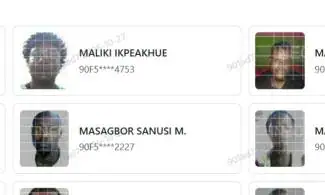
Nigeria's Independent National Electoral Commission (INEC) is under scrutiny after suspected artificial intelligence (AI)-generated images were discovered on multiple voters' profiles in its online voters' register. The images were observed by SaharaReporters while examining voter profiles on INEC's official website. Several records appeared to contain photographs suspected of being artificially generated rather than authentic pictures of registered voters. The discovery raises questions about the authenticity of photographs associated with voter records.
The voter profiles examined included those bearing the names Ealefoh Oritsenoma, Ebamenbhegbe Besi, Ebhohimen Godwin, Jacob Gabriel, Maniru Noah, Matthew Isaac, and Odion Bibi. The voter identification numbers displayed alongside the profiles were partially masked on the website. INEC has failed to respond to enquiries about the images, sparking concerns about the procedures used to verify submitted information and the safeguards in place to prevent potentially fabricated images.
The issue was first publicly raised by Nigerian political economist and professor, Pat Utomi, who questioned the implications of AI-generated images appearing in a database used in the country's electoral process. Utomi warned that the credibility of Nigeria's electoral system could be undermined if the commission failed to address concerns about the authenticity and verification of voter information. He emphasized that INEC cannot afford to be careless with the credibility of Nigeria's electoral process.
INEC Chairman, Professor Joash Amupitan, recently announced plans to deploy artificial intelligence tools to strengthen result verification and cybersecurity ahead of the 2027 general elections. The commission established a dedicated AI division within its Information and Communications Technology department and integrated automated AI auditing tools into its result verification process. Amupitan disclosed that INEC was working with international technology companies to integrate AI-powered anomaly detection tools into its systems.
The discovery of suspected AI-generated images on voter profiles raises questions about the specific safeguards INEC has in place to maintain the integrity of its own electoral databases. INEC's proposed use of artificial intelligence has also attracted criticism from the Nigeria Democratic Congress (NDC), which accused the commission of plotting to manipulate the 2027 general elections in favor of the ruling All Progressives Congress (APC). The NDC questioned the timing of the proposed deployment and demanded greater scrutiny of the technology.
SaharaReporters contacted INEC's Chief Press Secretary, Adedayo Oketola, for comments on the discovery, but he did not respond to repeated telephone calls or enquiries sent through WhatsApp. The commission had not provided an explanation for the images as of the time of reporting. INEC's response would be crucial in determining whether the images resulted from weaknesses in voter registration procedures or another cause.
The concerns come amid growing scrutiny of the role artificial intelligence could play in elections, particularly as advances in generative AI make it increasingly easy to produce realistic-looking images that may be mistaken for authentic photographs. INEC's preparations for the 2027 general elections are underway, with the commission planning nationwide mock accreditation and public display exercises while training its workforce. The chairman assured Nigerians and the international community of INEC's commitment to neutrality and electoral integrity.
Key points
- INEC faces scrutiny over suspected AI-generated images on voter profiles ahead of 2027 elections.
- The discovery raises questions about the authenticity of photographs associated with voter records and the procedures used to verify submitted information.
- INEC plans to deploy AI-powered tools to strengthen result verification and cybersecurity ahead of the 2027 general elections.