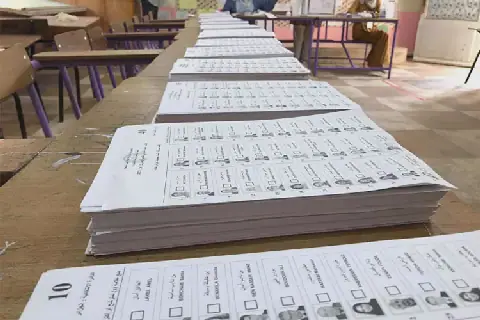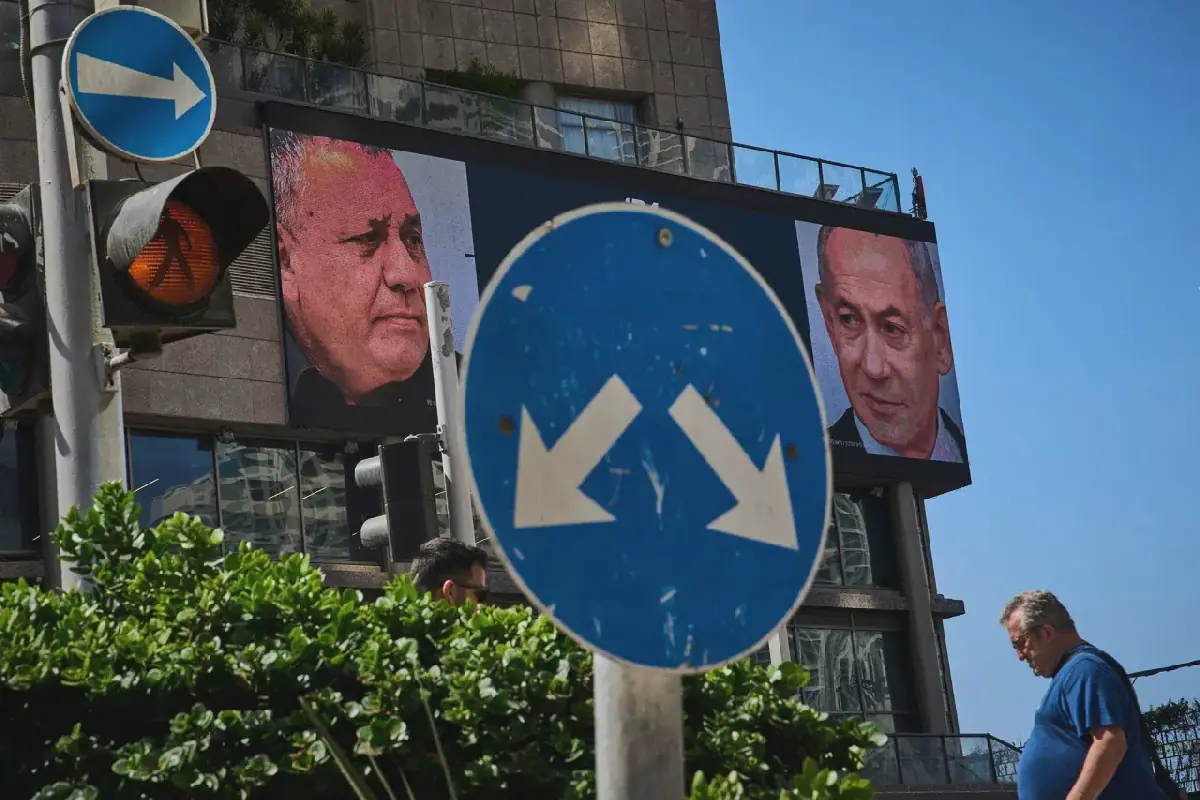
Israelis woke up to a familiar political impasse on Wednesday, as the recent elections failed to produce a clear winner. Neither Prime Minister Benjamin Netanyahu's right-wing coalition nor the opposition secured a majority to form a government. This outcome adds to the country's unprecedented streak of political paralysis, which has seen six elections in seven years.
The recent elections are a continuation of a trend that began in 2019. Between 2019 and 2022, Israel held five rounds of elections, but no side could secure a clear 61-seat majority in the 120-seat parliament. This has resulted in a country deeply divided over leadership and direction. The divisions have been exacerbated by Netanyahu's status as Israel's longest-serving prime minister and the first sitting prime minister to be indicted for corruption charges.
Netanyahu's tenure has been marked by a reliance on far-right and ultra-orthodox parties. Most opposition parties have refused to work with him, pushing him deeper into this reliance. The 2022 election saw Netanyahu and his allies win a majority, but this was short-lived. The government was marked by controversy, particularly over a sweeping judicial overhaul that sparked widespread liberal protests. These protests continued until the October 7, 2023, Hamas attack on Israel, which was followed by a multi-front war.
The recent vote was seen as a referendum on Netanyahu's leadership and the country's direction and identity. The results have reinforced the deep divide and polarization between Israelis over democratic values, religion and state, military service, and accountability. This polarization has become a defining feature of Israeli politics, with no clear end in sight.
The opposition parties' refusal to work with Netanyahu has been a significant factor in the country's political paralysis. This has limited Netanyahu's ability to form a stable government, forcing him to rely on smaller parties. The far-right and ultra-orthodox parties that have supported Netanyahu have often prioritized their own interests over the needs of the country as a whole.
The impact of the judicial overhaul on the country's politics cannot be overstated. The protests that followed its introduction highlighted the deep divisions within Israeli society. The overhaul was seen as a threat to the country's democratic institutions, and its implementation has been widely criticized. The controversy surrounding the overhaul has continued to shape the country's politics.
The recent election results have significant implications for Israel's future. The country's inability to form a stable government has raised concerns about its ability to address pressing issues, such as security and the economy. The ongoing polarization has also raised questions about the long-term viability of the country's democratic institutions.
Key points
- The recent election has yielded no clear majority, adding to Israel's streak of political paralysis.
- Netanyahu's reliance on far-right and ultra-orthodox parties has exacerbated divisions within the country.
- The judicial overhaul has been a significant factor in the country's politics, sparking widespread protests and controversy.