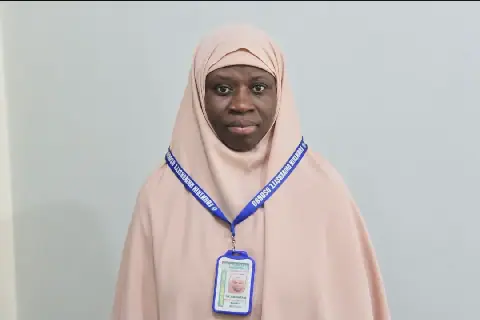
The Supreme Court of Ghana has confirmed the death sentences of Salamatu Karim, her brother Awudu Alhassan Sulemana, and Mohammed Sulemana, for their roles in the 2013 murder of Abdul Karim. The case dates back to June 15, 2013, when Salamatu reported a fake burglary at their home in ACP Estates, Pokuase. However, investigations revealed that she had orchestrated the killing by hiding the attackers in their bathroom and providing the weapon.
According to reports, Salamatu had placed a call to law enforcement on the evening of June 15, 2013, claiming armed intruders had stormed their family home and attacked her husband, Abdul Karim. When officers arrived, Abdul had already been transported to hospital, where he was declared dead. A post-mortem examination revealed severe fractures to Abdul's skull and jaw, consistent with a deliberate, sustained beating rather than violence incidental to a burglary.
The case went cold until police arrested a suspect named Kofi Nyagbedzi during a separate robbery investigation. Information he provided led investigators to Awudu Alhassan Sulemana, known as "Dozer," and Mohammed Sulemana, known as "Banana," who were tracked down and arrested in Dodowa. During interrogation, the two men admitted that the robbery story was a fabrication from the start.
Prosecutors established that Salamatu personally let Dozer and Banana into the property, concealed them in the bathroom, identified her husband as the target, and handed over the weapon used in the attack. She also promised them money once the act was done, before staging the scene and alerting police. The trial court convicted Dozer of murder and conspiracy, Banana of conspiracy, and Salamatu of abetment of murder. All three were sentenced to death.
The trio challenged their convictions at the Court of Appeal, which upheld the original verdict in November 2018. Defence lawyer Raphael Alijina Debrah then brought the matter before the Supreme Court on thirteen grounds, contesting the admissibility of the confession statements, the trial judge's directions to the jury, and whether the evidence was sufficient to sustain the convictions.
The Supreme Court rejected every ground, finding that the trial judge had correctly conducted a mini-trial to confirm the confessions were given voluntarily. The court also found the jury directions legally sound and balanced. On Salamatu's individual conviction, the court ruled that witness testimony, medical evidence, and proof of her preparatory actions collectively established her guilt for abetment of murder beyond reasonable doubt.
The appeal was dismissed in its entirety, and the death sentences for all three individuals were affirmed. This brings an end to years of legal battles for the trio, who were found guilty of orchestrating and executing the murder of Abdul Karim. The Supreme Court's decision confirms the severity of their crimes and upholds the original verdict.
Key points
- The Supreme Court of Ghana upheld the death sentences of Salamatu Karim, her brother Awudu Alhassan Sulemana, and Mohammed Sulemana for the 2013 murder of her husband, Abdul Karim.
- Salamatu had orchestrated the killing by hiding the attackers in their bathroom and providing the weapon.
- The Supreme Court rejected every ground of appeal, confirming the convictions and death sentences for all three individuals.