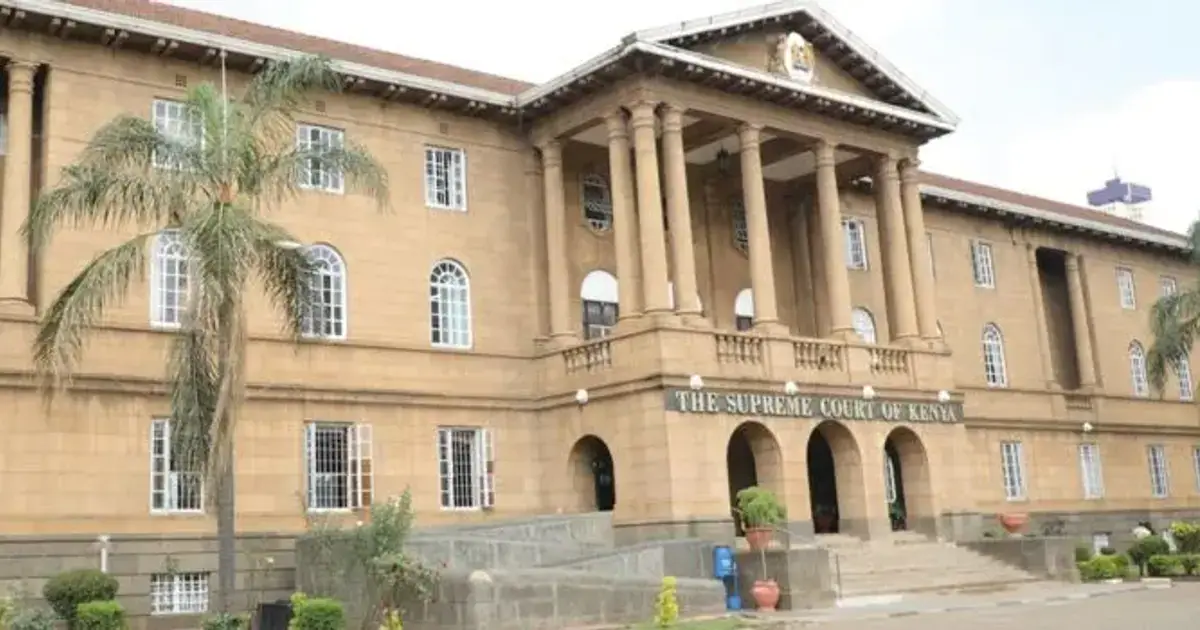
The Supreme Court, led by Chief Justice Martha Koome, has overturned a massive Sh103.4 million compensation award previously granted to a private contractor against the National Social Security Fund (NSSF). This ruling brings closure to a protracted legal battle stemming from a cancelled security surveillance contract dating back more than a decade. The court ruled that the firm at the centre of the dispute failed to provide reliable, verifiable evidence to justify the substantial sum it claimed as anticipated profits from the aborted project.
The legal tussle originated from a contract awarded in March 2011, where NSSF engaged the private contractor to install sophisticated CCTV cameras and access control systems at the Social Security House in Nairobi. The tender was valued at Sh244.8 million, with an additional provision for an annual maintenance fee of Sh15 million following the expiration of a two-year warranty period. However, the physical project never commenced as NSSF failed to hand over the site to the contractor.
The contractor filed a lawsuit against NSSF, citing a fundamental breach of contract and demanding heavy damages for lost business opportunities. The litigation wound its way through successive tiers of Kenya's judicial system, producing contrasting outcomes. The High Court initially ruled partly in favour of the company, awarding it Sh16.06 million, but rejected the firm's grand claim for Sh103.4 million in anticipated profits.
The Court of Appeal overturned the lower court's finding on profits, significantly boosting the payout to the firm. It awarded a total of Sh112.5 million in special damages, which included the contested Sh103.4 million in anticipated profits alongside Sh9.06 million in other associated costs. Unwilling to accept the appellate ruling, NSSF elevated the matter to the Supreme Court, seeking to set aside the multimillion-shilling liability.
The Supreme Court bench focused heavily on the credibility and reliability of the financial evidence tabled by the contractor. The judges pointed out glaring inconsistencies in how the projected profits were calculated and presented. Specifically, the court noted that the firm's managing director had initially estimated expected profits at approximately Sh26 million, but an independent accountant's report later inflated that figure to Sh103.4 million without providing a clear explanation.
The Supreme Court observed that the accountant’s report relied on unverified financial information and projected five full years of maintenance income without demonstrating that the company had a binding guarantee or entitlement to secure work for that duration. The bench also highlighted terms within the original contract that granted NSSF the flexibility to terminate the agreement by issuing one month's written notice, further undermining claims to long-term guaranteed revenue.
By setting aside the Sh103.4 million payout, the Supreme Court provided crucial legal clarity regarding claims for lost business opportunities and anticipated profits. The bench formally established that businesses seeking substantial compensation for anticipated profits following a contractual breach must furnish objective, reliable, and verifiable evidence. This ruling emphasizes the evidentiary threshold required for commercial damages.
Key points
- The Supreme Court overturned the Sh103.4 million award due to lack of reliable evidence from the contractor.
- The court's ruling provides clarity on claims for lost business opportunities and anticipated profits.
- Businesses must furnish objective, reliable, and verifiable evidence to seek substantial compensation for anticipated profits.