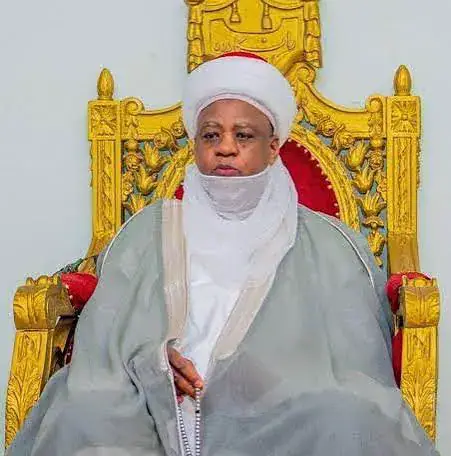
The Sokoto Caliphate, also known as ‘Daular Usmaniyya’, marked a significant milestone last Monday as Sultan Muhammadu Sa’ad Abubakar III celebrated 20 years on the throne. He ascended to the throne in November 2006 following the death of the 18th Sultan, Muhammadu Maccido, in an air crash. The ceremony was attended by distinguished Nigerians from various ethnic and religious backgrounds, showcasing the Sultanate's commitment to cultural diplomacy and national integration.
The Sultanate's 20th anniversary celebration was notable for its display of ceremonial pageantry and the conferment of traditional titles on 11 prominent Nigerians. Among them were Prof. Is-haq Olanrewaju Oloyede, former JAMB Registrar and NSCIA Secretary-General, and Dr. Peter Igho, former Director General of the NTA. These appointments reflect the Sultanate's emphasis on merit and mutual respect for diversity, sending a clear message against tribalism.
Dr. Peter Igho, a Christian from the Niger Delta, was appointed as the ‘Kakakin Daular Usmaniyya’, a high-level cultural ambassador and strategic communicator. This appointment is significant, as it bridges the Sultanate with the global community and counters misconceptions about the institution. Igho's recognition highlights the Sultanate's effort to reward citizens who have served the national project, transcending geographical and religious barriers.
The Sultan's gesture has been hailed as a template for other traditional rulers to build cross-cultural alliances and promote unity. At a time when insecurity is fueled by disunity among ethnic and religious groups, Sultan Abubakar's actions provide a beacon of hope. By recognizing prominent Nigerians with honours, the Sultanate sets a path for consensus-building and counters the flames of bigotry.
Sultan Abubakar III has established a reputation as a champion of interfaith dialogue, peacebuilding, and civic progress. He has followed in the footsteps of his father, the 17th Sultan, Sir Siddiq Abubakar III, who was known for his opposition to violence and advocacy for justice. The Sultan's commitment to unity and recognition of others' public service is seen as a positive step towards a new dawn for Nigeria.
The author, Simon Reef Musa, reflects on his personal experience with the Sultanate, citing instances of kindness and unity in his hometown. He recalls the Emir of Tsafe, Alhaji Muhammad Bawa Abubakar, and his Geography teacher, Mr. George Galadima, who taught Christian Religious Studies to non-Muslim students. These anecdotes highlight the potential for unity and cooperation in the region.
As Sultan Abubakar III continues on the throne, he faces the challenge of addressing mutual suspicion and violence in the North. With his reputation as a champion of unity and justice, he is seen as a beacon of hope for the region. The Sultan's 20th anniversary celebration serves as a testament to his commitment to broadening unity across ethnic and religious lines, and his legacy continues to inspire Nigerians.
Key points
- Sultan Abubakar III emphasizes unity and merit-based recognition in his 20th anniversary celebration as Sultan of Sokoto.
Reporting sources
- Sultan’s New Dynamic Leadership Paradigm At 20 · The Authority (newspaper)