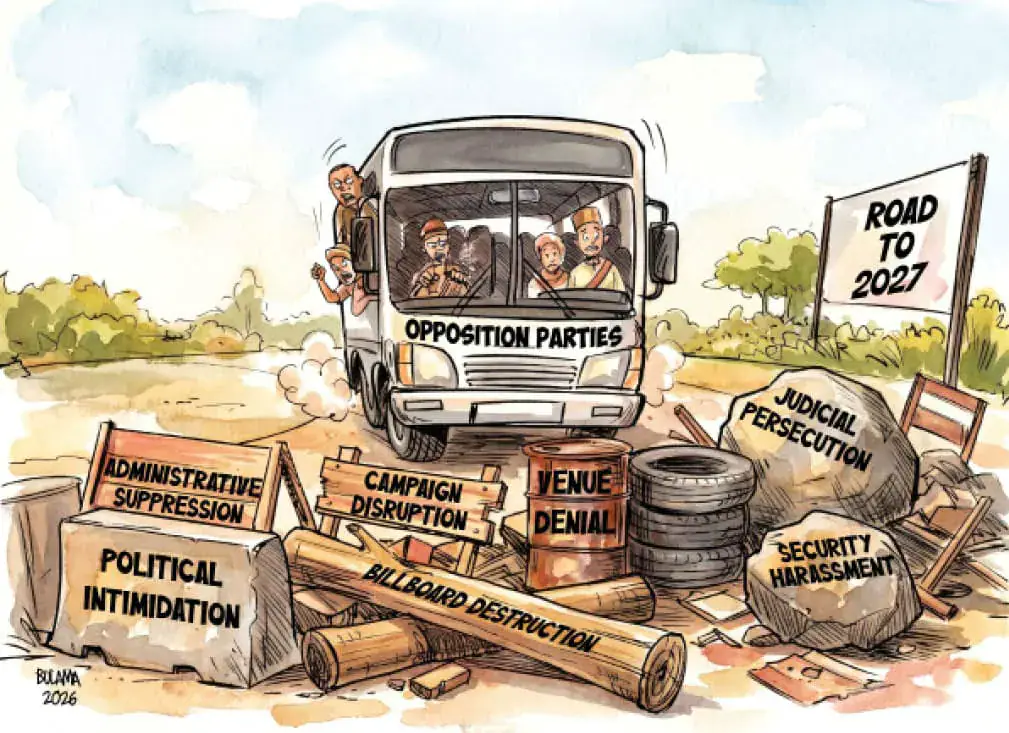
Nigeria's opposition political parties are encountering various challenges as they prepare for the 2027 general elections. Within a week, multiple incidents have been reported, including the attack on the convoy of the presidential candidate of the Nigeria Democratic Congress (NDC) in Cross Rivers State. Additionally, the African Democratic Congress (ADC) faced opposition when attempting to hold a rally in Sokoto State. In Edo and Plateau States, billboards of major opposition candidates were pulled down.
A Federal High Court in Abuja nullified the processes of the ADC that led to the emergence of former Vice President Atiku Abubakar as the party's candidate for the 2027 election. The court ruled that the nominations of candidates were cancelled due to an "illegal and unlawful leadership." On the same day, Atiku's presidential campaign convoy was attacked in Kebbi State, with thugs blocking the convoy and pelting vehicles with stones. These incidents have raised concerns over Nigeria's democracy and the systematic weakening of opposition parties.
Opposition figures and civil society organisations have accused the ruling All Progressives Congress (APC) of using state-backed coercion, judicial manipulation, and targeted inducements to dismantle counter-balancing political structures. Critics argue that by neutralising alternative political platforms, the APC-led administration is eroding the essential checks and balances required for democratic accountability. The opposition parties claim that they are being denied space for campaign materials, with increased outdoor advertising levies imposed by various state governments.
The APC has dismissed allegations of colluding with the judiciary, stating that the dispute within the ADC is an internal affair. The party's National Publicity Secretary, Felix Morka, emphasized that the APC was neither a party nor an interlocutor in the lawsuit. A chieftain of the APC also dismissed the opposition claims, challenging the parties to produce evidence linking the APC to their problems. The APC argued that opposition parties should focus on putting their house in order rather than blaming the ruling party for their challenges.
The federal government has urged political parties to conduct their activities in accordance with the law. The Minister of Information and National Orientation's Special Assistant, Rabiu Ibrahim, stated that all political parties are expected to operate fairly and without discrimination. However, opposition parties argue that they are facing financial extortion by state and municipal authorities, with public advertising fees skyrocketing and rendering traditional visibility virtually unattainable.
The African Action Congress (AAC) has called on the opposition to consider a collective boycott of the 2027 polls if the federal government and security agencies fail to guarantee equal protection and safety for all participants. A joint front of opposition groups, including the ADC, NDC, Allied Peoples Movement (APM), and Zenith Labour Party (ZLP), accused the ruling government of actively squeezing them out of the public square. The opposition parties are seeking a fair and level playing field ahead of the 2027 elections.
The situation remains tense as opposition parties continue to face challenges in Nigeria. The high cost of campaign materials and the intimidation of opposition candidates have raised concerns about the integrity of the electoral process. As the 2027 elections approach, it remains to be seen how the opposition parties will overcome these challenges and ensure a fair and democratic process.
Key points
- Opposition parties in Nigeria face harassment, suppression, and intimidation ahead of the 2027 general elections.
- The ruling APC has dismissed allegations of colluding with the judiciary to weaken opposition parties.
- Opposition parties are seeking a fair and level playing field ahead of the 2027 elections.
Reporting sources
- 2027: Opposition’s battle for space · Daily Trust