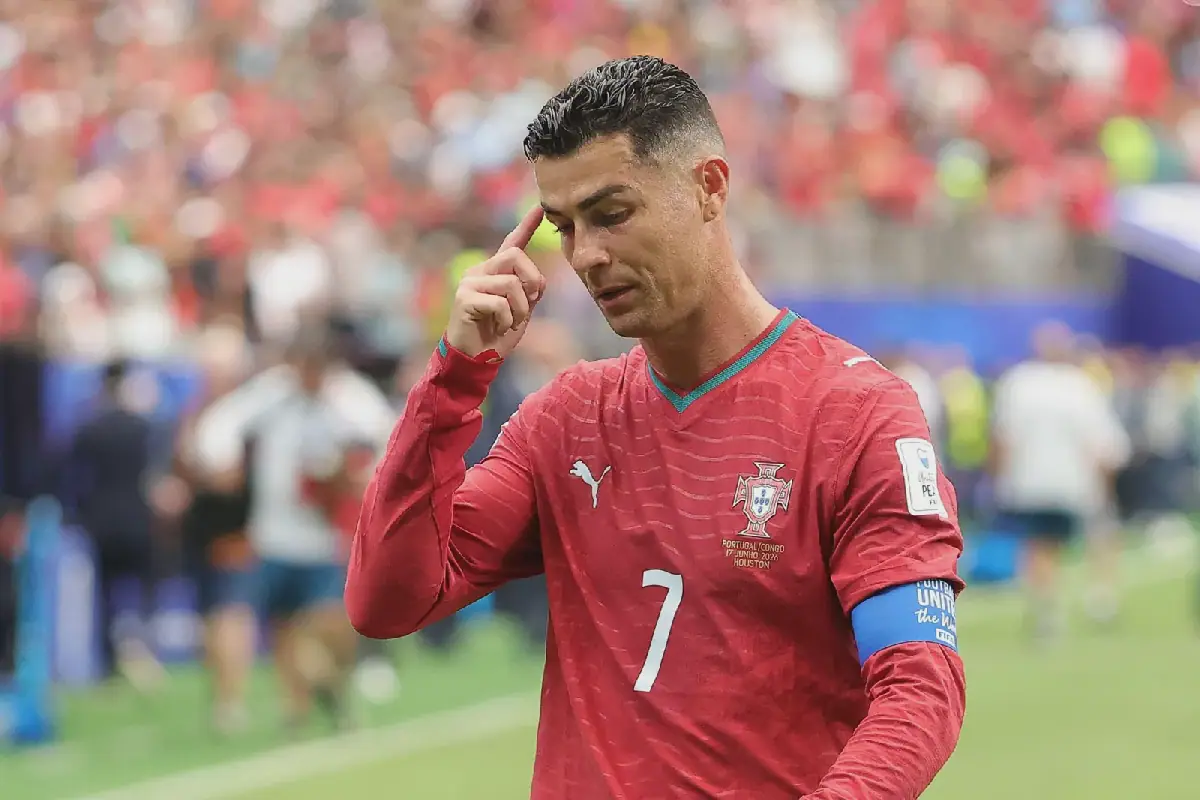
Cristiano Ronaldo's departure from the Portuguese national team has been marked by controversy and tension, a stark contrast to the thunderous applause one would expect for a legend who gave his country 146 international goals and 234 appearances over 23 years. His final days were clouded by disciplinary proceedings and disagreement with his coach. The Portuguese Football Federation acknowledged his contribution, but the emotional question remains: Why must a man who gave so much leave through controversy rather than honour?
Ronaldo's story transcends football, touching on the complex issue of public gratitude and how nations treat their heroes. Greatness does not guarantee a gracious exit, as history shows. Winston Churchill, who led Britain through World War II, was removed from office after victory in 1945. Despite his wartime greatness, the British people had legitimate domestic priorities, and his leadership style was not suited for peacetime government. This example highlights the emotional cost of political decisions that can overshadow a hero's achievements.
Napoleon Bonaparte's story offers another illustration of how nations can treat their powerful individuals. After transforming France and redrawing Europe's map, Napoleon was exiled to Saint Helena, far from the country he shaped. His final chapter was one of isolation, a prisoner of geography and memory. This demonstrates the volatility of national affection, where the same society that elevates a man into legend can seek to confine him to a footnote.
The case of Galileo Galilei, whose scientific discoveries challenged the Roman Catholic Church, shows that sometimes society must wait generations to recognise the wisdom of a person it punished. Galileo was forced to recant and spent his final years under house arrest. Centuries later, the world celebrates the truth he helped establish, and the institution that condemned him has acknowledged the injustice.
The African experience provides painful illustrations of the contradiction between a nation's treatment of its heroes and their later recognition. Thomas Sankara, the revolutionary leader of Burkina Faso, became an emblem of political idealism and African dignity. His assassination in 1987 ended his life but not the influence of his ideas. Today, Sankara's name is invoked across Africa as a symbol of courage and revolutionary integrity.
Nigeria also has its own painful chapters, such as the story of M.K.O. Abiola, who represented the hope of a democratic transition after the annulment of the June 12, 1993 presidential election. His political mandate became a national symbol of democratic legitimacy, and his subsequent imprisonment and death transformed him into a martyr of Nigeria's democratic struggle. Today, June 12 is celebrated as Democracy Day.
Ronaldo's legacy, like that of these historical figures, will be remembered for generations to come. His contributions to Portuguese football and his country's global image are undeniable. However, the circumstances of his departure serve as a reminder that nations and institutions must understand the emotional cost of their decisions and find a balance between accountability and gratitude for those who have given their all.
Key points
- Cristiano Ronaldo's international retirement was marked by controversy and tension.
- The circumstances of Ronaldo's departure highlight the complex issue of public gratitude and how nations treat their heroes.
- Historical examples illustrate that greatness does not guarantee a gracious exit, and nations must find a balance between accountability and gratitude.
Reporting sources
- Ronaldo: The farewell he never had · Daily Trust