In northern Sudan, henna artist Najwa Mubarak continues to adorn the hands of brides and women with intricate crimson floral patterns, preserving a cherished tradition that has been a part of Sudanese culture for centuries. The plant used to produce the dye is under threat due to water scarcity, climate change, and three years of war. Despite the challenges, Mubarak takes pride in her work, saying "Henna is both a hobby and a heritage for us." Her salon in Al-Damer, the capital of River Nile state, is a hub of activity, with fragrant incense drifting through the air as she applies the paste to her clients' skin.
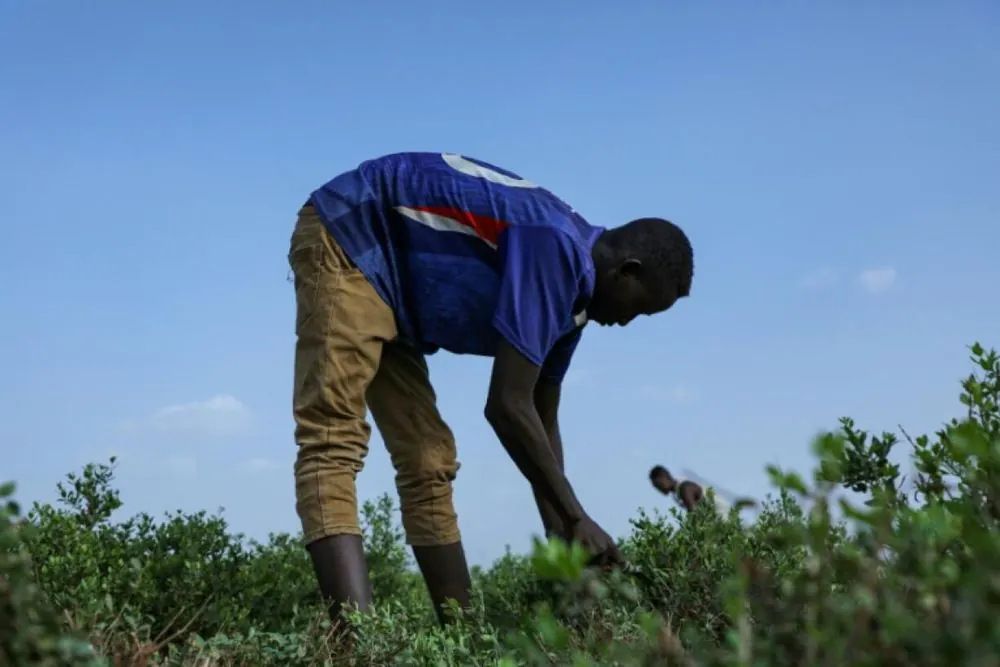
The pressures facing the henna crop are evident beyond the salon. Farmer Abdallah Mohammed, who has cultivated henna for decades, worries that the land is slowly drying out due to water shortages. He depends on Nile-fed irrigation canals, but sporadic supplies and neglected waterways have left his fields parched at critical times, reducing both the quantity and quality of the harvest. The 57-year-old farmer says, "Water arrives at long intervals and cuts off just when we need it most." Access to water is the biggest obstacle limiting production and causing the land to go thirsty.
Sudan's conflict between the army and the paramilitary Rapid Support Forces has crippled agriculture across the country, including the henna industry. The war, which erupted in April 2023, has damaged irrigation networks, leaving canals clogged, pumps idle, and water management systems neglected. The El Nino climate pattern has also disrupted weather systems, delaying seasonal rains and contributing to lower Nile water levels, depriving farms of a vital lifeline. As a result, agriculture, which provides livelihoods for roughly 65 percent of Sudan's population, has been severely impacted.
The UN's Food and Agriculture Organisation (FAO) reported that rainfall across key agricultural regions between June and mid-August was up to 30 percent below the long-term average, worsening drought and raising risks to food production and rural livelihoods. Despite these challenges, henna remains one of the most valuable cash crops in River Nile state, supporting livelihoods from farms and processing plants to marketplaces and beauty salons. Environmental activist El-Rasheed Ali Mahdy says henna is "a crop of significant local economic importance."
Sudan was once one of Africa's leading henna producers, building a thriving industry around the crop. The country exported its distinctive dye to consumers across the Gulf, Europe, and North America. In Al-Damer, a factory owner, Mohamed Ramadan, says that before the war, they used to export their produce from Omdurman to destinations all over the world. However, since fighting erupted, many exporters have rerouted shipments through neighbouring Egypt as traditional trade corridors have become increasingly difficult to use.
Despite the mounting pressures on the industry, Omnia El-Sayed, owner of a salon in Al-Damer, believes henna will endure. She says, "It is a cultural staple." The industry continues to support livelihoods, and farmers are working hard to maintain production. In the River Nile state, islands of emerald-green henna fields emerge from a sea of ochre and brown, and farmers are using sickles passed down through generations to cut the leaves.
As the henna industry faces significant challenges, efforts are being made to sustain the crop. The Sudanese government has not provided updated production and export figures, but it is clear that the industry remains vital to the country's economy and culture. With the resilience of farmers, artists, and entrepreneurs, henna continues to be an integral part of Sudanese traditions and celebrations.
Key points
- Water scarcity, climate change, and war threaten Sudan's henna industry.
- The henna industry supports livelihoods for thousands of people in Sudan.
- Despite challenges, henna remains an integral part of Sudanese culture and traditions.