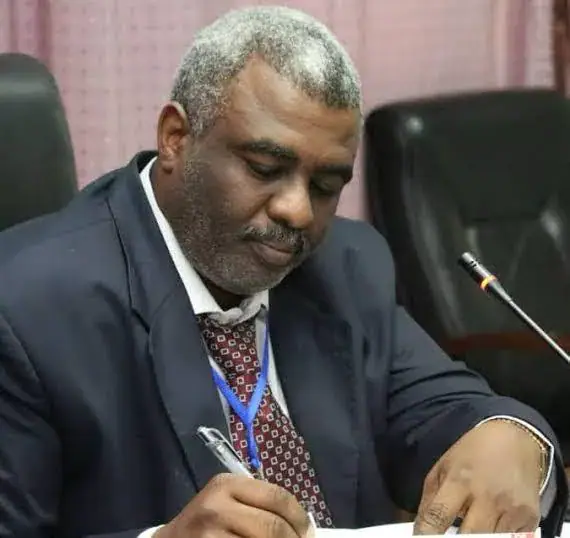
Sudanese author Berka Sakin has arrived in Khartoum to join the national dialogue committee, at a time when the country is searching for a way out of its crisis. Sakin is known for his literary works that address war, poverty, marginalization, and social change. His participation in the dialogue committee has sparked reflection on the meaning of dialogue and whether simply sitting together is enough to reach an understanding.
Sakin's literary works often focus on the human experience of war, as seen in his novel "Masiḥ Darfur", which exposes the violence and brutality of the Janjaweed militia. His writing has become a moral condemnation of violence and a call for peace and security. By joining the dialogue committee, Sakin is transitioning to a different space, one that focuses on preparing for national dialogue about Sudan's future.
Sakin has taken critical stances against the Rapid Support Forces (RSF) militia, linking their behavior to Sudan's future. His participation in the dialogue committee does not require him to retreat from his positions, but rather raises questions about the distance between moral stance and the search for a political exit from war. Since the conflict began on April 15, 2023, many Sudanese have come to believe that accepting the RSF as a partner in the country's future is difficult due to their human rights abuses.
The RSF is not part of this dialogue, according to the vision behind this track, and their inclusion does not imply granting them legitimacy or absolving them of responsibility for their actions. The issue at hand is how Sudanese people can restore their state, end the war, and address the causes of the national crisis. Sakin's participation in the dialogue committee should be understood in this context.
Friedrich Nietzsche's ideas on critiquing convictions are relevant here. The problem lies not in the solidity of an idea, but in its transformation into a barrier that prevents its owner from seeing reality and renewing means of action. Upholding the sanctity of life and rejecting injustice is a principle, while reviewing means is not a renunciation of rights, but rather a pursuit of protecting them effectively.
Sakin's condemnation of the RSF does not contradict his participation in the dialogue committee, as the intended dialogue is not a negotiation to grant the militia a place in Sudan's future, but rather an effort to build national consensus around the state, peace, and recovery. The political challenge is to turn this track into an action that addresses the root causes of the war, rebuilds the state and its institutions, and ensures civilian protection.
In the Sudanese context, the call for dialogue should not become a demand for victims to forget what happened or equate responsibility for abuses with positions of those demanding accountability. Genuine dialogue does not cancel justice, nor does it absolve responsibility or force society to treat violence as a mere difference of opinion. Instead, it facilitates discussion on how to end the war, build the state, and prevent crimes.
Key points
- Berka Sakin joins Sudan's national dialogue committee amid ongoing conflict.
- Sakin's participation does not imply a retraction of his critical stance against the RSF militia.
- The national dialogue aims to build consensus on state, peace, and recovery in Sudan.