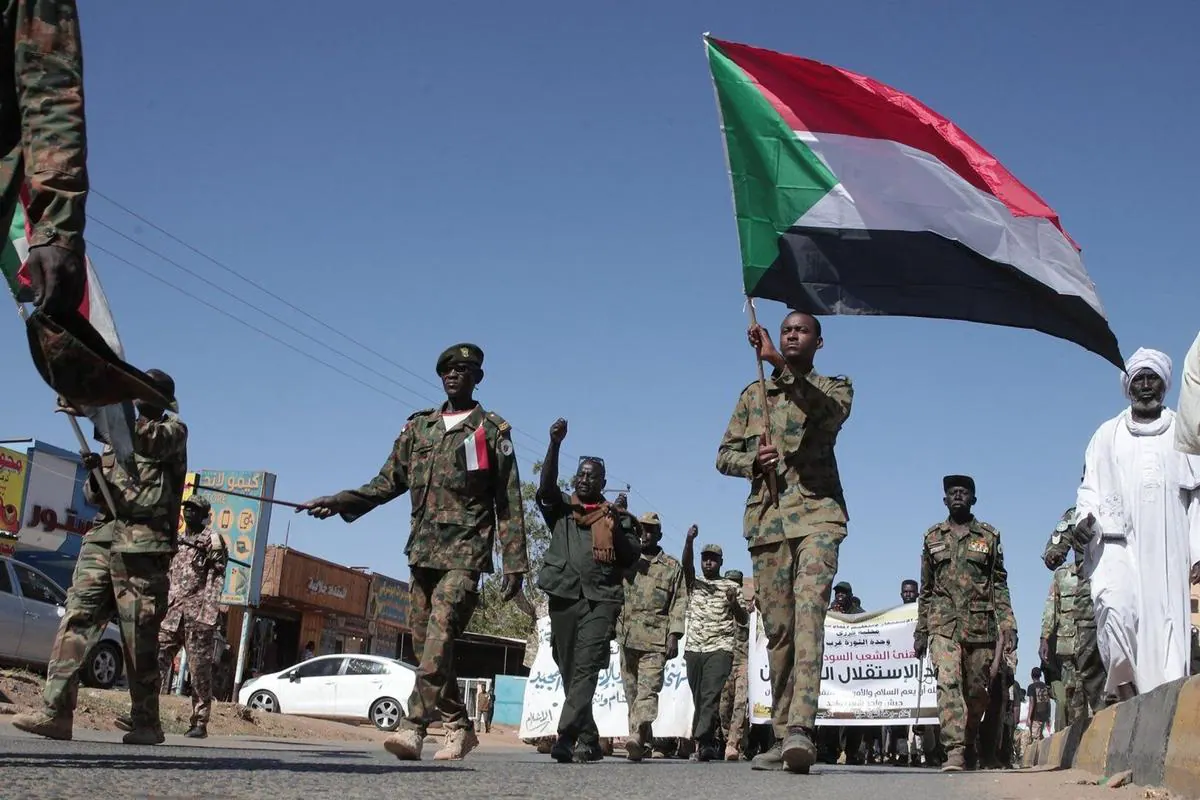
The United States recently stated that Sudan's rival military parties lack a legitimate mandate to govern the country amid ongoing conflict. Washington expressed concern that the military leaders' disregard for the future of the Sudanese state has resulted in continued bloodshed. The US decision came as al-Burhan prepared to attend the United Nations General Assembly, but he was denied a visa due to his alleged crimes during the war. This development reflects the international community's growing skepticism about al-Burhan's legitimacy.
Sudan has been embroiled in a conflict between the army and the Rapid Support Forces since mid-April 2023. The war has resulted in an estimated 200,000 deaths and displaced over 14 million people, with another 30 million suffering. Despite the dire situation, al-Burhan has rejected a truce proposal put forward by the US, insisting that the war will not be decided militarily. Saudi Crown Prince Mohammed bin Salman recently expressed his country's support for efforts to achieve stability in Sudan and preserve its unity and sovereignty during a phone call with al-Burhan.
The Saudi Crown Prince's call carries significant implications, as it constitutes official recognition of al-Burhan's legitimacy by Saudi Arabia. This move has raised concerns, as al-Burhan came to power through a military coup in October 2021. The call also implies support for alleged violations committed against civilians, including killings, displacement, and executions. Saudi Arabia has emerged as a key player in the conflict, seeking to shape a negotiating framework that brings the warring parties together while protecting its strategic interests in the Red Sea.
Saudi Arabia's actions in Sudan have involved using economic and diplomatic support to promote stability and secure its interests. However, available information suggests that Saudi support for al-Burhan goes beyond development considerations and forms part of a broader geopolitical strategy. Reuters reported that Saudi Arabia had mediated a $1.5 billion Pakistani arms deal for the Sudanese army, which was later cancelled. The Sudanese army has since obtained armoured vehicles and drones through separate deals, potentially financed by Saudi Arabia.
Egypt has also been accused of showing bias towards the Sudanese army under al-Burhan's leadership. The close relations between the Egyptian and Sudanese armies have contributed to complicating the Sudanese situation, reinforcing the warring parties' belief that a military victory remains possible. This has reduced the prospects for an early political settlement and deepened divisions within Sudan's political landscape.
The use of Turkish combat drones by Egypt has raised concerns about the escalation of the conflict. Satellite images have shown Turkish drones being deployed at an airstrip on Egypt's southwestern border, which has been used to launch strikes in Sudan. The involvement of regional powers in the conflict has undermined victims' confidence in achieving justice and made national reconciliation more difficult.
The ongoing conflict in Sudan has resulted in a state of violent stalemate, with the Sudanese people bearing the brunt of the violence. The international community has called for an independent investigation into the Sudanese army's alleged use of chemical weapons. As the conflict approaches its fourth year, concerns about regional powers' support for al-Burhan's legitimacy and accountability continue to grow.
Key points
- Regional powers' support for al-Burhan has raised concerns about legitimacy and accountability.
- The conflict in Sudan has resulted in an estimated 200,000 deaths and displaced over 14 million people.
- The international community has called for an independent investigation into the Sudanese army's alleged use of chemical weapons.