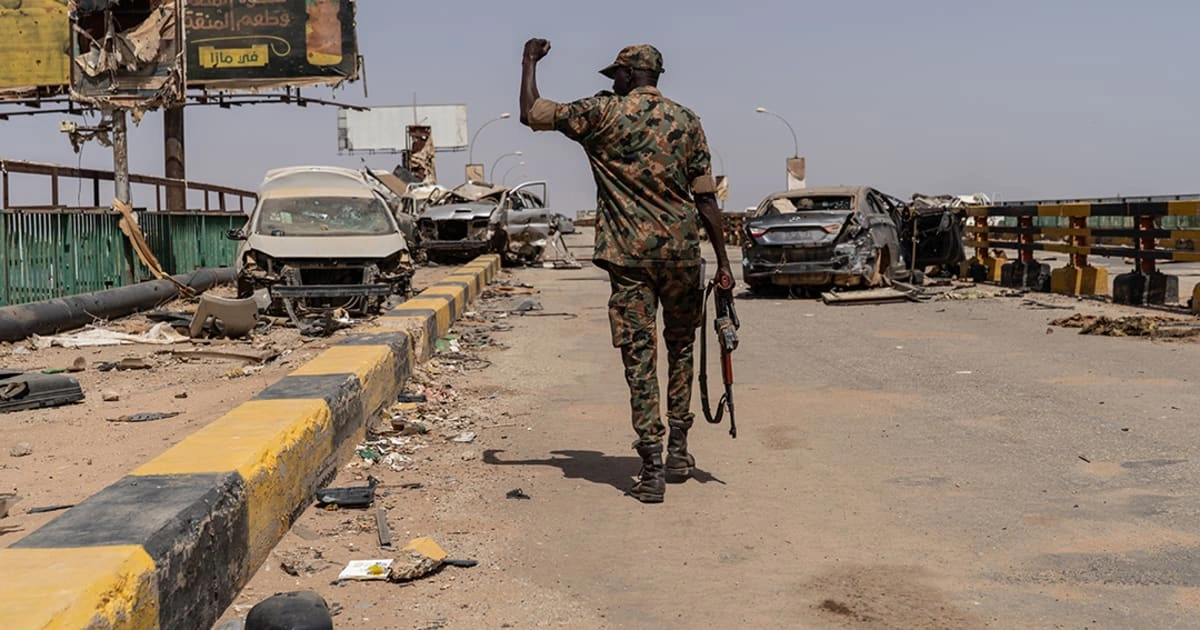
The ongoing conflict in Sudan has evolved into a prolonged struggle for security, dignity, and access to basic services for millions of Sudanese. The government of Sudan is calling for renewed international attention to the devastating consequences of the conflict and the activities of the Rapid Support Forces (RSF), which the government describes as a rebel militia. The conflict, which began with the RSF rebellion in April 2023, has inflicted widespread harm on civilians and placed enormous pressure on the country's institutions and essential infrastructure.
According to the Sudanese government, the conflict has affected women, children, older persons, and other vulnerable groups. The government's account alleges that civilians have been subjected to unlawful and extrajudicial killings, attacks on residential areas, sexual violence, and forced displacement. The government further alleges attacks on property and civilian facilities, alongside the looting and destruction of public and private infrastructure. These allegations form the central part of Khartoum's appeal for stronger international engagement.
The Sudanese government argues that the destruction of infrastructure and disruption of essential services have consequences that extend beyond the immediate battlefield, making the restoration of functioning state institutions and the return of displaced populations considerably more difficult. The government maintains that Sudan's sovereignty, territorial integrity, and national institutions must remain central to any effort to resolve the conflict. The government insists that the Sudanese Armed Forces (SAF) are the country's legitimate national military institution.
The government rejects what it regards as attempts to place the national army on the same footing as the RSF, which it identifies as a rebel militia. It also objects to what it describes as external interference in Sudan's affairs and calls for an end to military, financial, and logistical support to the RSF. According to the government, cutting off sources of financing and arms supplies to the militia should form part of a broader international effort to bring the conflict to an end.
The Sudanese government says it remains open to serious regional and international peace initiatives and is prepared to participate in an inclusive Sudanese political process, provided that Sudan's sovereignty, unity, and national institutions are respected. Any sustainable settlement must create conditions for the safe, voluntary, and dignified return of internally displaced people and refugees. Displacement has become one of the defining consequences of the war, with interrupted livelihoods, fractured communities, and damaged homes.
The government wants the international response to encompass more than diplomacy, calling for stronger civilian protection, humanitarian access, support for voluntary return, and reconstruction, while insisting that humanitarian action remain neutral. The government further argues that accountability must accompany any peace process, with those responsible for violations against civilians facing justice under international law and international humanitarian law.
The Government of Sudan's appeal to the international community is ultimately framed around several principles: support Sudanese state institutions, strengthen civilian protection, facilitate humanitarian assistance, cut off external sources of military support to the RSF, and help create the conditions for peace and reconstruction. For Sudan, the stakes are larger than who controls a particular city or territory, concerning whether a country fractured by war can preserve its institutions, protect its people, and eventually reconstruct the social and physical foundations of national life.
Key points
- The Sudanese government is calling for renewed international attention to the devastating consequences of the conflict with the Rapid Support Forces (RSF).
- The conflict has affected vulnerable groups, including women, children, and older persons.
- The government wants the international community to support Sudanese state institutions, strengthen civilian protection, and facilitate humanitarian assistance.