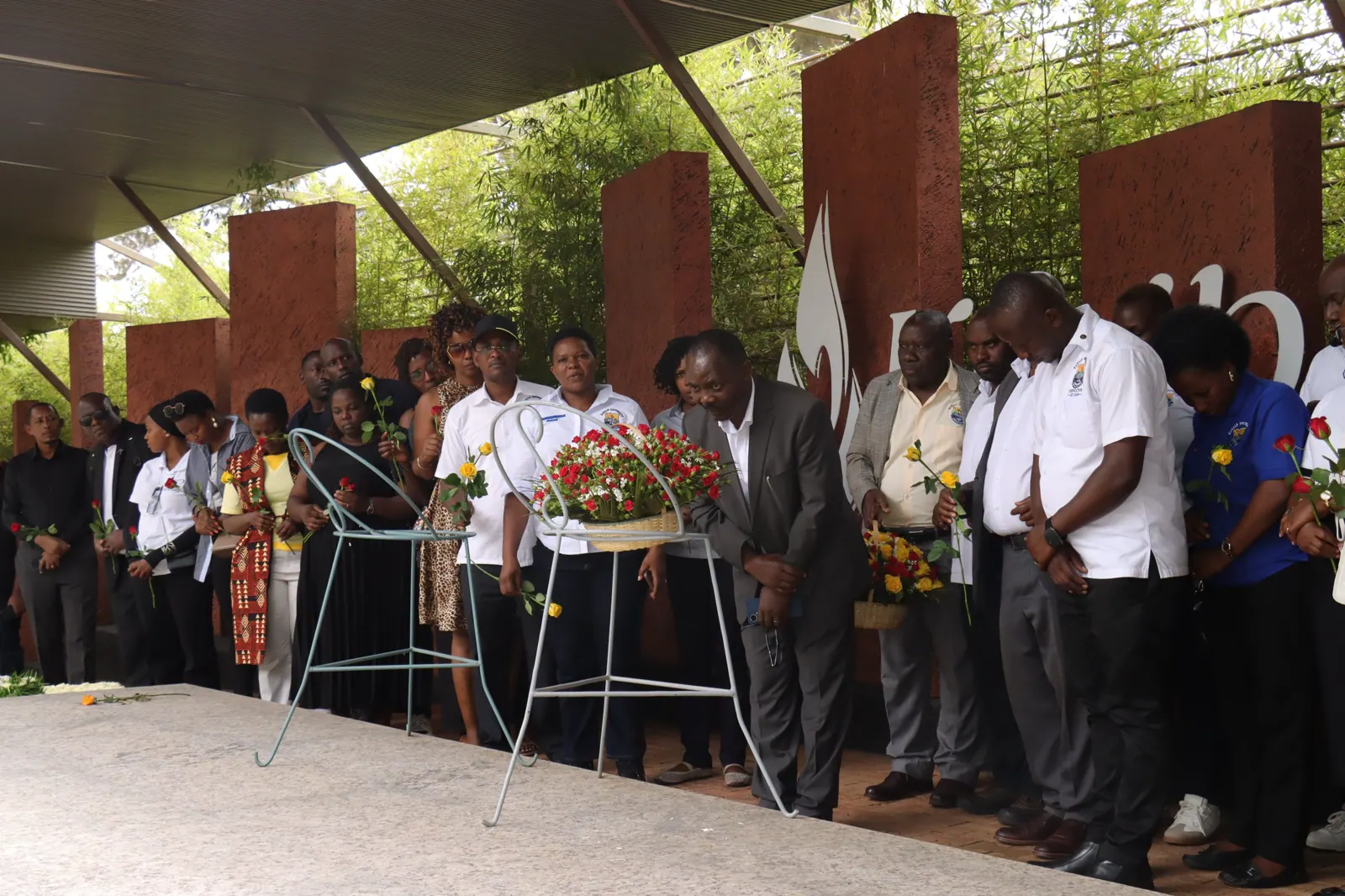
A group of 120 students and leaders from Kabale University in Uganda have vowed to play a role in fighting genocide denial and promoting awareness about the 1994 genocide against Tutsis in Rwanda. This commitment was made on September 19, 2026, after visiting the Kigali Genocide Memorial and learning about the country's history. The visit aimed to educate them about the genocide and its consequences.
During their visit to the Kigali Genocide Memorial, which honors over 250,000 victims, Karambizi Olivier, a director at the Ministry of Unity and National Guidance, briefed the group on how the genocide was planned and executed. He explained that over one million Tutsis were killed in just three months and highlighted the role of colonial legacy, ethnic tensions, and hate speech in fueling the violence.
Karambizi Olivier emphasized the significance of the students' role in combating genocide denial, especially with the rise of social media and technology. He urged them to use their knowledge to counter hate speech and promote unity. The students were also encouraged to spread awareness about the dangers of genocide and the importance of preserving the country's history.
Byarugaba Isiah, the leader of the Rwandan student group at Kabale University, expressed gratitude to the Rwandan government, particularly the Ministry of Unity and National Guidance, for their efforts in preserving the country's history. He emphasized that the students will not tolerate genocide denial and will work to counter it, especially on social media platforms.
Tibenderana Naris, the academic director at Kabale University, criticized the international community for not intervening during the genocide, despite being aware of the situation. He praised the Rwandans who fought to liberate their country, often at a young age. The university's leadership expressed commitment to partnering with Rwandans in commemorating the genocide.
Ingabire Chantal, a Rwandan student at Kabale University, stated that she and her peers will not stand idly by while others attempt to distort the history of the genocide. She emphasized the importance of preserving Rwanda's history and promoting unity. The students also donated food and other essentials to 150 vulnerable families of genocide survivors in the Kicukiro district.
The leadership of Kabale University announced that their partnership with Rwandans in genocide commemoration activities will be an annual event. The university's involvement aims to promote awareness and education about the genocide and its consequences. Key points:
Key points
- Students from Kabale University pledge to fight genocide denial.
- The group visited the Kigali Genocide Memorial to learn about the country's history.
- The university's leadership committed to annual partnership with Rwandans in genocide commemoration activities.