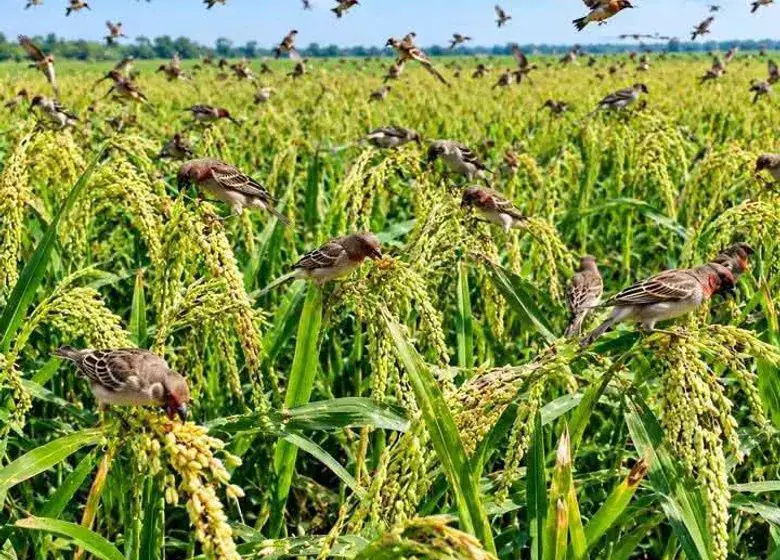
Farmers in Dassari, a commune in northern Benin, are facing significant challenges due to attacks by birds of the Quelea genus on their cereal crops, particularly rice, sorghum, and millet. These attacks have been reported in controlled occupation zones of the Pendjari park, specifically in areas like Pouri and Dassari-centre. The Ministry of Agriculture, Livestock, and Fisheries has stepped in, urging farmers and local populations to adopt preventive measures and collaborate with technical services to mitigate the damage.
The Ministry of Agriculture has formulated five key recommendations for the farmers. First, they advise farmers to ensure permanent surveillance of their fields, suggesting rotations among farmers to quickly detect the arrival of birds and intervene promptly. This measure aims to protect crops from early damage. The ministry emphasizes the importance of an active and continuous presence in the fields during the day.
Another recommendation is to organize collective bird-scaring efforts. The government suggests coordinated actions to scare birds away, using methods such as loud noises, hand clapping, whistles, or mobile ribbons. The ministry stresses the need for simultaneous action in neighboring farms to prevent birds from simply moving to another field. This coordinated approach is crucial for effectively protecting the crops.
Farmers are also advised to identify and report the gathering places of these birds. By observing the birds' movement patterns, especially in the late afternoon, locals can signal these sites to agricultural agents or local authorities. However, any intervention at these sites must be carried out under the supervision of competent services to ensure safety and effectiveness.
To minimize agricultural losses, the government recommends that farmers harvest mature crops promptly. This should be done with the guidance of agricultural agents to ensure proper techniques are followed. Harvested crops should then be securely stored to protect them from further attacks. Timely harvesting and proper storage are seen as critical steps in reducing damage.
The ministry also urges farmers to report any new attacks immediately, providing detailed information about the affected village, field location, type of crops attacked, and the extent of the damage. This rapid reporting will facilitate a swift response from competent services and help in managing the situation effectively.
Finally, the Ministry of Agriculture warns against certain dangerous practices that could exacerbate the problem, such as using poisoned baits, starting bush fires, or cutting down trees that serve as bird shelters. The minister calls for solidarity among farmers and close collaboration with technical services to address this issue and protect the livelihoods of the affected populations.
Key points
- The Benin government has issued five recommendations to help farmers protect their crops from bird attacks.