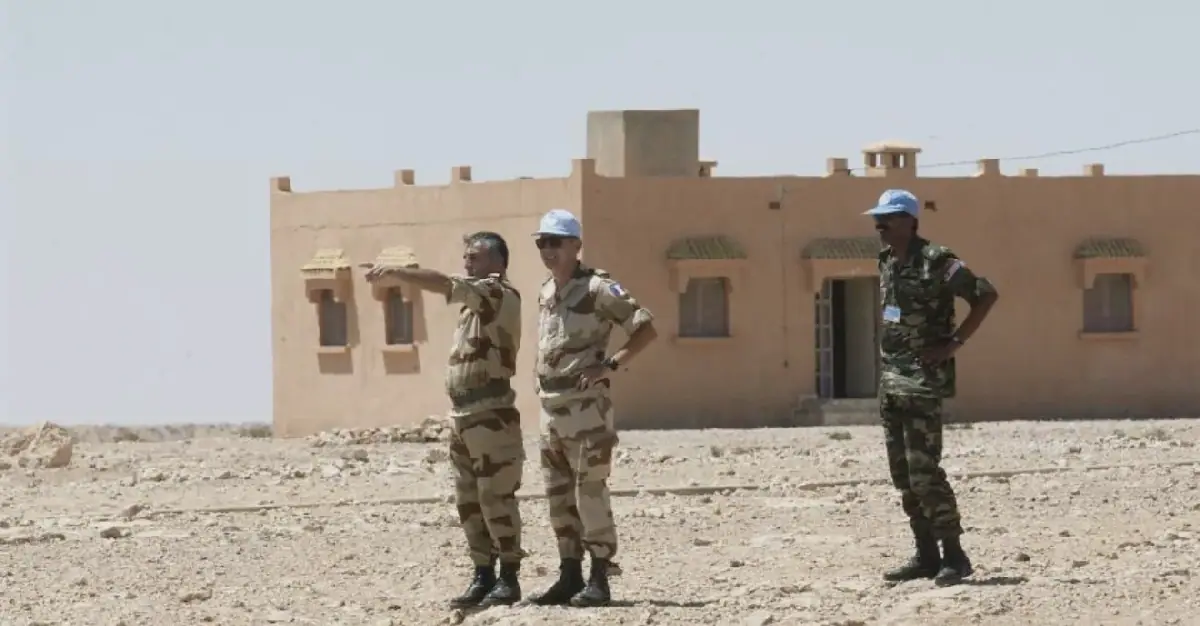
UN Secretary-General Antonio Guterres has submitted a report on the strategic review of the United Nations Mission for the Referendum in Western Sahara (MINURSO). The review, mandated by Security Council Resolution 2797 (2025), assesses the mission's performance, mandate, and relevance in the current context of the Western Sahara conflict. The report highlights the challenges facing MINURSO and proposes options to enhance its effectiveness.
The strategic review notes that MINURSO has been facing significant challenges, including a widening gap between its mandated tasks and what it can realistically achieve in the current context. The mission's activities have been hindered by restrictions on freedom of movement, technological limitations, and a decline in financial and other resources. Despite these challenges, the review acknowledges the mission's achievements, including its role in maintaining stability and reducing tensions.
The review emphasizes that the ongoing political divisions between the parties, restrictions on freedom of movement, and changing security dynamics have impacted MINURSO's effectiveness. The mission's structure and mandate have not kept pace with these changes, leading to a need for a clearer alignment between its mandate and the current situation on the ground. The review proposes options to address these challenges and improve the mission's efficiency.
One of the key challenges facing MINURSO is the restriction on its freedom of movement. The mission is subject to restrictions imposed by the parties, which limit its ability to monitor developments, conduct patrols, and engage with stakeholders. These restrictions have weakened the mission's situational awareness and limited its ability to respond to developments in a timely and comprehensive manner.
The review also highlights the impact of technological advancements on MINURSO's operations. The increasing use of drones has raised concerns about the mission's ability to monitor and verify their use. Furthermore, the mission's limited technological capabilities, including its inability to update its equipment, have hindered its operational effectiveness.
The strategic review notes that MINURSO has been facing significant financial and resource constraints. Budget cuts, liquidity challenges, and uncertainty about future funding have forced the mission to reprioritize its activities and limit its investments in critical capabilities. These constraints have affected the mission's staffing, infrastructure maintenance, and equipment replacement.
The review concludes that MINURSO's current structure and mandate need to be reassessed in light of the changing context and challenges. The Secretary-General proposes options to improve the mission's effectiveness, including a possible adjustment of its mandate and a reconfiguration of its structure. The review emphasizes the need for a more realistic and achievable mandate that takes into account the current situation on the ground.
Key points
- The strategic review of MINURSO highlights the need for a clearer alignment between the mission's mandate and the current situation on the ground.
- The review proposes options to address the challenges facing MINURSO, including a possible adjustment of its mandate and a reconfiguration of its structure.
- The mission's effectiveness has been impacted by restrictions on freedom of movement, technological limitations, and financial and resource constraints.