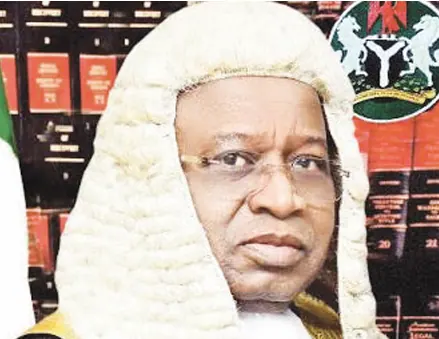
In a landmark judgment, the Supreme Court of Nigeria has provided clarity on when acknowledgement of debt can revive the right of action in a debt recovery case. The court, in a unanimous decision delivered by Justice Abubakar Sadiq Umar, held that an acknowledgement of debt can revive the right of action, even after the statute of limitation has expired. The case involved Petroleum Products Marketing Co. Ltd and Masters Maritime Limited.
The dispute began in 1997 when the two companies entered into an agreement for the supply of petroleum products worth $1,013,678.80. However, Masters Maritime Limited failed to make payment after delivery of the products, prompting Petroleum Products Marketing Co. Ltd to commence a suit for recovery of the outstanding debt. The suit was later withdrawn after the respondent wrote a letter in 2020, stating its intention to settle the debt.
Unfortunately, Masters Maritime Limited failed to fulfil its obligations under the settlement terms, leading Petroleum Products Marketing Co. Ltd to commence a fresh action at the High Court of Lagos State in 2005. The appellant sought to recover the sum of $1,013,678.80, interest on the said sum, and post-judgment interest. However, the respondent raised a preliminary objection, challenging the jurisdiction of the trial court to entertain the action.
The trial court ruled that the matter was not an admiralty matter, but one involving money had and received. However, the court agreed that the State High Court lacked jurisdiction over matters involving the administration or management of a Federal Government agency. The court therefore upheld the respondent's preliminary objection and struck out the appellant's suit. Dissatisfied with the decision, the appellant appealed to the Court of Appeal.
At the Court of Appeal, the respondent raised the issue of limitation of action, arguing that the suit was statute-barred having been instituted more than 6 years from the time the cause of action arose. The lower court agreed with the respondent and dismissed the appellant's appeal on the ground that it was statute-barred. The appellant then appealed to the Supreme Court.
In its judgment, the Supreme Court held that the acknowledgement of debt by the respondent in 2020 revived the right of action, even though the statute of limitation had expired. The court also held that the suit was not statute-barred, as the cause of action arose in 1997, and the appellant commenced the suit in 2005, within the 8-year period allowed for simple contract claims.
The Supreme Court's decision has significant implications for debt recovery cases in Nigeria. The court emphasized that an acknowledgement of debt can revive the right of action, even after the statute of limitation has expired. The court also clarified that the suit was not statute-barred, as the cause of action arose in 1997, and the appellant commenced the suit in 2005.
Key points
- The Supreme Court of Nigeria has held that an acknowledgement of debt can revive the right of action, even after the statute of limitation has expired.
- The court's decision has significant implications for debt recovery cases in Nigeria.
- The suit was not statute-barred, as the cause of action arose in 1997, and the appellant commenced the suit in 2005.