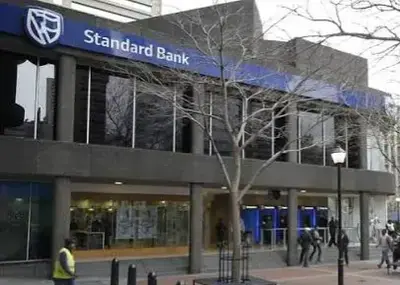
A complaint has been filed against Standard Bank, alleging that it misrepresents its commitment to sustainability and environmental responsibility. The complaint highlights that Standard Bank is one of four institutions financing the East African Crude Oil Pipeline (EACOP) project, alongside Stanbic Bank Uganda, Afreximbank, KCB Bank Uganda, and Saudi Arabia’s Islamic Corporation for the Development of the Private Sector.
According to Standard Bank’s 2025 Report to Society, the bank claims to have engaged with stakeholders and implemented strong environmental and social risk controls. The report also notes the project’s economic advantages, including over 8,000 Ugandan and Tanzanian citizens employed and 400,000 hours of training provided. The bank argues that supporting renewable energy alongside fossil fuel projects is essential for Africa’s development.
Critics of the bank argue that it misleadingly promotes its renewable energy initiatives, citing an image of a wind turbine in the report that represents the Ummbila Emoyeni project, developed with Seriti Green—a subsidiary of Seriti Holdings, a major coal producer. This has raised concerns about the bank’s statements regarding its intentions to reduce oil and fossil fuel exposure.
The complaint identifies nine areas where Standard Bank’s advertising may violate the Advertising Regulatory Board (ARB) Code, including net-zero commitments and compliance with environmental standards. It calls for the ARB to demand documentation supporting the bank’s claims concerning climate alignment and sustainable finance.
The complaint suggests that misleading representations should be amended or withdrawn. Standard Bank acknowledged reports of the complaint but stated it had yet to see or comment on it. The bank reaffirmed its dedication to fostering a lower-carbon economy in Africa.
The complaint asserts that the real issue is whether Standard Bank’s environmental claims accurately reflect the full extent of its financing activities. It concludes that the bank’s advertisements may constitute greenwashing, as they reportedly exaggerate its standing as a leader in sustainable finance while omitting significant information.
The outcome of the complaint remains to be seen, but it has sparked a renewed debate about the role of financial institutions in promoting sustainable development and reducing their environmental footprint. The case highlights the challenges of balancing economic development with environmental responsibility in Africa.
Key points
- Standard Bank faces allegations of greenwashing over its financing of the East African Crude Oil Pipeline project.
- The complaint calls for the bank to provide documentation supporting its claims concerning climate alignment and sustainable finance.
- The bank has reaffirmed its commitment to fostering a lower-carbon economy in Africa.