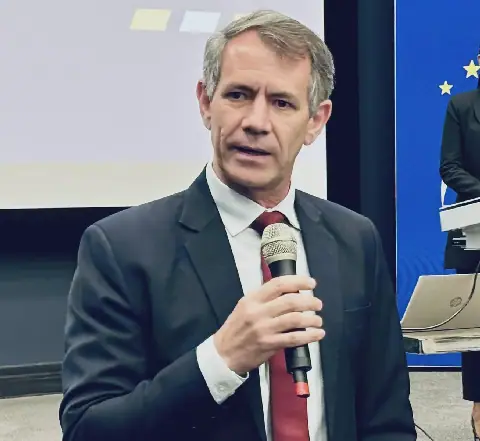
Stanbic Bank Zimbabwe has taken a significant step towards promoting sustainable growth in the country by placing sustainability at the core of its lending and strategy decisions. The bank recently held its second annual Sustainability Conference, which brought together bankers, businesses, government officials, and development partners. The event aimed to tie private capital to measurable development outcomes, signaling a deliberate push towards sustainable development.
The conference, held on October 23, 2026, had a clear message from Chief Executive Solomon Nyanhongo, who emphasized that sustainable development must support economic progress without consuming the resources future generations will need. He added that lending decisions must account for their long-term effects on communities and the broader economy. This approach positions Stanbic Bank not merely as a commercial lender but as a channel through which environmental and social risk assessment shapes credit decisions.
The United Nations Development Programme (UNDP) Resident Coordinator in Zimbabwe, Dr. Rosemary Kalapurakal, presented the SDG Impact Investment Map, developed jointly by UNDP and the Zimbabwe Investment and Development Agency (ZIDA), with technical support from CrossBoundary Advisory. The map identified 98 investment opportunities requiring a combined $923 million in financing. Of these, 31 were prioritized, requiring approximately $535 million in financing, covering sectors such as agriculture, renewable energy, and infrastructure.
According to the UNDP-ZIDA pipeline assessment, the identified investment opportunities have the potential to drive sustainable growth in Zimbabwe. The sectors covered by the pipeline include agriculture, renewable energy, financial services, manufacturing, infrastructure, and housing. The UNDP-ZIDA pipeline assessment provides a clear framework for investors to support sustainable development in the country.
Dr. Kalapurakal emphasized that project preparation must improve before capital can flow responsibly at scale. She noted that credible, scalable projects are the immediate filter for institutional investors weighing entry into Zimbabwe. The UNDP and ZIDA have taken steps to address this issue, including the introduction of digital licensing, an eRegulations portal, and a One Stop Investment Services Centre.
The introduction of digital licensing and other regulatory reforms has significantly reduced licensing turnaround times in Zimbabwe. According to Dr. Kalapurakal, licensing turnaround times have fallen from 21 days to five, making it easier for investors to navigate the country's regulatory environment. This development is expected to attract more investors to the country.
The success of Zimbabwe's sustainable growth pipeline depends on the depth of project preparation and the consistency of approval processes through 2027. The country's ability to attract investment will depend on its ability to demonstrate a clear and efficient regulatory environment. With a named, quantified project pipeline and a regulator actively reducing friction, Zimbabwe is well-positioned to compete for mobile capital on efficiency grounds.
Key points
- Stanbic Bank Zimbabwe places sustainability at the core of its lending and strategy decisions.
- UNDP and ZIDA identified 98 investment opportunities requiring $923 million in financing.
- Zimbabwe has introduced regulatory reforms to reduce licensing turnaround times from 21 days to five.